If you need stable live video with fewer dropouts and more control, the right encoder matters as much as the camera. Today’s streaming encoders range from compact HDMI boxes to pro-grade SDI and multi-input systems.
This roundup focuses on the best options for creators, churches, schools, event teams, and production crews that want dependable streaming, recording, and format support without a complicated setup.
Best 10 Streaming Encoders Picks for 2026
Flagship 4K Multi-Input Workflow
Magewell Ultra Encode AIO 4K Encoder

- HDMI and SDI inputs with mixing layouts
- 4K H.264/HEVC encoding
- Streams to six destinations and records locally
Best For: Live production teams needing flexible multi-input encoding
Broadcast HD SDI Encoder
Blackmagic Design Streaming Encoder HD

- 1080p60 H.264/H.265 streaming
- 12G-SDI input with loop out
- Focused SDI workflow for live video
Best For: HD SDI streaming setups that do not need 4K
Protocol-Rich HDMI Encoder
URayCoder 4K HDMI to Ethernet Encoder
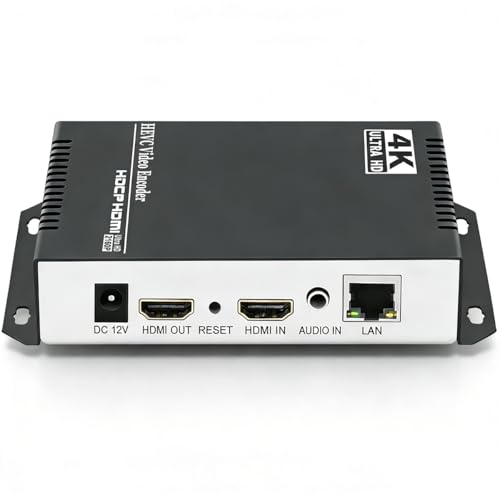
- 4K HDMI input up to 30fps
- Supports RTSP, RTMP, SRT, HLS, WebRTC, and more
- Can send four streams at once
Best For: Creators needing flexible HDMI encoding with many protocols
Compact 4K Streaming Hub
Blackmagic Design Streaming Encoder 4K

- DCI 4K streaming up to 60fps
- H.264/H.265 to SRT or RTMP
- USB-C tethering plus monitor outputs
Best For: Compact 4K live streaming with simple front-panel control
Premium HDMI 4K All-in-One
Magewell Ultra Encode HDMI Plus 53150

- 4K HDMI encoding with loop-through monitoring
- Streams via RTMP, SRT, NDI|HX, HLS, and more
- Records to internal, USB, or network storage
Best For: HDMI live production with recording and IP delivery
Broadcast 4K SDI Streamer
Blackmagic Design Streaming Encoder 4K
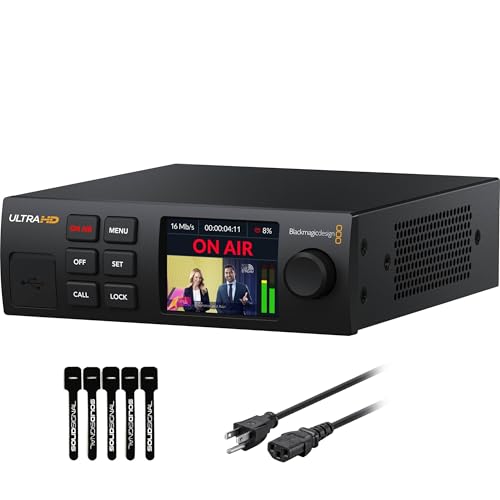
- 4K streaming over SRT or RTMP without a PC
- 12G-SDI input with standards conversion and loop out
- Ethernet plus mobile failover for added reliability
Best For: SDI broadcast workflows that need resilient live streaming
Multi-Protocol HDMI IP Encoder
URayCoder H.265/H.264 4K HDMI to IP Encoder

- 4K HDMI encoding with H.265/H.264 support
- Multiple outputs including RTSP, RTMP(S), SRT, HLS, and WebRTC
- Text, logo, timestamp, and cropping tools for branded streams
Best For: Configurable HDMI streaming to many IP platforms
Compact protocol encoder

- 1080P60 H.265/H.264 hardware encoding
- Wide support: SRT, RTMP, RTSP, HLS, WebRTC
- Browser-based setup with no software needed
Best For: compact live streaming and IP distribution
Multi-stream encoder

- 1080p60 H.265/H.264 dual encoding
- Outputs up to 4 streams with different protocols
- Text, logo, timestamp, and video adjustment tools
Best For: multi-platform streaming with heavy customization
4K encoder
4K HDMI to Video Streaming Encoder

- 4K UHD support up to 30fps
- Wide protocol support including WebRTC and Icecast
- Customizable overlays, cropping, and rotation
Best For: 4K streaming setups needing flexible protocol output
Flagship 4K Multi-Input Workflow – Magewell Ultra Encode AIO 4K Encoder
If you want one of the more capable streaming encoders for live production, the Magewell Ultra Encode AIO stands out for its HDMI + SDI flexibility, 4K encoding, and broad protocol support. It can handle either input type, mix them into picture-in-picture or side-by-side layouts, and stream to multiple destinations while also recording locally.
Best For: Live producers who need flexible HDMI/SDI input switching, multi-destination streaming, and recording in one box.
Pros:
- HDMI and SDI inputs with picture-in-picture or side-by-side layouts
- Supports up to 4K encoding with H.264 or HEVC compression
- Streams to up to six destinations using RTMP, RTMPS, SRT, NDI|HX, HLS, and more
- Can stream and record at the same time to SD card, USB storage, or network drives
Cons:
- More feature-rich than a basic single-purpose encoder
- Its full workflow may be more than casual streamers need
- Rack-mount design may not suit every setup
For buyers comparing streaming encoders for professional use, this model is built around workflow flexibility rather than simplicity. The onboard processing, overlays, and network control options make it a strong fit when reliability and production features matter most.
Broadcast HD SDI Encoder – Blackmagic Design Streaming Encoder HD
This Blackmagic Design option is a straightforward choice among streaming encoders if you mainly need HD output and SDI connectivity. It supports H.264 and H.265 streaming at 1080p60, with 12G-SDI input and loop out for cleaner integration into a broadcast-style chain.
Best For: Users who need a compact HD SDI encoder for 1080p live streaming.
Pros:
- Supports H.264 and H.265 streaming at 1080p 60fps
- 12G-SDI input with loop out
- Simple, focused design for HD streaming workflows
Cons:
- Limited to 1080p resolution
- Fewer workflow features than multi-input 4K units
If your priority is a dependable HD encoder rather than a feature-heavy production box, this model keeps the setup focused. It is a good fit for SDI-based workflows where 1080p streaming is enough.
Protocol-Rich HDMI Encoder – URayCoder 4K HDMI to Ethernet Encoder
Among streaming encoders, this URayCoder model is aimed at buyers who want broad protocol compatibility and easy multi-platform delivery. It takes HDMI input, supports 4K UHD up to 30fps, and can push multiple streams in different formats for services like YouTube, Facebook, Twitch, and Vimeo.
Best For: Streamers who want a versatile HDMI encoder with many output protocols and platform options.
Pros:
- Supports 4K input up to 30fps and higher frame rates at lower resolutions
- Works with many protocols including RTSP, RTMP(S), SRT, HLS, WebRTC, and more
- Can output up to 4 streams simultaneously with different protocols
- Includes text, scrolling captions, logos, timestamps, and basic image adjustments
Cons:
- HDMI-only input limits source flexibility
- 4K is capped at 30fps
- Feature set is broad, so setup may take some tuning
This is a practical pick if your streaming workflow depends on protocol variety and direct platform compatibility. Its mix of customization tools and multi-stream output makes it useful for creators who need more than a basic HDMI-to-IP encoder.
Compact 4K Streaming Hub – Blackmagic Design Streaming Encoder 4K
If you are comparing streaming encoders for a compact 4K workflow, this Blackmagic Design model focuses on core live-streaming functions with a few useful control extras. It supports H.264 and H.265 streaming to SRT or RTMP, DCI 4K up to 60fps, and adds SDI and HDMI monitor outputs along with USB-C phone tethering and webcam out.
Best For: Users who want a compact 4K encoder with straightforward streaming and monitoring options.
Pros:
- Supports DCI 4K streaming up to 60fps
- Streams with H.264 and H.265 to SRT or RTMP
- Includes SDI and HDMI monitor outputs
- USB-C supports phone tethering and webcam out
Cons:
- More streamlined than the Ultra Encode AIO
- Less focused on multi-input mixing features
This model is a strong option when you want 4K streaming capability without a complicated control surface. The front-panel buttons and spin knob make it easier to manage, while the monitoring outputs help keep the workflow practical.
Premium HDMI 4K All-in-One – Magewell Ultra Encode HDMI Plus 53150
If you want a flexible option in streaming encoders for HDMI-based productions, the Magewell Ultra Encode HDMI Plus stands out for combining 4K encoding, recording, and IP workflow support in one compact box. It is built for live production setups that need both local monitoring and multi-protocol delivery.
Best For: Live producers, educators, and AV teams that need HDMI encoding with recording and NDI|HX support.
Pros:
- Encodes HDMI up to 4K30 with loop-through for monitoring or pass-through.
- Supports RTMP, RTMPS, SRT, NDI|HX, HLS, and TS over UDP/RTP for multi-destination streaming.
- Includes internal 128 GB storage plus support for USB and network recording.
- Offers PoE, Wi-Fi, and 4G/5G USB modem support for flexible deployments.
Cons:
- Designed specifically for HDMI workflows, so it is not the right fit for SDI sources.
- 4K capture is limited to 30 fps rather than 60 fps.
- 4G/5G modem support requires a separate USB modem.
Overall, this is a strong choice if you need streaming encoders that can handle broadcasting, recording, and NDI-style IP contribution without relying on a computer.
Broadcast 4K SDI Streamer – Blackmagic Design Streaming Encoder 4K
Among streaming encoders for SDI workflows, the Blackmagic Design Streaming Encoder 4K is built for direct live delivery without needing a separate encoding PC. It combines 4K H.264/H.265 streaming, standards conversion, and failover connectivity for more demanding broadcast and event setups.
Best For: Broadcast teams and remote production setups that need SDI input, monitoring, and connection resilience.
Pros:
- Streams HD or Ultra HD up to 2160p60 via SRT or RTMP.
- Accepts 12G-SDI input with automatic standards conversion and SDI loop out.
- Includes SDI and HDMI monitor outputs for confidence monitoring or downstream devices.
- Supports Ethernet plus 5G/4G mobile connectivity with auto-failover.
Cons:
- Built around SDI workflows, so HDMI-only sources are not the best fit.
- Some advanced features depend on compatible Blackmagic Design camera and decoder workflows.
- More specialized than simple plug-and-stream boxes.
This is a practical pick if you need streaming encoders with broadcast-style control, captioning support, and dependable live streaming over redundant connections.
Multi-Protocol HDMI IP Encoder – URayCoder H.265/H.264 4K HDMI to IP Encoder
If you need streaming encoders that can push HDMI video into a wide range of IP and social platforms, this URayCoder model focuses on protocol flexibility and easy configuration. It supports 4K input, multiple simultaneous outputs, and customization features for branded live streams.
Best For: Users who want a highly configurable HDMI-to-network encoder for multi-platform streaming.
Pros:
- Supports H.265/H.264 encoding with 4K input up to 30 fps.
- Can output multiple streams using protocols like RTSP, RTMP(S), SRT, HLS, WebRTC, and more.
- Allows overlays such as text, scrolling captions, logos, and timestamps.
- Includes HDMI embedded audio plus line-in audio support and adjustable audio settings.
Cons:
- 4K operation is limited to 30 fps.
- Intended for HDMI sources, so it does not cover SDI workflows.
- Many advanced options may be more than casual users need.
For buyers who prioritize protocol variety, branding tools, and network output flexibility, this encoder is a capable and practical option.
Compact protocol encoder – 1080P60 HDMI Video Encoder
If you need streaming encoders for a simple HDMI-to-network workflow, this model focuses on practical setup and broad protocol support. It uses hardware H.265/H.264 encoding at 1080P60, and the browser-based configuration means you can get it running without extra software or drivers.
Best For: Users who want a compact encoder for live streaming, IPTV, or browser-based monitoring with minimal setup friction.
Pros:
- Hardware H.265/H.264 encoding at 1080P60 for efficient live output
- Supports SRT, RTMP(S), RTSP, UDP, HTTP, HLS, WebRTC, TRTC, Icecast, and SHOUTcast
- Browser setup with DHCP enabled by default
- Compact palm-sized design for racks, shelves, or behind a monitor
Cons:
- Advanced streaming setups still require basic networking knowledge
- Only one HDMI input port, so it is not meant for multi-source production
- Focused on encoded output rather than onboard workflow tools
Overall, this is a strong fit when you want a low-profile encoder that can serve multiple delivery formats from one box. The OSD overlay support and external audio input add flexibility for branding or security-style streams.
Multi-stream encoder – HEVC MPEG4 HDMI to IP Encoder
Among streaming encoders, this URayCoder unit stands out for multi-protocol output and flexibility. It supports 1080p at 60fps, can output up to 4 streams with different protocols, and includes controls for text, logos, timestamps, cropping, rotation, and audio adjustments.
Best For: Creators or operators who want one encoder to feed multiple platforms and customize the stream presentation.
Pros:
- Advanced H.265/H.264 dual encoding chip with 1080p60 support
- Can output 4 video streams with different protocols at the same time
- Supports HTTP, RTSP, RTMP(S), SRT, HLS, MP4, UDP/RTP, ONVIF, and FLV
- Includes static text, scrolling captions, logos, timestamps, and image adjustments
Cons:
- Setup and tuning may be more than casual users need
- Single-channel design limits it to one HDMI source at a time
- Best value comes from using its advanced customization features
This is a good pick if you need one encoder that can do a lot without adding more hardware. The lifetime free warranty and technical support are also notable for buyers planning a longer-term installation.
4K encoder – 4K HDMI to Video Streaming Encoder
If your workflow needs a higher-resolution option among streaming encoders, this URayCoder model is built around 4K HDMI input support and broad protocol compatibility. It can handle up to 4K UHD at 30fps, and lower resolutions up to 120fps, while offering the same style of stream customization found on the brand’s other encoder models.
Best For: Users who want 4K-capable HDMI encoding with multi-protocol streaming and stream branding tools.
Pros:
- Supports 4K UHD input/output at up to 30fps
- Up to 120fps at 2K and lower resolutions
- Wide protocol support including HTTP, RTSP, RTMP(S), SRT, HLS, MP4, UDP/RTP, FLV, WebRTC, TRTC, and Icecast
- Stream customization for text, logos, timestamps, cropping, rotation, flipping, and mirroring
Cons:
- 4K tops out at 30fps, not 60fps
- Single HDMI input means it is not a multi-source switcher
- Feature set is broad, so it may be more than needed for simple streaming jobs
This model makes sense when 4K support matters more than the absolute simplest configuration. It combines a wide format list with low-latency network delivery and lifetime support, which is useful for more demanding installations.
How We Picked These Streaming Encoders
We prioritized reliable input options, strong codec support, broad platform compatibility, and practical deployment features such as PoE, loop-through, recording, and low-latency delivery. We also looked for models that fit different use cases, from simple single-camera streams to more demanding live production workflows.
Quick Comparison
At a high level, the list breaks into three groups: pro hybrid encoders with SDI or dual-input workflows, standalone HDMI encoders for straightforward live streaming, and budget-friendly network video encoders that emphasize protocol support and basic 1080p or 4K output. The best choice depends on your input type, required resolution, and whether you need backup recording or multi-platform streaming.
Key Buying Factors for Streaming Encoders
Input Type and Signal Path
Match the encoder to your source. HDMI is common for cameras and switchers, while SDI is better for longer cable runs and professional production environments. If you need flexibility, look for models with dual inputs or loop-through for monitor feeds.
Codec and Resolution Support
H.264 remains widely compatible, while H.265/HEVC can reduce bandwidth at the same quality level. For sharp live events and future-proofing, 4K support is valuable, but 1080p is often enough for meetings, worship, education, and most social live streams.
Streaming Protocols and Destination Support
The strongest Streaming Encoders support a mix of RTMP, SRT, HLS, RTSP, and WebRTC. If you stream to YouTube, Facebook, or a CDN, RTMP is still essential. For contribution links, remote production, and lower-latency transport, SRT is a major advantage.
Recording, Networking, and Power
Built-in recording can save a stream if the network fails and gives you a backup file for editing. Ethernet is standard, but PoE simplifies installation where power outlets are limited. If you need mobility, confirm that the unit supports the network and power setup you plan to use.
Who Should Buy Which Streaming Encoders?
Choose a pro hybrid encoder if you need multiple inputs, higher reliability, or more control over live workflows. Pick a standalone HDMI encoder if you want an easier setup for one camera or one source. Go with a budget network video encoder if your priority is broad protocol support and a lower entry price. In short, the best Streaming Encoders are the ones that match your source, bandwidth, and production needs without adding unnecessary complexity.