Choosing the right encoder can make or break a live show, especially when you’re managing multiple cameras, switching angles, and pushing a stable stream at the same time.
Below, we’ve rounded up the best streaming encoders for multi camera setups in 2026 to help you find the right balance of workflow, video quality, and connectivity.
Best 10 Streaming Encoders for Multi Camera Setups Picks for 2026
Multi-Channel Live Switcher

- 4 HDMI inputs with dual HDMI outputs
- Streams to 3 platforms in landscape or portrait
- Records to SD card or USB SSD while streaming
Best For: Multi-camera HDMI live productions with built-in switching and recording
Rack Stream Encoder
Blackmagic Streaming Encoder 4K
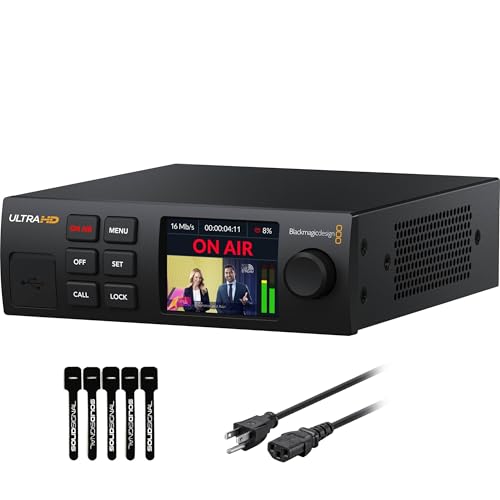
- 4K H.264/H.265 streaming with no encoding PC
- 12G-SDI input plus standards conversion
- Ethernet and mobile failover for backup connectivity
Best For: SDI production teams that need dependable 4K streaming and failover
All-in-One Touchscreen Studio

- 8 HDMI inputs with 2 assignable outputs
- ISO records each input for post-production
- Built-in NDI HX and instant replay support
Best For: Portable 4K multi-camera events and all-in-one live production
Network Video Encoder
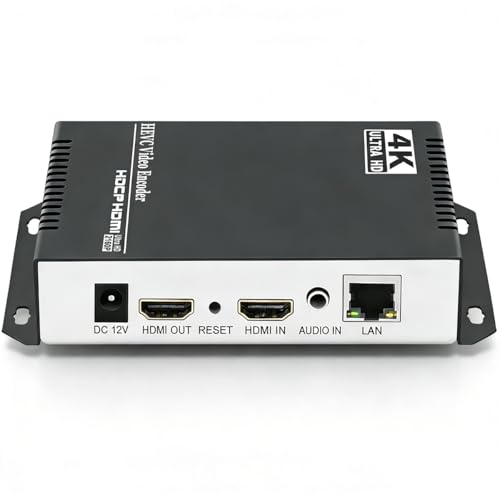
- 4K HDMI to network encoding with H.264/H.265
- Supports RTSP, RTMP, SRT, HLS, and WebRTC
- Can output up to 4 simultaneous streams
Best For: HDMI sources that need flexible network streaming protocols
Top Hybrid Pick

- HDMI and SDI inputs with PiP or side-by-side mixing
- Streams to up to six destinations with broad protocol support
- Records while streaming to SD card, USB, or network storage
Best For: Teams that need a flexible hybrid encoder for live production and multi-destination delivery
Simple HDMI IP Encoder
URayCoder 4K HDMI to IP Encoder

- 4K HDMI input with support for multiple network protocols
- Can output multiple streams to major live platforms
- Includes text, logo, timestamp, and cropping tools
Best For: HDMI-based users who want an easy IP streaming encoder with broad protocol support
Best HDMI IP Workhorse
Magewell Ultra Encode HDMI Plus

- 4K HDMI encoder with loop-through for monitoring or pass-through
- Streams with RTMP, SRT, NDI|HX, HLS, and more
- Records to internal, USB, or network storage while streaming
Best For: HDMI live production teams that want loop-through, NDI|HX, and recording in one encoder
SDI Multi-Stream Encoder

- 4K UHD input with H.265/H.264 encoding
- Up to 4 simultaneous streams and broad protocol support
- SDI-focused with overlays, cropping, and audio options
Best For: SDI live productions that need multi-platform output and stream customization
Wireless Dual-Channel Encoder

- NDI|HX3, WiFi 6, and PoE connectivity
- Dual-channel H.265/H.264 streaming to two platforms
- Records to TF card or USB while live
Best For: Churches and live event teams needing wireless flexibility and dual-stream output
HDMI Multi-Protocol Encoder

- 4K HDMI input with H.265/H.264 encoding
- Up to 4 simultaneous streams with wide protocol support
- Adds text, logos, timestamps, and image adjustments
Best For: HDMI-based multi-camera streaming to multiple platforms
Multi-Channel Live Switcher – Osee GoStream Deck HDMI Pro
The Osee GoStream Deck is a practical pick for streaming encoders for multi camera setups when you want a hardware switcher with broad connectivity. With 4 HDMI inputs, dual HDMI outputs, Type-C I/O, Ethernet streaming, and SD card recording, it covers a full live-production workflow without relying on a PC for basic control.
Best For: Education, worship, conferences, podcasts, and live events that need multi-camera switching, overlays, and built-in recording.
Pros:
- 4 HDMI inputs plus 2 HDMI outputs for Multiview and monitoring
- Streams to up to 3 platforms and supports both landscape and portrait modes
- Records PGM to SD card or USB SSD while playing MP4 files
- Includes audio controls, EQ, limiter, fader, and keying tools
Cons:
- Best suited to HDMI-based workflows rather than SDI setups
- Some advanced control is expanded through PC software or a companion module
Overall, this is a feature-rich mixer for creators who want switching, streaming, overlays, and audio tools in one box. It looks especially useful for teams that want hands-on control and flexible multi-camera production.
Rack Stream Encoder – Blackmagic Streaming Encoder 4K
The Blackmagic Design Streaming Encoder 4K is a strong choice in streaming encoders for multi camera setups when your workflow is built around SDI. It offers self-contained H.264/H.265 encoding, standards conversion, and remote production features, so it can fit into a broadcast-style setup without needing an encoding PC.
Best For: SDI-based live streaming, remote camera control workflows, and reliable single-box 4K encoding.
Pros:
- Encodes in H.264 and H.265 up to 2160p60
- 12G-SDI input with standards conversion and SDI loop output
- Dual monitor outputs for confidence monitoring or downstream devices
- Supports Ethernet plus 5G/4G mobile with auto-failover
Cons:
- Designed around SDI devices, not HDMI camera inputs
- Best results depend on compatible Blackmagic camera control workflows
For productions that need dependable encoder hardware and broadcast-style control, this model stands out for its SDI features and failover connectivity. It is a solid fit when reliability and remote management matter more than touchscreen-style convenience.
All-in-One Touchscreen Studio – YoloLiv YoloBox Extreme
The YoloLiv YoloBox Extreme is built for streaming encoders for multi camera setups where flexibility and on-device control are priorities. With 8 HDMI inputs, 2 assignable outputs, NDI HX support, ISO recording, and a large OLED touchscreen, it combines switching, streaming, and recording in one portable unit.
Best For: Mobile productions, live events, sports, and creators who want an all-in-one 4K multi-cam system.
Pros:
- 8 HDMI inputs with built-in 4K60 scaling
- 2 assignable HDMI outputs for Program, Multiview, or Preview
- ISO recording for each input, up to 4K30 on select channels
- Free NDI HX support plus instant replay for multi-camera productions
Cons:
- Heavier and more full-featured than a simple encoder
- Advanced workflow may be more than basic streamers need
This is a versatile choice if you want a single device to handle switching, recording, replay, and streaming. The touchscreen interface and battery power make it especially appealing for portable multi-camera work.
Network Video Encoder – URayCoder HDMI to Ethernet 4K
The URayCoder HDMI to Ethernet encoder is a straightforward option for streaming encoders for multi camera setups when you need to turn HDMI video into network streams. It supports 4K input, multiple streaming protocols, and customizable overlays, making it useful for simple contribution or distribution workflows.
Best For: HDMI sources that need protocol flexibility for live streaming to multiple platforms or servers.
Pros:
- Supports H.265/H.264 encoding with up to 4K UHD input
- Outputs multiple protocols including RTSP, RTMP(S), SRT, HLS, and WebRTC
- Can push up to 4 video streams with different protocols
- Includes text, logos, timestamps, cropping, rotation, and mirroring options
Cons:
- Limited to HDMI source workflows rather than multi-input switching
- No built-in display or touch control for live production mixing
For users who want a dedicated encoder instead of a switcher, this model offers a lot of streaming flexibility. It is a good fit when the priority is getting an HDMI source onto the network with minimal fuss and broad protocol support.
Top Hybrid Pick – Magewell Ultra Encode AIO
If you need one of the more flexible streaming encoders for multi camera setups, this Magewell unit stands out for handling HDMI and SDI in the same box with picture-in-picture or side-by-side layouts. It also supports multi-protocol, multi-destination output, so it can fit live production chains where you need to send the same feed to several platforms or IP workflows at once.
Best For: Live production teams that want HDMI/SDI flexibility, multi-destination streaming, and onboard recording in one device.
Pros:
- HDMI and SDI inputs in one encoder with picture-in-picture and side-by-side mixing
- Streams to up to six destinations using RTMP, RTMPS, SRT, NDI|HX2/HX3, HLS, and more
- Supports 4K encoding with H.264 or HEVC compression
- Can stream and record at the same time to SD card, USB storage, or network drives
Cons:
- Rack-mount design may be more than some small setups need
- SDI 4K support is listed at up to 4096×2160p30, not 60p
- Many control and networking features may be unnecessary for simple single-output use
This is a strong pick when your workflow needs serious routing flexibility, IP streaming support, and recording backup in one encoder. The built-in processing tools and control options make it especially useful in more demanding production environments.
Simple HDMI IP Encoder – URayCoder 4K HDMI to IP Encoder
For streamlined streaming encoders for multi camera setups built around HDMI sources, this URayCoder model focuses on simple network encoding and broad protocol support. It can push multiple streams at once and includes useful customization tools like text, logos, timestamps, cropping, and rotation.
Best For: Users who want an HDMI-to-IP encoder with wide protocol compatibility and straightforward setup.
Pros:
- Supports 4K UHD input up to 3840×2160 at 30fps
- Outputs multiple streams and supports protocols like RTSP, RTMP(S), SRT, HLS, WebRTC, and ONVIF
- Allows text, scrolling captions, logos, timestamps, cropping, rotation, flipping, and mirroring
- Compatible with common platforms such as YouTube, Facebook, Twitch, and Vimeo
Cons:
- HDMI-only input limits it to HDMI sources
- 4K is capped at 30fps
- Designed more as a network encoder than a full multi-input production hub
This encoder makes sense if you want a practical HDMI network solution without a steep learning curve. Its protocol flexibility and stream customization options are helpful, but it is best suited to simpler source setups rather than more advanced multi-camera switching.
Best HDMI IP Workhorse – Magewell Ultra Encode HDMI Plus
This is a strong choice in streaming encoders for multi camera setups when your workflow is centered on HDMI sources and you want loop-through monitoring plus IP delivery. It combines 4K encoding, multi-protocol streaming, recording, and NDI|HX support, making it a practical fit for live production, events, and corporate AV.
Best For: HDMI-based live production setups that need loop-through monitoring, NDI|HX, and built-in recording.
Pros:
- 4K HDMI encoding with loop-through output for local monitoring or pass-through
- Streams simultaneously via RTMP, RTMPS, SRT, NDI|HX, HLS, and TS over UDP/RTP
- Records to internal storage, USB storage, or network locations while streaming
- Includes PoE, Wi-Fi, and 4G/5G USB modem support for flexible deployment
Cons:
- HDMI-only workflow may not suit SDI-based productions
- 4K encoding is listed up to 4096×2160p30, not higher frame rates
- Internal storage capacity is fixed at 128 GB
Overall, this model is a versatile HDMI encoder for teams that want clean monitoring, IP streaming options, and recording in one compact box. Its NDI|HX support and network flexibility make it especially useful where production needs to move between onsite and remote workflows.
SDI Multi-Stream Encoder – 4K Multi-Protocol Encoder
If you need a streaming encoder for multi camera setups built around SDI sources, this URayCoder unit is aimed at live production workflows that demand flexible outputs. It supports 4K input, multiple protocols, and up to four simultaneous streams, making it a practical fit for one-to-many streaming setups.
Best For: SDI-based multi-camera streaming to multiple platforms or servers with customizable overlays and low-latency network output.
Pros:
- Supports 4K UHD input with H.265/H.264 encoding and up to 30fps at 4K.
- Can output multiple stream protocols, including HTTP, RTSP, RTMP(S), SRT, HLS, and multicast options.
- Allows four simultaneous video streams and compatibility with platforms like YouTube, Facebook, Twitch, and Vimeo.
- Includes customization tools such as text, scrolling captions, logos, timestamps, cropping, rotation, and mirroring.
Cons:
- Designed around SDI input, so HDMI-based rigs will need different hardware.
- Setup is straightforward, but the wide feature set may be more than simple single-stream users need.
This is a strong choice when your priority is routing multiple camera feeds into network streaming workflows with broad protocol support. The combination of SDI connectivity, four-stream output, and customization makes it well suited to more advanced live production.
Wireless Dual-Channel Encoder – C6 4K NDI HX3 Encoder
For streaming encoders for multi camera setups that need a compact, modern connection package, the CNDLive C6 stands out with NDI|HX3, WiFi 6, PoE, and dual-channel encoding. It is built for live broadcasts where low latency, reliable networking, and the option to record locally matter as much as streaming.
Best For: Church, broadcast, and live event teams that want wireless or PoE flexibility with dual-stream output and local recording.
Pros:
- Supports NDI|HX3 and WiFi 6 for low-latency 4K streaming.
- Dual-channel H.265/H.264 encoding can stream to two platforms at once.
- Includes both 12G-SDI and HDMI 2.0 inputs for flexible camera integration.
- Offers PoE plus TF card and USB recording while streaming.
Cons:
- It weighs 3 pounds, so it is less pocketable than simpler encoder boxes.
- Wireless and advanced network features may be unnecessary for very basic streaming rigs.
The C6 is a smart pick if you want network flexibility without giving up broadcast-style input options. Its combination of NDI, PoE, dual-channel output, and recording makes it especially useful for multi-camera events that need dependable all-in-one streaming gear.
HDMI Multi-Protocol Encoder – 4K HDMI Live Stream Box
This URayCoder model is a practical option among streaming encoders for multi camera setups when your video sources are HDMI-based and you want broad protocol support. It offers 4K input, multiple simultaneous outputs, and extensive control over stream appearance and delivery.
Best For: HDMI production setups that need one encoder to serve multiple streaming protocols and platforms.
Pros:
- Supports 4K UHD HDMI input with H.265/H.264 encoding.
- Can output up to four streams at once using protocols such as RTSP, RTMP(S), SRT, HLS, WebRTC, and more.
- Includes customization features like text, logos, timestamps, cropping, rotation, flipping, and mirroring.
- Supports HDMI embedded audio plus line-in audio, with low-latency network transmission.
Cons:
- It is limited to HDMI-compatible sources, so it is not the best fit for SDI-only workflows.
- Users who only need a simple single-platform encoder may not use all of its features.
If you need a flexible HDMI encoder for live streaming across multiple destinations, this unit has the feature depth to handle it. The wide protocol support and stream customization make it especially useful for users who want more control over output without adding extra gear.
How We Picked the Best Streaming Encoders for Multi Camera Setups
We focused on Streaming Encoders for Multi Camera Setups that are practical for real live-production workflows. Priority went to models with dependable encoder performance, support for common streaming protocols, useful input options such as HDMI or SDI, and features that help simplify multi-camera switching or recording. We also considered portability, networking options, and whether the hardware is better suited to solo creators, small teams, or more advanced productions.
Quick Comparison
As a group, these encoders cover a wide range of use cases. Some are compact all-in-one units built for fast setup and simpler operation, while others are standalone encoders designed to integrate into a larger broadcast chain. If you need the simplest path to live streaming, an integrated switcher-encoder can save time. If you already use cameras, switchers, or audio gear, a dedicated encoder with strong protocol support may be the better long-term fit.
Key Buying Factors for Streaming Encoders for Multi Camera Setups
Input Type and Channel Count
Start by matching the encoder to your camera system. HDMI is common for mirrorless and DSLR setups, while SDI is usually preferred for longer cable runs and more robust pro workflows. For multi-camera rigs, confirm whether the unit handles one input, dual input, or a true multi-channel workflow.
Streaming Protocol Support
Look for the protocols your platform or workflow requires. RTMP is still widely used, while SRT is increasingly important for lower-latency, more reliable contribution streaming. Support for HLS, RTSP, NDI|HX, or WebRTC can be useful if you stream to multiple destinations or feed video into local production systems.
Recording and Backup Options
Recording locally can be a major advantage when streaming live events. It gives you a backup copy, helps with post-production, and protects against connection issues. If your workflow depends on redundancy, prioritize units that can stream and record at the same time.
Network and Power Flexibility
Ethernet is essential for most professional builds, and PoE can simplify cable management. Wi-Fi can be helpful for mobile or temporary setups, but wired networking is usually the safer choice for important live broadcasts.
Who Should Buy Which Streaming Encoders for Multi Camera Setups?
If you’re a creator, educator, church, or small production team, an all-in-one unit may offer the fastest path to dependable live streaming. If you already have a switcher and want a dedicated output device, a standalone encoder is often the better value. For larger events, sports, or venue installs, prioritize SDI, SRT, PoE, and multi-protocol support so your streaming encoder can grow with your production needs.