The best wireless conference microphone setups make it easier for everyone to be heard, whether you are hosting a small video call or running a larger hybrid meeting. The right choice depends on room size, connection options, microphone range, and how much setup your team can manage.
We compared ten options ranging from compact USB and Bluetooth speakerphones to multi-microphone UHF systems. Use the guide below to narrow the choices by meeting style, coverage needs, and budget.
Best 10 Wireless Conference Microphone Picks for 2026
Best for Large Meetings
Phenyx Pro 8-Channel Wireless Conference Microphone
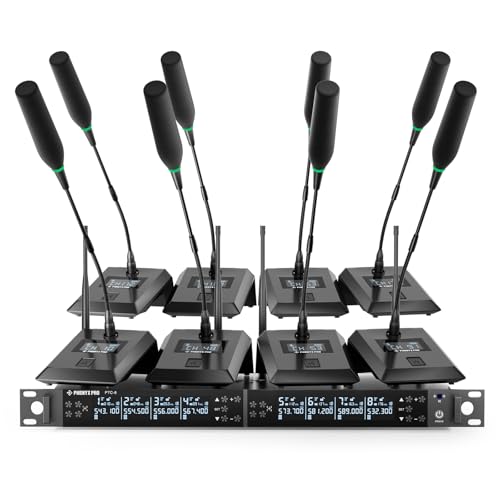
- Eight gooseneck microphones included
- Auto Scan and IR synchronization
- 1U rackmount receiver with up to 328-foot line-of-sight range
Best For: Large meeting rooms, lecture halls, and multi-microphone installations
Best for Simple USB Meetings
Anker PowerConf S330 USB Speakerphone
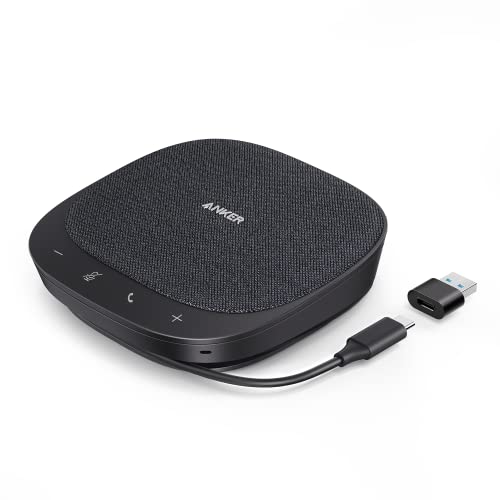
- Plug-and-play USB-C connection
- Four microphones with 360-degree coverage
- Voice enhancement and up to 3-meter pickup
Best For: Home offices and small wired computer meetings
Best Mid-Size UHF Setup
Phenyx Pro 4-Channel Wireless Conference Microphone

- Four gooseneck microphones included
- 50 selectable frequencies per channel
- Auto Scan, IR pairing, and 328-foot line-of-sight range
Best For: Mid-size meetings, classrooms, and four-speaker presentations
Best Portable Wireless Speakerphone
Anker PowerConf 6-Mic Speakerphone

- Six-microphone 360-degree array
- Bluetooth and USB-C connectivity
- Up to 24 hours of call time
Best For: Portable home-office and conference-room calls
Best Portable Pick

- Bluetooth or USB connection
- Up to 15-hour battery life
- Portable design for on-the-go meetings
Best For: Individual users and small meetings
Best Large-Room Coverage

- Eight-mic array with satellite microphone
- 360-degree pickup for up to 14 people
- Bluetooth, USB, and wireless dongle support
Best For: Medium conference rooms and group meetings
Best Expandable Setup
Synbit SPK400 Conference Speakerphone

- Includes extension microphone and wireless dongle
- Supports daisy-chaining two speakerphones
- Bluetooth, USB, and wireless connections
Best For: Small-to-large meeting room flexibility
Best All-Around Pick
EMEET Luna 360° Conference Speakerphone

- 360° pickup with three microphone arrays
- VoiceIA noise reduction and vocal enhancement
- USB, Bluetooth, AUX, and dongle connectivity
Best For: Home offices and small meeting rooms
Best Expandable Kit
RayBit POD4 Daisy-Chain Speakerphone

- Includes expansion mic, dongle, and daisy-chain cable
- Voice AI with echo cancellation and voice enhancement
- Works via Bluetooth, USB, dongle, or daisy chain
Best For: Flexible small- to extra-large-room setups
Best for Large Groups
CM300 Speakerphone with 10 Wireless Mics

- Ten independent wireless microphones for group participation
- Up to 65 feet of wireless range
- AI noise reduction and echo cancellation
Best For: Meetings and presentations with up to 10 active speakers
Best for Large Meetings – Phenyx Pro 8-Channel Wireless Conference Microphone
If you need a wireless conference microphone system for a larger meeting room, the Phenyx Pro PTC-8 provides eight gooseneck microphones with UHF connectivity. Auto Scan helps identify lower-interference frequencies, while IR synchronization simplifies pairing and the stated line-of-sight range reaches up to 328 feet.
Best For: Corporate meetings, classrooms, churches, lecture halls, and other spaces needing up to eight microphones in one rack-friendly system.
Pros:
- Includes eight gooseneck microphones and an eight-channel metal receiver.
- Auto Scan, selectable frequencies, frequency lock, and IR synchronization support reliable setup.
- 360-degree microphone positioning, one-key mute, tuned voice EQ, and foam windscreens aid speech clarity.
- 1U rackmount design provides eight channels without expanding rack space.
Cons:
- Requires 16 AA batteries for the microphones.
- Its eight-microphone capacity and rackmount design may be more than smaller meetings need.
- Uses a 6.35 mm audio output cable rather than a wireless connection to the sound system.
Choose this model when microphone count and scalable UHF management matter most. It is a more substantial installation than a tabletop USB speakerphone, but it offers dedicated gooseneck microphones for organized group speaking.
Best for Simple USB Meetings – Anker PowerConf S330 USB Speakerphone
The Anker PowerConf S330 is a compact wired alternative to a wireless conference microphone for home-office and small-room calls. Its USB-C plug-and-play connection, four microphones, and 360-degree voice coverage are designed to make computer meetings quick to start without separate receiver setup.
Best For: Home offices and small meeting spaces where a stable USB connection and simple tabletop operation are more important than wireless freedom.
Pros:
- Plug-and-play USB-C connection includes a standard USB adapter.
- Four high-sensitivity microphones cover voices within up to 3 meters.
- Voice enhancement reduces background noise while emphasizing speech.
- 1.75-inch driver and passive bass radiators provide fuller meeting audio and music playback.
Cons:
- It is not wireless; the supplied notes specify USB connectivity and no wireless communication technology.
- Its stated microphone range is limited to 3 meters.
- It is a single tabletop speakerphone rather than a multi-microphone system.
The S330 is best viewed as a straightforward USB conference speakerphone, not a true wireless conference microphone system. Pick it for fast computer-based calls, especially when a corded connection is acceptable.
Best Mid-Size UHF Setup – Phenyx Pro 4-Channel Wireless Conference Microphone
For a mid-size room, the Phenyx Pro PTC-4 is a practical wireless conference microphone system with four gooseneck microphones and a quad-channel UHF receiver. Auto Scan, 50 selectable frequencies per channel, and IR synchronization help simplify frequency selection and pairing.
Best For: Meetings, classrooms, churches, lecture halls, and presentations requiring four dedicated microphones without the footprint of an eight-channel system.
Pros:
- Includes four gooseneck microphones, a metal receiver, antennas, cables, and batteries.
- Supports up to 12 conference microphones in a multiset operation according to the supplied notes.
- Auto Scan, frequency lock, IR synchronization, and stated 328-foot line-of-sight range support flexible deployment.
- 360-degree positioning, one-key mute, tuned EQ, and foam windscreens are useful for speech-focused events.
Cons:
- Requires eight AA batteries for the included microphones.
- Four channels may not be enough for larger panels or expanding installations.
- Connects to audio equipment through a 6.35 mm output cable.
This PTC-4 balances dedicated wireless microphones with a smaller channel count and receiver footprint. It is a strong fit when four speakers need individual gooseneck microphones and the room already has compatible audio equipment.
Best Portable Wireless Speakerphone – Anker PowerConf 6-Mic Speakerphone
The Anker PowerConf is a portable speakerphone option for buyers who want wireless conference microphone functionality without individual gooseneck units. Six microphones arranged in a 360-degree array, Voice Radar 3.0 processing, Bluetooth, and USB-C connectivity support flexible meetings at home or in a conference room.
Best For: Portable home-office and conference-room calls where multiple people need to speak from around a table.
Pros:
- Six microphones use a 360-degree array to pick up voices from all directions.
- Voice Radar 3.0 reduces noise, cancels echo, and detects multiple speakers.
- Supports Bluetooth wireless connection or USB-C connection without driver installation.
- Built-in battery provides up to 24 hours of call time and can charge other devices.
Cons:
- It is a tabletop speakerphone rather than a system with separate adjustable microphones.
- Bluetooth range is listed as up to 20 meters, so larger spaces may require careful placement.
- It has a 3-watt maximum output and is intended for home-office and conference-room use.
Choose the PowerConf when portability and easy wireless connectivity are priorities. Its integrated microphone array is simpler to deploy than a receiver-and-gooseneck setup, while USB-C remains available when you want a wired connection.
Best Portable Pick – Jabra Speak 510
The Jabra Speak 510 is a practical wireless conference microphone and speakerphone for individual desks, small meetings, and mobile calls. It connects through Bluetooth or USB, sets up quickly, and works with computers, smartphones, tablets, desk phones, softphones, Microsoft Teams, and other online meeting platforms.
Best For: Professionals who want a compact, portable speakerphone for one-person or small-group meetings.
Pros:
- Bluetooth and USB connectivity provide flexible setup options.
- Portable design includes a travel pouch and offers up to 15 hours of battery life.
- Built-in microphone and echo-free meeting audio are designed for clear calls.
- Broad compatibility includes Microsoft Teams and major online meeting platforms.
Cons:
- Its single microphone is better suited to smaller spaces than large conference rooms.
- The listed maximum range is 1.5 meters, limiting room-wide pickup.
- It is not waterproof.
The Speak 510 stands out for straightforward portability and dependable connection choices. Choose it when convenience and easy transport matter more than extending microphone coverage across a large meeting room.
Best Large-Room Coverage – EMEET Luna Plus Kit
The EMEET Luna Plus Kit combines a wireless conference microphone system with a speakerphone and satellite mic for broader room coverage. Its eight-microphone array and dedicated satellite microphone provide 360-degree pickup, while VoiceIA noise reduction, echo cancellation, and full-duplex audio support clearer group conversations.
Best For: Medium-size conference rooms and teams that need expanded voice pickup for up to 14 participants.
Pros:
- Eight built-in microphones plus a satellite mic support 360-degree pickup.
- Designed to cover meetings with up to 14 people.
- VoiceIA noise reduction, echo cancellation, and full-duplex communication help reduce distractions.
- Supports Bluetooth 5.3, USB 2.0, and the included A350 wireless dongle.
Cons:
- The daisy-chain cable for linking two units is sold separately.
- Battery life is listed at up to 10 hours, shorter than some portable alternatives.
- Daisy-chaining requires two Luna Plus units for meetings of up to 25 attendees.
The Luna Plus Kit is a strong choice when one compact speakerphone does not provide enough microphone coverage. Its satellite mic and expansion capability make it more suitable for shared meeting spaces than basic single-mic models.
Best Expandable Setup – Synbit SPK400 Conference Speakerphone
The Synbit SPK400 is an expandable wireless conference microphone and speakerphone kit for meeting rooms that need flexible connections. It includes a 1.8-meter extension microphone, wireless dongle, USB cable, and daisy-chain cable, with Bluetooth, USB, wireless-dongle, and daisy-chain modes for different room setups.
Best For: Teams that want to extend voice pickup from a small meeting space to a larger room.
Pros:
- Extension microphone provides 360-degree pickup across a stated 3–5 meter range.
- Daisy-chain support can link two speakerphones and two extension microphones.
- DSP processing, voice enhancement, full-duplex audio, and echo and noise cancellation support clearer calls.
- Works with Zoom, Teams, Skype, GoToMeeting, and multiple connection types.
Cons:
- The larger-room setup requires additional compatible speakerphone units.
- Expansion adds cables and components compared with a basic portable speakerphone.
- The supplied notes do not specify battery runtime or Bluetooth range.
The SPK400 is particularly useful when meeting-room coverage may change over time. Its included extension mic and expansion accessories offer more setup flexibility than a standalone unit, though a fully expanded arrangement requires additional hardware.
Best All-Around Pick – EMEET Luna 360° Conference Speakerphone
The EMEET Luna is a practical wireless conference microphone and speakerphone for home offices and small meeting rooms. Its three-microphone array provides 360° pickup, while VoiceIA noise reduction helps limit keyboard clicks, air-conditioning noise, and other background distractions.
Best For: Home offices, small meetings, and users who want flexible USB, Bluetooth, AUX, or dongle connectivity.
Pros:
- 360° voice pickup from three microphone arrays
- VoiceIA noise reduction and automatic vocal volume adjustment
- Supports USB, Bluetooth, AUX, and wireless dongle connections
- Can be daisy-chained for meetings with up to 16 or more attendees, with a separate cable
Cons:
- Daisy-chain cable is sold separately
- Bluetooth range is listed at 10 meters
- Automatically shuts off after one hour of inactivity
The Luna combines broad compatibility, full-duplex audio, and portable tabletop design in one straightforward meeting device. It is especially appealing when you need one speakerphone to cover both personal and small-group calls.
Best Expandable Kit – RayBit POD4 Daisy-Chain Speakerphone
The RayBit POD4 is a wireless conference microphone kit designed for adaptable meeting setups. It combines a Bluetooth speakerphone with an expansion microphone, wireless dongle, USB cable, and daisy-chain cable, while its DSP-based Voice AI supports echo cancellation, voice enhancement, and full-duplex conversations.
Best For: Teams that need a ready-to-use kit for small or extra-large rooms and want multiple connection options.
Pros:
- Includes a 1.8-meter expansion microphone with 360° pickup
- Supports Bluetooth, USB, wireless dongle, and daisy-chain connections
- Voice AI combines noise reduction, echo cancellation, and voice enhancement
- Includes a 3-meter daisy-chain cable in the box
Cons:
- Expansion microphone pickup range is identified within a 3–5-meter radius
- Uses a corded-electric power source
- Plastic enclosure may feel less premium than a metal design
Unlike a basic tabletop speakerphone, the POD4 is packaged for expansion from the start. The included accessories make it a convenient choice for organizations that regularly change room layouts or meeting sizes.
Best for Large Groups – CM300 Speakerphone with 10 Wireless Mics
The CM300 stands out among wireless conference microphone systems by giving up to 10 participants an individual wireless microphone. Its 65-foot range, AI noise reduction, echo cancellation, and full-duplex audio are designed for group meetings where people may sit, stand, or move around the room.
Best For: Up to 10-person meetings, presentations, training sessions, and larger conference-room discussions.
Pros:
- Includes 10 independent omnidirectional wireless microphones
- Wireless transmission range reaches up to 65 feet
- AI noise reduction, echo cancellation, and dereverberation help clarify speech
- USB-A and USB-C plug-and-play compatibility with major meeting platforms
Cons:
- USB connection to the computer is wired
- Designed for up to 10 active speakers rather than unlimited participants
- The supplied notes do not specify the full charging setup for all microphones
The CM300 is the most participant-focused option in this group. Dedicated microphones reduce the need for people to lean toward a central unit, making it a strong fit for active meetings and presentations where consistent voice capture matters.
How We Picked the Best Wireless Conference Microphones
We focused on the features that have the greatest effect on real-world meetings: voice pickup, connection reliability, echo and noise control, portability, battery or power requirements, and ease of setup. The lineup includes both all-in-one speakerphones and expandable wireless systems, since they serve different room sizes and workflows.
We also considered compatibility with common computers and meeting platforms, support for Bluetooth or USB connections, microphone quantity, wireless range, and whether a system can cover multiple speakers without requiring everyone to sit close to the main unit.
Quick Comparison
| Type | Best For | Main Advantage | Potential Limitation |
|---|---|---|---|
| USB/Bluetooth speakerphone | Small offices and remote work | Simple plug-and-play setup | Usually limited room coverage |
| Multi-microphone speakerphone kit | Medium conference rooms | More even voice pickup | More devices to position and charge |
| UHF wireless microphone system | Large rooms and presentations | Longer range and scalable coverage | Requires more setup and equipment management |
Key Buying Factors for a Wireless Conference Microphone
Room Size and Pickup Pattern
A compact speakerphone can work well for a small table, but larger rooms benefit from satellite microphones or multiple wireless transmitters. Look for 360-degree pickup when participants sit around the device, and check the stated range against your actual room layout.
Connection Options
USB is generally the simplest choice for computers and offers a dependable wired connection. Bluetooth adds flexibility for phones and tablets, while daisy-chain support can extend coverage when one speakerphone is not enough. Confirm compatibility with your operating system and meeting software before buying.
Audio Processing
Echo cancellation, automatic gain control, noise reduction, and full-duplex audio help conversations sound more natural. AI noise cancellation can be useful in busy home offices, but microphone placement still matters and no processing system removes every background sound.
Wireless Range, Power, and Maintenance
Check whether wireless microphones use rechargeable batteries, replaceable batteries, or a dedicated receiver. Compare advertised range with walls, furniture, and interference in your space. A system with longer range may be preferable for presentations, while a rechargeable tabletop unit is often easier for recurring team calls.
Who Should Buy Which Wireless Conference Microphone?
For Remote Workers and Small Teams
Choose a compact USB or Bluetooth speakerphone with plug-and-play operation. These models minimize setup and are convenient for desks, small huddle rooms, and occasional calls.
For Medium Conference Rooms
Look for a speakerphone with multiple microphones, 360-degree pickup, or satellite units. These options help participants speak naturally without crowding around one central device.
For Large Rooms, Training, and Presentations
A multi-channel UHF system is the better fit when speakers move around, several microphones are needed, or wireless range is a priority. Expect more configuration work, and verify that the receiver connects cleanly to your conferencing equipment.
For Flexible Hybrid Meetings
Prioritize a model that supports both USB and Bluetooth, reliable echo cancellation, and easy controls for mute and volume. That combination makes it simpler to switch between laptops, mobile devices, and different meeting spaces.