Travel photography demands accurate color without adding bulky gear to your bag. The best color calibration tools for travel help you set white balance, check exposure, and maintain consistent color across changing locations and lighting conditions.
We compare compact passport kits, foldable charts, gray cards, and multi-target systems so you can choose a practical reference tool for your camera workflow, shooting style, and available space.
Best 10 Color Calibration Tools for Travel Picks for 2026
Best Overall
Calibrite ColorChecker Passport Photo 2
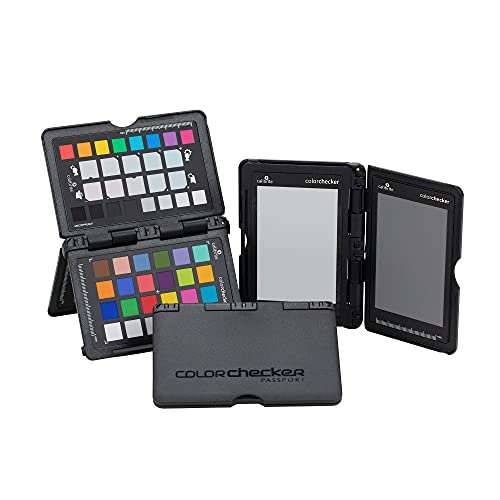
- Four targets for exposure, white balance, and profiling
- Supports DNG and ICC workflows
- Folding case with lanyard for travel
Best For: Complete color control during photo and video shoots
Best for Detailed Color Checks
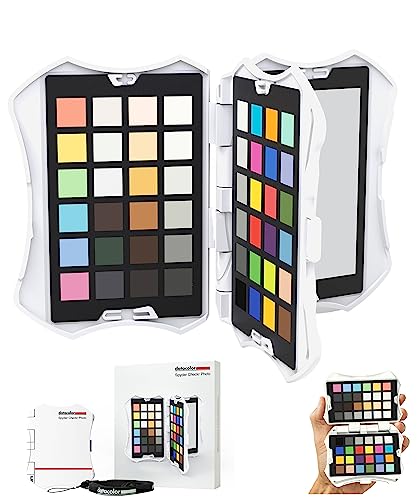
- 62 targets across four interchangeable cards
- Includes skin tones and multiple gray scales
- Creates HSL presets with Spyder software
Best For: Detailed photography color and tone reference on location
Best for Travel Video

- Includes two dedicated video targets
- Supports white balance and camera matching
- Compact case with adjustable positions
Best For: Travel video and multi-camera color consistency
Best Budget Pick
Kaavie 3-in-1 Reference Card Set

- Three pocket-sized gray, white, and black cards
- 18% gray and 90% white references
- Works with JPEG and RAW photography
Best For: Basic, low-cost white-balance and exposure checks
Most Complete Travel Kit
Portable Photo Color Management Set
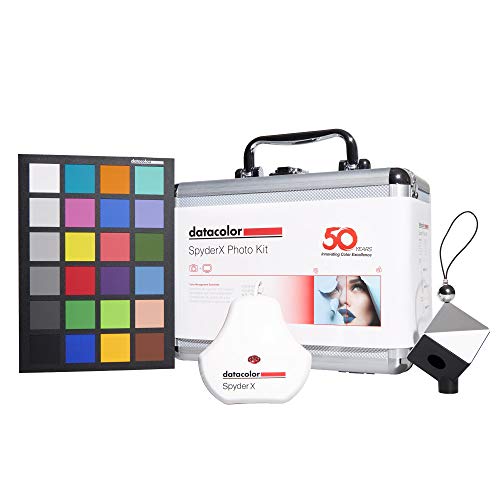
- Combines display, camera, and RAW references
- Supports monitor and projector calibration
- Comprehensive but weighs 2.4 pounds
Best For: Traveling photographers needing an all-in-one color workflow
Lightest Reference Set
Portable White Balance Tone Cards

- Includes white, black, and gray cards
- Weighs just 2.88 ounces
- Waterproof and hard-wearing
Best For: Minimalist travel photography and quick exposure checks
Best Chart Set
DKC-Pro Color Calibration Cards
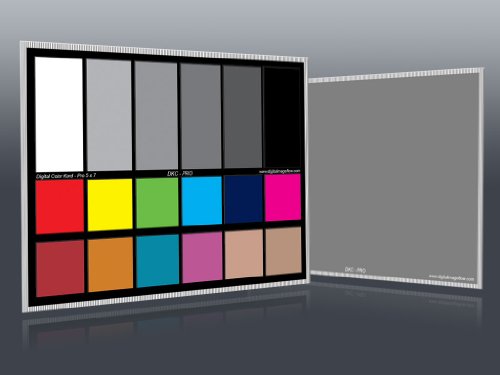
- Includes 12% and 18% gray references
- Adds 18 color patches for correction
- Works with Photoshop and Lightroom
Best For: Travel editors needing detailed chart-based color correction
Field Color Reference
Bewinner 24-Color Calibration Chart

- 24 calibrated color, skin-tone, and grayscale patches
- Gray patches support custom in-camera white balance
- Compact acrylic chart fits in a camera bag
Best For: Travel shooters needing detailed color references under mixed lighting
Simple Exposure Check
Stephencho 3-in-1 Balance Tool

- Black, white, and neutral gray reference surfaces
- Supports white balance and exposure control
- Designed for studio and outdoor photography
Best For: Travel creators wanting a basic, quick-reference calibration card
Ultralight Pocket Pick

- Includes black, white, and neutral 18% gray cards
- About 30g with a detachable carrying lanyard
- Matte, waterproof cards suit outdoor shooting
Best For: Travel photographers who need a compact, bag-attachable reference set
Best Overall – Calibrite ColorChecker Passport Photo 2
The Calibrite ColorChecker Passport Photo 2 is a versatile choice among color calibration tools for travel. Its four targets cover exposure, white balance, camera profiling, and enhancement, while the folding case keeps the kit protected and ready for location work.
Best For: Photographers and creators who want a complete capture-to-edit color workflow in a compact kit.
Pros:
- Combines exposure, white-balance, profiling, and enhancement targets.
- Supports DNG and ICC profile workflows through Calibrite PROFILER software.
- Folding protective case and included lanyard make it convenient for travel.
Cons:
- More equipment than a basic gray-card set requires.
- Profile creation depends on compatible software workflows.
Choose this kit when consistency across changing locations, cameras, or editing sessions matters more than having the simplest possible reference card.
Best for Detailed Color Checks – Datacolor SpyderCheckr Photo
The Datacolor SpyderCheckr Photo offers an extensive reference set for travelers who need detailed color control. Its interchangeable cards provide 62 targets, including skin tones, gray scales, and white and black adjustments, in a pocket-sized case.
Best For: Photographers who need broad color coverage and software-assisted HSL presets for editing.
Pros:
- Includes 62 color targets across four interchangeable cards.
- Provides expanded skin tones, white and gray references, and a 12-step gray scale.
- Spyder Checkr software can create HSL presets for supported editing applications.
Cons:
- The larger target selection may be more than casual photographers need.
- The case and cards are not described as water resistant.
This is a strong travel option when detailed color and tonal references are more important than a minimal, single-card setup.
Best for Travel Video – ColorChecker Passport Video 2
The ColorChecker Passport Video 2 is designed for creators working across stills and moving images in changing or mixed lighting. It combines a 24-patch color target, white-balance target, and two video targets in a compact protective case.
Best For: Video shooters and teams matching color across multiple cameras during travel productions.
Pros:
- Includes dedicated video targets for in-camera or post-production use.
- Provides a 24-patch target and white-balance target for photo workflows.
- Portable case adjusts to multiple positions and includes a lanyard.
Cons:
- Its video-focused targets may be unnecessary for still-photo-only users.
- The supplied notes do not indicate water resistance for outdoor travel.
For location video, mixed lighting, and multi-camera shoots, this Passport offers a focused way to establish and match color without carrying a larger kit.
Best Budget Pick – Kaavie 3-in-1 Reference Card Set
The Kaavie 3-in-1 set is a simple, economical option among color calibration tools for travel. Three pocket-sized cards provide gray, white, and black references for balancing color in JPEG or RAW workflows, and the included strap helps keep them accessible.
Best For: Travelers and casual photographers who want basic white-balance and exposure references without a larger profiling kit.
Pros:
- Includes three small, portable reference cards.
- Offers an 18% gray side and a 90% white side for balancing.
- Works with film or digital cameras and JPEG or RAW files.
Cons:
- Does not include dedicated color patches or camera-profile software.
- Offers fewer calibration features than the multi-target Passport kits.
This set makes sense for straightforward exposure and white-balance checks, especially when keeping a travel bag light and costs low is the priority.
Most Complete Travel Kit – Portable Photo Color Management Set
Datacolor SpyderX Photo Kit: Compact Tool Set for Precise Color Management - SXPK050
Check Price On AmazonFor travelers who need a broader workflow than a single reference card, the Datacolor SpyderX Photo Kit combines display calibration, camera color consistency, and RAW-editing references. It is a versatile option among color calibration tools for travel, though its 2.4-pound kit weight is worth considering for lightweight packing.
Best For: Traveling photographers and creators who need monitor, camera, and RAW workflow references in one kit.
Pros:
- Combines the SpyderX Elite display calibrator, Spyder Checkr 24, and Spyder Cube.
- Supports accurate monitor calibration, camera color consistency, and HSL presets for image series.
- Spyder Cube helps define white and black values for RAW conversion.
- Supports photography, video production, and projector calibration workflows.
Cons:
- At 2.4 pounds, it is less packable than a simple reference card.
- The multi-piece kit may be more than casual photographers need.
This is the most comprehensive choice of the three for travelers who edit seriously on the road. Choose it when display calibration and camera consistency matter as much as portability.
Lightest Reference Set – Portable White Balance Tone Cards
This two-set reference kit is a straightforward pick for photographers who want color calibration tools for travel without adding much bulk. Its white, black, and gray cards help with exposure and white balance adjustments, while the lightweight, waterproof design suits mobile shooting.
Best For: Casual and traveling photographers who prioritize minimal weight and quick white balance references.
Pros:
- Includes white, black, and gray reference cards for exposure and white balance.
- Extremely lightweight at 2.88 ounces.
- Waterproof and hard-wearing for travel use.
- Designed to retain stable color without easily fading.
Cons:
- Provides reference cards rather than a monitor calibrator or broader editing workflow.
- The supplied notes do not identify dedicated color patches or software presets.
For photographers who mainly need dependable in-camera references, this is the easiest set to carry. It is a practical budget-conscious companion, but advanced color-managed workflows may require additional tools.
Best Chart Set – DKC-Pro Color Calibration Cards
The DKC-Pro two-card set is aimed at photographers who want more detailed color correction than basic gray references provide. Its 5-by-7-inch cards combine 12% and 18% gray references with 18 color patches, making them useful color calibration tools for travel when precise editing references are important.
Best For: Photographers who want portable white balance and multi-color correction references for Photoshop or Lightroom.
Pros:
- Includes precision 12% and 18% gray references for white balance.
- Provides 18 color patches for digital color correction.
- n-Chrome coating is designed for higher color saturation, luminance, and accuracy.
- Includes a frame stand and user guide, with support for Photoshop and Lightroom workflows.
Cons:
- The 5-by-7-inch card size takes more room than ultra-compact reference cards.
- It is a chart-based solution and does not include a display calibrator.
This set offers a useful middle ground: more detailed than basic white-balance cards while remaining far lighter than a complete calibration kit. It is a strong choice for travelers who need repeatable color correction during editing.
Field Color Reference – Bewinner 24-Color Calibration Chart
For photographers and filmmakers comparing color calibration tools for travel, the Bewinner chart offers a compact 24-patch reference for checking color in the field. Its gray patches also provide a practical starting point for custom white balance before you begin shooting.
Best For: Travel photographers, portrait shooters, product photographers, and filmmakers who need a broader color reference in a compact camera-bag format.
Pros:
- Provides 24 calibrated color, skin-tone, and grayscale patches for detailed color comparison.
- Gray patches support quick custom white-balance setup in the camera.
- Acrylic construction and a 5.7 x 4.1-inch size suit regular outdoor and studio use.
- Can serve photography, video, and print-proofing workflows.
Cons:
- It is larger than the included compact three-card alternatives.
- The chart is a visual reference rather than an electronic calibration device.
Choose this model when you want more color targets than a simple gray card while still keeping the tool small enough for a camera bag. It is especially useful when mixed lighting makes consistent color more difficult to judge.
Simple Exposure Check – Stephencho 3-in-1 Balance Tool
Among color calibration tools for travel, this Stephencho card keeps the process straightforward with black, white, and neutral gray surfaces. The three-zone design gives photographers and videographers quick reference points for white balance and exposure in studio or outdoor settings.
Best For: Content creators and photographers who prefer a simple, lightweight reference for portraits, products, and landscapes.
Pros:
- Combines black, white, and neutral gray surfaces for exposure and white-balance checks.
- Portable design works for studio, outdoor, and mixed-light shooting.
- Three reference zones simplify camera adjustments and help protect highlight detail.
- Suitable for portrait, product, and landscape workflows.
Cons:
- Offers fewer color-reference zones than a 24-patch chart.
- The supplied specifications provide limited information about its exact dimensions and material.
This is a practical pick for travelers who want essential black, white, and gray references without carrying a more comprehensive color chart. Its simpler layout can make quick exposure and balance checks easier on location.
Ultralight Pocket Pick – Compact 18% Gray Card Set
For travelers prioritizing minimal kit, this small three-card set is one of the most pocket-friendly color calibration tools for travel. It includes black, white, and matte neutral 18% gray references, plus a detachable lanyard for attaching the set to a camera bag or backpack.
Best For: DSLR photographers, video shooters, and film photographers who need an immediately accessible calibration reference while traveling light.
Pros:
- Includes black, white, and neutral 18% gray cards for balance and exposure checks.
- Each card measures about 3 1/3 x 2 1/8 inches and weighs about 30g net.
- Matte gray surface helps minimize reflections during calibration.
- Waterproof construction and included lanyard support outdoor portability.
Cons:
- Its three-color format provides less detailed color comparison than a multi-patch chart.
- The small surface may be less convenient for scenes requiring a larger reference target.
This set stands out when pocket space and quick access matter most. The lanyard, compact dimensions, and waterproof construction make it well suited to carrying on hikes, location shoots, or everyday travel assignments.
How We Picked the Best Color Calibration Tools for Travel
We focused on portability, calibration functions, target variety, construction, and ease of use in the field. The selection includes simple black-and-white-gray cards for quick white-balance checks, larger color charts for more detailed correction, and integrated kits designed for photographers or video creators.
Travel gear should be easy to carry and quick to deploy, so we considered folded or pocket-sized designs, protective cases, lanyards, stands, and other features that reduce setup time. We also looked for tools that support more than one task, such as white balance, exposure reference, and color correction.
Quick Comparison
| Tool type | Best for | Main advantage |
|---|---|---|
| Passport color kit | Photographers and hybrid shooters | Multiple targets in a compact format |
| Video color chart | Videographers | Consistent color and skin-tone references |
| Gray card set | Fast white-balance and exposure checks | Simple, lightweight operation |
| Multi-color chart | Detailed post-processing | More reference colors for correction |
Key Buying Factors for Color Calibration Tools for Travel
Size and Protection
Choose a tool that fits your camera bag without bending, scuffing, or fading. Foldable passport-style kits are convenient, while rigid cards may be better if you need a stable reference surface. A case, frame, or stand can be useful when working outdoors.
Calibration Targets
Gray cards are sufficient for basic white balance and exposure. If you need more accurate color matching, select a chart with multiple color patches, neutral targets, and dedicated video references. More targets generally provide greater control but can increase size and setup time.
Workflow Compatibility
Check whether the chart is supported by your camera, editing software, or color-management workflow. A tool that integrates with your preferred photo or video process can save time, especially when processing large batches from a trip.
Durability and Handling
Look for laminated or carefully finished targets that tolerate frequent handling. A lanyard, quick-release strap, or stand may make a small tool easier to position consistently in wind, uneven terrain, or crowded locations.
Who Should Buy Which Color Calibration Tools for Travel?
Choose a compact gray card or three-target set if you primarily shoot stills and want fast white-balance and exposure references. A passport-style color kit is a stronger all-around choice for photographers who travel frequently and want several calibration targets in one package.
Videographers should prioritize a video-specific chart with skin-tone and neutral references for consistent footage across scenes. If detailed color correction is central to your workflow, choose a larger multi-color chart. For occasional travel use or a very small kit, a basic pocket-sized reference card offers the lowest bulk and simplest operation.