A well-chosen stage snake keeps guitar rigs organized, reduces cable clutter, and makes connections between pedalboards, amplifiers, mixers, and stage boxes easier to manage. The right model depends on your channel needs, stage distance, and whether you need sends, returns, or splitter-style routing.
We’ve gathered 10 options ranging from compact 8- and 12-channel designs to longer 16- and 24-channel snakes. Use the guide below to narrow the list by layout, construction, portability, and the demands of your live setup.
Best 10 Stage Snakes for Guitar Setups Picks for 2026
Compact 16-Channel Pick

- 16 XLR sends and 4 returns
- 25-foot cable for compact layouts
- Circuit-board stage box design
Best For: Shorter guitar rigs and small live-sound stages
Durable 50-Foot Choice

- 16 channels with 4 returns
- Hand-soldered insulated XLR connectors
- Includes nylon bag and carrying handle
Best For: Mid-sized live guitar rigs and touring-style setups
Road-Ready 50-Foot Splitter

- 16-channel, 50-foot XLR snake
- Low-profile labeled stage box
- Color-coded fantail for easier setup
Best For: Longer professional guitar and live-sound connections
Maximum-Reach Option

- 100-foot cable with 16 channels
- Four returns and quick-release connectors
- Metal chassis with nylon storage bag
Best For: Large stages and extended professional audio layouts
Compact Stage Drop

- 12-channel XLR snake
- 25-foot cable length
- Low-profile design
Best For: Compact guitar and monitor setups
Balanced Stage Coverage
Elite Core PS12450 12 x 4 50' Snake

- 12 inputs and 4 returns
- 50-foot stage reach
- Shielded, balanced lines
Best For: Long-run guitar and live-sound setups
High-Channel Stage Routing
Harmony Audio 24-Channel 50' Stage Snake

- 20 sends and 4 returns
- 50-foot XLR snake
- Shielded 22-gauge cable
Best For: Large guitar rigs and complex live routing
Compact Modular Hub
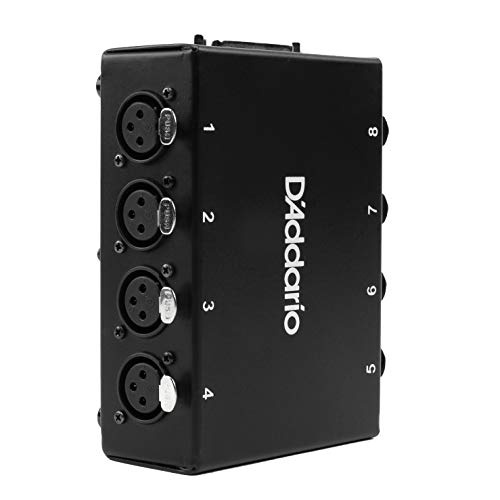
- Four XLR female and four combo jacks
- Rugged enclosure for road use
- Pairs with modular cable and breakout parts
Best For: Modular guitar stage and studio connections
Numbered 8-Channel Run
PRORECK 25-Foot 8-Channel Snake

- Eight XLR channels over 25 feet
- Numbered connectors simplify routing
- Circuit board supports solid connections
Best For: Medium-size XLR stage and recording setups
Expanded 12-Channel Coverage
PRORECK 25-Foot 12-Channel Snake

- Twelve XLR channels for larger setups
- Numbered box and fantail connectors
- Rugged 25-foot low-profile cable
Best For: Higher-channel-count live and studio systems
Compact 16-Channel Pick – Seismic Audio SACB-16x4x25
Seismic Audio SACB-16x4x25 16-Channel XLR Low Profile Circuit Board Snake Cable, 25-Feet
Check Price On AmazonFor stage snakes for guitar setups where a shorter run is practical, the Seismic Audio SACB-16x4x25 combines 16 XLR sends with four XLR returns in a 25-foot cable. Its low-profile circuit-board stage box helps keep the connection footprint manageable for indoor or outdoor audio use.
Best For: Guitar rigs and compact live-sound setups that need multiple XLR connections without a 50- or 100-foot cable.
Pros:
- Provides 16 XLR male sends and four XLR female returns.
- 25-foot length suits shorter stage layouts.
- Uses circuit board technology and a steel outer material.
Cons:
- The 25-foot reach may be limiting on larger stages.
- At 12 pounds, it is not an especially lightweight cable assembly.
This is a practical choice when channel capacity matters more than maximum reach. Its shorter length can also make storage and routing simpler for smaller guitar setups.
Durable 50-Foot Choice – On-Stage SNK16450V2
The On-Stage SNK16450V2 is a 50-foot option for stage snakes for guitar setups that need extra placement flexibility. It provides 16 channels and four returns, with hand-soldered, individually insulated XLR connectors and 100% OFC wiring.
Best For: Live guitar and professional audio setups that need a mid-length snake with a heavy-duty stage box and carrying features.
Pros:
- Offers 16 channels and four returns over a 50-foot run.
- Hand-soldered connectors are individually insulated.
- Includes wire-mesh strain relief, a metal chassis, carrying handle, and nylon bag.
- Backed by a three-year warranty.
Cons:
- Its 22.2-pound weight may be more than needed for small setups.
- A 50-foot cable can require more careful coiling and storage than a shorter snake.
With its combination of reach, strain relief, protective storage, and robust construction, this model is a well-rounded fit for regular live use when 25 feet is not enough.
Road-Ready 50-Foot Splitter – Seismic Audio SACB-16x4x50
For stage snakes for guitar setups requiring a longer run, the Seismic Audio SACB-16x4x50 supplies 16 channels in a 50-foot format. Its low-profile stage box, labeled send and return connections, and color-coded fantail are aimed at faster setup and teardown.
Best For: Professional guitar and live-sound connections where a 50-foot cable, clearly identified channels, and splitter-style returns are useful.
Pros:
- Provides 16 channels with nickel-plated XLR return connectors.
- Low-profile stage box reduces the footprint at the connection point.
- Individually shielded conductor pairs are designed to reject outside noise.
- Numerical labeling and a color-coded fantail simplify setup.
Cons:
- It weighs 11.5 pounds, which may still be substantial for minimal rigs.
- The one-year manufacturer defect and labor warranty is shorter than some alternatives.
This model emphasizes practical stage handling: its labels, color coding, low-profile box, and 50-foot reach can reduce setup confusion while keeping the connection layout flexible.
Maximum-Reach Option – On-Stage SNK164100V2
The On-Stage SNK164100V2 is the longest option here, making it suitable for stage snakes for guitar setups spread across large performance spaces. Its 100-foot cable carries 16 channels and four returns, with hand-soldered XLR connectors, 100% OFC wiring, and a heavy-duty metal chassis.
Best For: Large stages and professional audio layouts where a 100-foot reach is more important than compact storage.
Pros:
- Provides a 100-foot run with 16 channels and four returns.
- Uses hand-soldered, individually insulated XLR connectors.
- Includes wire-mesh strain relief, quick-release connectors, and a carrying handle.
- Includes a protective nylon bag and a three-year warranty.
Cons:
- Its 15.8 kg weight makes it the least convenient option for frequent carrying.
- The 100-foot length can be excessive for small stages and requires more storage space.
If your guitar setup must span a substantial stage or reach a distant mixer position, this snake offers the necessary distance and a durable feature set. For smaller venues, its extra length may be more cable than you need.
Compact Stage Drop – Whirlwind Mini 12 Low Profile
The Whirlwind Mini 12 is a compact option for stage snakes for guitar setups where a low-profile 12-channel XLR connection is useful. Its 25-foot length can help keep a monitor or stage box positioned without the bulk of a longer snake.
Best For: Guitar rigs and monitor setups needing a shorter, low-profile 12-channel XLR snake.
Pros:
- Provides 12 XLR channels in a 25-foot length.
- Uses XLR female-to-male connections.
- Low-profile design is suited to compact stage layouts.
Cons:
- Shorter than the 50-foot alternatives in this roundup.
- Offers 12 channels rather than the higher channel count of the Harmony Audio model.
Choose this model when portability and a manageable cable run matter more than maximum reach or channel capacity.
Balanced Stage Coverage – Elite Core PS12450 12 x 4 50' Snake
The Elite Core PS12450 is a practical choice for stage snakes for guitar setups that need a 50-foot run and balanced signal handling. It combines 12 channels with four returns, shielded lines, and hand-soldered XLR connectors for live-stage routing.
Best For: Guitarists and live-sound setups needing a 50-foot, 12-by-4 snake with balanced, shielded channels.
Pros:
- Provides a 12 x 4 channel configuration with 50 feet of reach.
- Uses 24-gauge shielded lines with foil shielding and drain wires.
- Includes fully balanced and shielded channels and returns.
- Comes with a bag for covering the stage box or fan during storage and transport.
Cons:
- At 21 pounds, it is heavier than the compact Whirlwind option.
- Its 12-channel configuration provides less input capacity than the 24-channel Harmony Audio snake.
This is a well-suited middle ground for setups that need long reach, dedicated returns, and more structured stage connectivity.
High-Channel Stage Routing – Harmony Audio 24-Channel 50' Stage Snake
The Harmony Audio HA-SB2450 is built for stage snakes for guitar setups that require substantial channel capacity and a 50-foot run. Its 20-send, four-return layout, labeled connections, and shielded XLR cable support organized live-sound and studio routing.
Best For: Large guitar rigs, live stages, and recording setups needing 20 sends and four returns over 50 feet.
Pros:
- Offers 24 channels arranged as 20 sends and four returns.
- Provides a 50-foot 3-pin XLR male-to-female connection layout.
- Uses 100% shielded XLR cable with 22-gauge conductors.
- Labels returns A, B, C, and D while numbering inputs for easier setup.
Cons:
- At 27.7 pounds, it is the heaviest option listed.
- Its larger channel count may be more than a small guitar setup requires.
For complex rigs, the extra sends and clearly labeled returns make this the most capable option here, while the 50-foot length supports flexible stage placement.
Compact Modular Hub – D'Addario Stage Box
For stage snakes for guitar setups that need a compact connection point, the D’Addario Modular Snake System Stage Box provides four XLR female jacks and four XLR-1/4-inch combo jacks in a rugged enclosure. It is designed for stage and studio use and can be paired with a core cable and matching eight-channel male breakout for a standard stage-box configuration.
Best For: Guitar rigs and small stage or studio setups that need a modular stage box with mixed XLR and combo inputs.
Pros:
- Combines four XLR female jacks with four XLR-1/4-inch combo jacks.
- Rugged enclosure is suitable for road use.
- Modular design can be matched with a needed-length core cable and breakout.
Cons:
- Requires additional compatible cable and breakout components for a complete snake configuration.
- Provides four XLR and four combo connections rather than a larger channel count.
This is a flexible stage-box component rather than a complete cable snake, making it a practical choice when you want to build a setup around your preferred cable length and breakout.
Numbered 8-Channel Run – PRORECK 25-Foot 8-Channel Snake
For stage snakes for guitar setups requiring several balanced XLR connections, this PRORECK model provides eight channels over a 25-foot cable. Its female connectors are on the box, while the male fantail connectors are numbered to simplify routing between stage equipment and an analog or digital console.
Best For: Live performances, recording sessions, and stage setups needing eight clearly labeled XLR channels over a 25-foot run.
Pros:
- Offers eight XLR channels in a 25-foot snake.
- Numbered box and fantail connectors make channel identification easier.
- Circuit-board construction is intended to support solid connections and reduce external noise.
- Rugged cable material is suited to transport and repeated use.
Cons:
- Uses XLR connections, so it is not a direct solution for instruments or devices without XLR connectivity.
- The fixed 25-foot length may not suit every stage layout.
With its numbered connectors and eight-channel layout, this is a straightforward choice for organizing multiple XLR lines when a 25-foot reach fits the setup.
Expanded 12-Channel Coverage – PRORECK 25-Foot 12-Channel Snake
For larger stage snakes for guitar setups, the PRORECK 12-channel model provides 12 XLR channels across a 25-foot cable. The female connectors are housed on the box, and the numbered male fantail connectors are designed to make connecting multiple microphones, mixers, interfaces, or soundboards easier.
Best For: Larger live-sound, recording, and studio systems that need 12 labeled XLR channels over a 25-foot distance.
Pros:
- Provides 12 XLR channels for higher-input-count setups.
- Includes numbered connectors for easier channel matching.
- Circuit-board construction is intended to support reliable connections and reduced external noise.
- Rugged cable material supports transport and regular use.
Cons:
- The 25-foot length is fixed and may be excessive or insufficient for some layouts.
- Its XLR-only design may require additional equipment for non-XLR connections.
This model makes the most sense when an eight-channel snake is too limiting. Its higher channel count adds routing capacity while retaining the numbered, low-profile format.
How We Picked These Stage Snakes for Guitar Setups
We focused on snakes that suit common guitar applications, including pedalboard-to-stage-box runs, amplifier connections, monitor or effects sends, and compact live or rehearsal rigs. The selection covers several channel counts, cable lengths, connector layouts, and form factors so you can compare a straightforward stage snake with more specialized splitter or modular systems.
We also considered practical setup concerns: labeling, handling, portability, connector access, and whether the cable is better suited to a small club, larger stage, recording space, or permanent installation. Specifications should be checked before purchase, especially channel direction and connector type.
Quick Comparison
| Priority | Look for | Best fit |
|---|---|---|
| Compact rig | 8–12 channels and 25-foot length | Small stages, rehearsals, and mobile pedalboards |
| General live use | 12–16 channels and 50-foot length | Club gigs and flexible guitar setups |
| Large stage coverage | 16 or more channels and 100-foot length | Long runs between stage and mixing position |
| Expanded routing | Multiple returns, splitter wiring, or modular connections | Complex rigs and installed systems |
Key Buying Factors for Stage Snakes for Guitar Setups
Channel Count and Direction
Count every signal you need to carry, then leave some spare capacity. A guitar rig may need channels for instrument outputs, amplifier microphones, effects returns, monitor feeds, or additional players. Pay close attention to whether the snake provides one-way sends, returns, or a combination such as 12 x 4 or 16 x 4.
Cable Length
Choose enough length to reach the stage box or mixer without stretching the cable across walkways. A 25-foot snake is easier to transport and often works for compact stages, while 50 feet is a versatile choice for clubs. A 100-foot model can cover larger venues but adds weight, storage demands, and coiling time.
Connector and Stage-Box Design
Verify the connector gender, XLR layout, labeling, and box orientation before ordering. Low-profile circuit-board designs can be convenient where space is limited, while a more substantial stage box may be easier to access repeatedly. Make sure the connections match your mixer, microphones, amplifiers, and pedals without requiring unexpected adapters.
Durability and Handling
Look for a cable jacket and connector strain relief appropriate to repeated gigging. Keep the snake away from sharp edges, power cables, and high-traffic areas, and coil it loosely after use. Good cable management extends service life regardless of brand.
Who Should Buy Which Stage Snakes for Guitar Setups?
Choose an 8- or 12-channel, 25-foot model if you play small venues, rehearse regularly, or want a manageable cable for a compact guitar and pedalboard setup. Choose a 12- or 16-channel, 50-foot snake for the best balance of reach, capacity, and portability at typical club gigs. Choose a 16-channel, 100-foot option when the mixing position is far from the stage and you need extra routing capacity. Choose a 24-channel or modular system if your rig includes several guitars, amplifiers, effects returns, monitor paths, or future expansion.
Before buying, sketch your signal flow and measure the longest required run. That simple check helps prevent paying for unnecessary length or discovering that a promising snake lacks the returns or connector layout your guitar setup requires.