Great audio starts with the right recorder. Whether you’re capturing dialogue, ambient sound, music rehearsals, or quick content on the move, handheld field recorders give you a practical way to record clean, reliable audio anywhere.
This roundup focuses on portable models that balance sound quality, ease of use, and real-world features like 32-bit float recording, built-in microphones, USB-C connectivity, and creator-friendly controls.
Best 10 Handheld Field Recorders Picks for 2026
Modular 4-Track Flexibility
Zoom H5 4-Track Handheld Recorder for Filmmakers
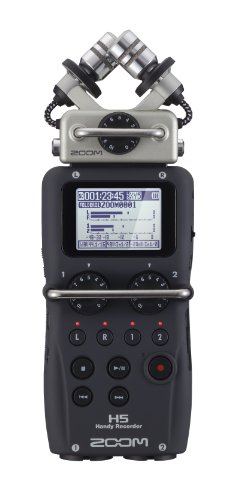
- Interchangeable input capsules for flexible setups
- Four-track recording with two XLR/TRS combo inputs
- USB audio interface with loop back function
Best For: Filmmakers and musicians needing flexible handheld capture
32-Bit Float Simplicity
TASCAM DR-05XP Portable Handheld Recorder

- 32-bit float recording with multiple format options
- Built-in omni mics handle loud sources up to 125dB SPL
- USB-C 2-in/2-out interface for computer recording
Best For: Creators wanting simple stereo capture with computer connectivity
Large-Mic Pro Capture

- 19.4mm X/Y mics with wide dynamic range
- 32-bit float recording for clip-free capture
- Dedicated gain knobs and up to 4-track recording
Best For: Field recordists wanting larger mics and tactile control
Adjustable Stereo Field Recording
TASCAM DR-07XP Handheld Recorder

- AB/XY condenser mics for flexible stereo pickup
- 32-bit float plus 24-bit, 16-bit, and MP3 modes
- USB-C 2-in/2-out interface and card support up to 512GB
Best For: Users wanting adjustable stereo mics and USB-C recording
Portable Clip-Free Stereo Recording

- 32-bit float stereo capture
- USB-C microphone mode
- Compact handheld design
Best For: Musicians and creators who want a simple handheld recorder for clear stereo audio.
Pro Two-Input Float Recording

- 32-bit float with dual A/D converters
- Two locking XLR mic/line inputs
- USB-C audio interface support
Best For: Filmmakers and journalists who need XLR input flexibility and clean, distortion-free field recording.
Versatile 4-Track Handheld Recording

- 4-track recording for bigger sessions
- Built-in mics plus two XLR/TRS inputs
- USB-C recording and streaming support
Best For: Creators who want a guided handheld recorder with flexible inputs and 4-track capture.
Compact Stereo Float Recorder
Xvive XV1-R Portable Stereo Audio Recorder

- 32-bit float recording for clip-free capture
- Built-in X/Y mics handle up to 130 dB SPL
- USB-C mic mode for PC, Mac, iOS, and Android
Best For: portable stereo recording with simple gain-free workflow
Flexible Multi-Input Recorder
Zoom H6 Essential Handheld Recorder

- 6-track 32-bit float recording across multiple sources
- Four XLR/TRS inputs plus built-in X/Y mics
- Works as a USB audio interface and SD recorder
Best For: multi-source recording for bands, interviews, and film crews
Compact Accessibility Recorder
Zoom H2 Essential Handheld Recorder

- Three built-in mics with nine selectable patterns
- 32-bit float capture at up to 96 kHz
- USB microphone mode with SD-card backup
Best For: portable recording with strong accessibility and simple setup
Modular 4-Track Flexibility – Zoom H5 4-Track Handheld Recorder for Filmmakers
The Zoom H5 is a versatile handheld field recorder for buyers who want more routing flexibility than a basic stereo unit. Its interchangeable capsule system, XLR/TRS combo inputs, and four-track simultaneous recording make it a practical choice for handheld recording in filmmaking, music, and general location work.
Best For: Filmmakers and musicians who want a handheld recorder with interchangeable capsules and expanded input options.
Pros:
- Interchangeable input capsules let you swap the mic setup as needed.
- Detachable XYH-5 capsule includes shock-mounted mics to help reduce handling noise.
- Two XLR/TRS combo inputs support selectable phantom power and a -20dB pad.
- Records four tracks simultaneously and can also work as a USB audio interface.
Cons:
- Runs on 2 AA batteries, so power management matters on longer shoots.
- Direct recording is limited to SD/SDHC cards up to 32GB.
Overall, the H5 stands out for buyers who need a handheld recorder that can adapt to different recording setups without becoming complicated. It balances practical field features with enough flexibility to handle audio-for-video and music capture.
32-Bit Float Simplicity – TASCAM DR-05XP Portable Handheld Recorder
The TASCAM DR-05XP is a straightforward handheld field recorder for buyers who want simple stereo capture with modern safety margins. With 32-bit float recording, built-in omnidirectional condenser mics, and USB-C audio interface support, it fits well for music, voice, meetings, and audio-for-video work.
Best For: Creators who want an easy-to-use handheld recorder for stereo recording and direct computer connection.
Pros:
- 32-bit float support helps preserve recordings across different input levels.
- Built-in omnidirectional condenser mics are rated for loud sources up to 125dB SPL.
- USB-C 2-in/2-out interface mode lets you record directly to a computer.
- Lightweight body and up to 17.5 hours of battery operation suit field use.
Cons:
- SD card and batteries are not included.
- It focuses on stereo recording rather than expandable multi-input workflows.
For shoppers comparing handheld field recorders, the DR-05XP is appealing if you want a compact stereo device without extra setup complexity. It leans into practical essentials rather than advanced expansion.
Large-Mic Pro Capture – Zoom H5 Studio Handy Recorder
The Zoom H5 Studio is a handheld field recorder aimed at users who want larger built-in mics and clip-free recording flexibility. Its 19.4mm X/Y capsule, 32-bit float support, dedicated gain knobs, and four-track recording make it a strong option for on-location audio work.
Best For: Field recordists and filmmakers who want larger stereo mics and hands-on level control.
Pros:
- 19.4mm X/Y microphones are the largest mics on a handheld recorder in this lineup.
- 32-bit float recording helps deliver clip-free captures with extended dynamic range.
- Dedicated gain knobs make level changes quick and intuitive.
- Can record up to 4 tracks at up to 192kHz in WAV format.
Cons:
- Uses 4 AA batteries, which is more than some smaller handheld recorders.
- It is heavier than the simpler pocket-style recorders in this group.
This model is best for buyers who prioritize better built-in stereo mics and fast hands-on control over the smallest possible size. It looks especially well-suited to serious handheld recording on set or in the field.
Adjustable Stereo Field Recording – TASCAM DR-07XP Handheld Recorder
The TASCAM DR-07XP is a practical handheld field recorder for buyers who want adjustable stereo mics and straightforward connectivity. Its AB/XY condenser microphones, 32-bit float support, and USB-C interface make it a useful option for music, voice, meetings, and audio-for-video recording.
Best For: Users who want a handheld recorder with adjustable stereo microphones and USB-C computer recording.
Pros:
- AB/XY condenser microphones give you two stereo pickup approaches in one recorder.
- 32-bit float, 24-bit, 16-bit, and MP3 recording modes add flexibility.
- USB-C 2-in/2-out audio interface mode supports direct computer recording.
- Supports microSD, microSDHC, and microSDXC cards up to 512GB.
Cons:
- Memory card is not included.
- Uses 2 AA batteries, which are sold separately.
The DR-07XP is a solid pick if you want handheld field recording with adjustable built-in mics rather than external input expansion. It keeps the focus on stereo capture, portability, and easy computer integration.
Portable Clip-Free Stereo Recording – Zoom H1 Essential Recorder
If you want one of the most straightforward handheld field recorders for quick, polished capture, the Zoom H1 Essential is built for that job. It records clear stereo audio for video clips, voiceovers, interviews, lectures, rehearsals, and ambient sound, while the 32-bit float design helps reduce clipping concerns during fast-moving recording sessions.
Best For: Musicians, podcasters, and creators who need a simple handheld recorder for clear stereo audio and USB-C convenience.
Pros:
- 32-bit float recording for clip-free capture
- Built-in X/Y stereo mics for easy handheld use
- USB-C mic mode for livestreams, calls, and desktop recording
- Lightweight and compact for travel, field notes, and quick setups
Cons:
- Uses 2 AAA batteries rather than a rechargeable internal battery
- No external XLR input options listed in the supplied details
The H1 Essential makes sense when portability and simple operation matter more than advanced routing. For handheld field recording, it covers the core basics well: stereo capture, USB use, and a format that works for a wide range of creative tasks.
Pro Two-Input Float Recording – Zoom F3 Field Recorder Bundle
Zoom F3 32-Bit Float Field Recorder Bundle | For Field Recording & Production | Battery Powered
Check Price On AmazonThe Zoom F3 is a more specialized choice among handheld field recorders, especially if you need professional input flexibility and worry-free gain staging. Its dual A/D converters and 32-bit float recording are designed to capture both very quiet and very loud sources without clipping, and the two locking XLR inputs make it easy to connect pro mics or line feeds.
Best For: Filmmakers, journalists, and sound designers who need a compact field recorder with XLR inputs and distortion-free capture.
Pros:
- 32-bit float recording with dual A/D converters
- Two balanced XLR mic/line inputs with phantom power
- Records uncompressed BWF files at high sample rates
- USB-C can be used for file transfer or as a 2×2 audio interface
Cons:
- Heavier than the handheld-style Zoom H1 and H4 options
- Bundle adds extras, which may be more than some users need
For field work where clean capture matters more than built-in mics, the F3 stands out. It is a strong pick if your workflow already centers on external microphones, mixers, or interview setups and you want dependable recording without constant level adjustments.
Versatile 4-Track Handheld Recording – Zoom H4 Essential Recorder
If you need one of the more flexible handheld field recorders for mixed creative work, the Zoom H4 Essential gives you more room to grow. It combines built-in stereo microphones with two XLR/TRS inputs, so you can handle interviews, music, podcasts, live performances, and video audio without switching devices.
Best For: Creators who want a guided handheld recorder with built-in mics, external inputs, and 4-track capture.
Pros:
- 4-track recording for larger projects and more capture flexibility
- Built-in stereo mics plus two XLR/TRS inputs
- USB-C recording or streaming to phone, tablet, or computer
- Spoken menu guidance helps make it easier to navigate
Cons:
- Uses 2 AA batteries rather than a built-in rechargeable power source
- Larger and heavier than the simpler H1 Essential model
The H4 Essential is a smart middle ground if you want more input options than a basic handheld recorder but do not need a full production kit. Its combination of built-in mics, external connections, and 4-track recording makes it a practical choice for a wide range of handheld field recording tasks.
Compact Stereo Float Recorder – Xvive XV1-R Portable Stereo Audio Recorder
If you want handheld field recorders that keep things simple without giving up modern audio quality, the Xvive XV1-R is built around 32-bit float capture and built-in X/Y mics. It handles loud sources without gain anxiety, records to microSD, and can also work as a USB microphone for quick transfers into a computer or mobile setup.
Best For: Musicians, podcasters, and filmmakers who want a compact recorder with clip-free stereo capture and USB mic flexibility.
Pros:
- 32-bit float recording helps prevent distortion in high dynamic range situations.
- X/Y microphones are rated for up to 130 dB SPL for loud performances and events.
- Supports WAV up to 96 kHz, plus AAC for smaller file sizes.
- USB-C mic mode works with PC, Mac, iOS, and Android.
Cons:
- No headphone jack for direct monitoring.
- Uses 2 AA batteries rather than a built-in rechargeable battery.
- Maximum file size is 4GB, so longer sessions are automatically split.
Overall, the XV1-R is a practical choice if you value easy, distortion-free recording in a lightweight handheld design. Its mix of 32-bit float audio, stereo mics, and USB use makes it especially versatile for day-to-day field work.
Flexible Multi-Input Recorder – Zoom H6 Essential Handheld Recorder
Among handheld field recorders, the Zoom H6 Essential stands out for users who need more inputs and more routing options in one unit. It records 32-bit float across six tracks, combines built-in X/Y microphones with four XLR/TRS combo inputs, and can double as a USB audio interface for computer or mobile workflows.
Best For: Bands, interview setups, and filmmakers who need multiple mic inputs plus clip-free recording.
Pros:
- 6-track 32-bit float recording keeps levels safe across multiple sources.
- Four XLR/TRS inputs plus built-in X/Y mics expand recording options.
- Interchangeable capsule system adds flexibility for different scenarios.
- USB audio interface mode supports PC, Mac, iOS, and Android.
Cons:
- Bulkier than simpler two-mic handheld recorders.
- Uses 4 AAA batteries instead of a built-in power source.
- Designed more for flexibility than pocketable portability.
The H6 Essential is a strong pick when your recordings need to grow beyond a basic stereo setup. Its extra inputs and capsule system make it a better fit for more complex field or production work.
Compact Accessibility Recorder – Zoom H2 Essential Handheld Recorder
If you need handheld field recorders that are easy to carry and flexible enough for a range of sessions, the Zoom H2 Essential is a very efficient option. It uses three built-in microphones with nine recording patterns, records in 32-bit float up to 96 kHz, and can function as a USB mic while also saving to SD card.
Best For: Journalists, podcasters, musicians, and field recorders who want a compact recorder with strong accessibility features.
Pros:
- Three mics and nine patterns support a wide range of recording setups.
- 32-bit float recording helps eliminate gain-adjustment stress.
- USB mic mode plus SD backup adds workflow flexibility.
- Audio guidance in 7 languages improves accessibility.
Cons:
- Built-in mics only, so there are no XLR inputs for external mics.
- Smaller screen may feel limited compared with larger handheld models.
- AA battery power may be less convenient than built-in rechargeables.
The H2 Essential is appealing when portability, simplicity, and accessibility matter most. It does a lot with a small footprint, making it a practical field recorder for everyday capture and quick setup work.
How We Picked the Best Handheld Field Recorders
We prioritized models that make field recording simpler without sacrificing audio quality. Key factors included recording format, mic quality, input options, portability, battery life, and how well each recorder fits common use cases like filmmaking, podcasting, music, and location sound.
We also looked for features that matter in the field, such as 32-bit float recording for easier gain management, USB-C connectivity for fast transfers or interface use, and intuitive controls that are easy to operate on set or outdoors.
Quick Comparison of Handheld Field Recorders
In general, compact stereo recorders are best for quick capture, interviews, and ambience. Models with more inputs are better for filmmakers and musicians who need to connect external mics or instruments. If you want the simplest workflow, choose a recorder with built-in mics and 32-bit float. If you need more flexibility, step up to a multi-track option.
Among Handheld Field Recorders, the biggest tradeoff is usually between simplicity and expandability. Smaller recorders are easier to carry and faster to use, while larger models offer more routing, more channels, and better options for growing productions.
Key Buying Factors for Handheld Field Recorders
Recording Format
32-bit float recording is a major advantage because it helps prevent clipping and reduces the need to ride input levels constantly. Standard 24-bit recording still works well, but it requires more careful gain staging.
Microphones and Inputs
Built-in stereo mics are convenient for run-and-gun work, while XLR or combo inputs are better for external microphones, instruments, and higher-end production workflows.
Portability and Power
Choose a size and power setup that matches your workflow. Some Handheld Field Recorders are pocketable and ideal for travel, while others are larger but offer more channels and better control surfaces.
Connectivity and Workflow
USB-C can be useful for file transfer, audio interface use, and fast integration with laptops or mobile rigs. Also consider file formats, onboard limiters, and media compatibility if you need a recorder that fits into an existing production setup.
Who Should Buy Which Handheld Field Recorders?
Filmmakers should look for models with dependable inputs, clean preamps, and flexible recording options. Musicians may prefer recorders with better multi-track capability and stronger line-in performance. Podcasters and content creators often benefit most from simple Handheld Field Recorders with built-in mics, easy controls, and USB-C support.
If you want the easiest all-around choice, pick a compact 32-bit float model with built-in stereo microphones. If you need to capture multiple sources or want room to grow, choose a more advanced recorder with extra inputs and track flexibility. The right handheld field recorder is the one that matches your recording style, not just the biggest feature list.