Portable streaming encoders make it easier to send live video from the field, studio, or event venue without a full rack setup. The best models balance video quality, protocol support, and dependable connectivity.
This roundup focuses on 10 practical options for creators, churches, educators, and live production teams that need compact hardware with real-world streaming flexibility.
Best 10 Portable Streaming Encoders Picks for 2026
All-in-One Portable Studio
YoloBox Pro Multi-Cam Live Switcher

- Encodes, switches, monitors, and records in one unit
- Streams to up to 3 platforms at once without subscription fees
- Includes 3 HDMI inputs plus USB, USB-C, and SD support
Best For: Mobile producers who need a compact multi-cam streaming hub
High-Resolution IP Encoder
URayCoder 4K HDMI to Ethernet Encoder
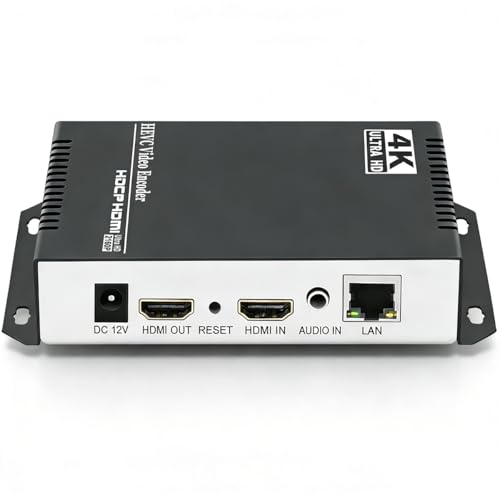
- Encodes HDMI to network video streams in H.265/H.264
- Supports RTSP, RTMP(S), SRT, HLS, WebRTC, and more
- Can push 4 streams with different protocols at once
Best For: Streamers who need a protocol-heavy HDMI-to-IP encoder
Premium Production Hub
YoloBox Extreme 4K Live Streaming

- Handles up to 8 HDMI inputs with 4K60 scaling
- Records each input separately for editing flexibility
- Includes NDI HX support, replay, and dual HDMI outputs
Best For: Advanced multi-cam productions needing portable 4K control
Ultra-Mini Mobile Encoder
DDMALL USB-Powered HDMI Encoder
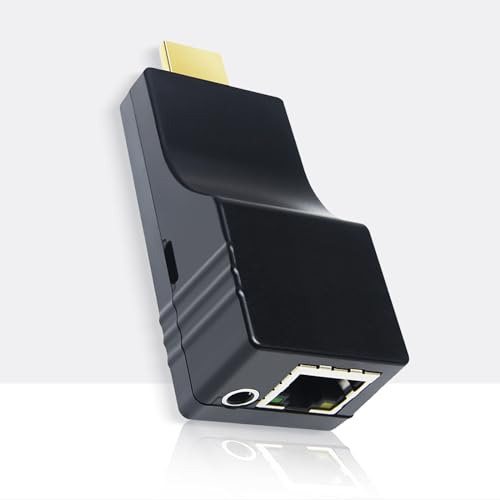
- Ultra-compact encoder with USB-powered operation
- Streams 1080p60 with H.265/H.264 support
- Adds real-time OSD and cloud-based remote control
Best For: Mobile streamers needing a tiny, low-power HDMI encoder
Premium 4K Hybrid Encoder

- HDMI or SDI input with PIP and side-by-side layouts
- Streams to up to six destinations with multiple protocols
- Records to SD card, USB, or network storage while live
Best For: Live production teams needing flexible 4K encoding and multi-destination streaming
Budget Multi-Protocol Encoder

- 4K HDMI input with H.265/H.264 encoding
- Supports many live protocols including RTMP, SRT, and HLS
- Adds captions, logos, timestamps, and basic video adjustments
Best For: HDMI streamers who want broad protocol support in a compact unit
Portable HDMI IP Encoder
Magewell Ultra Encode HDMI Plus

- 4K HDMI encoding with loop-through for monitoring
- Streams with RTMP, SRT, NDI|HX, HLS, and UDP/RTP
- Records while streaming to internal, USB, or network storage
Best For: HDMI-based productions needing streaming, recording, and loop-through
Premium 4K Remote-Production Encoder
Blackmagic Design Streaming Encoder 4K
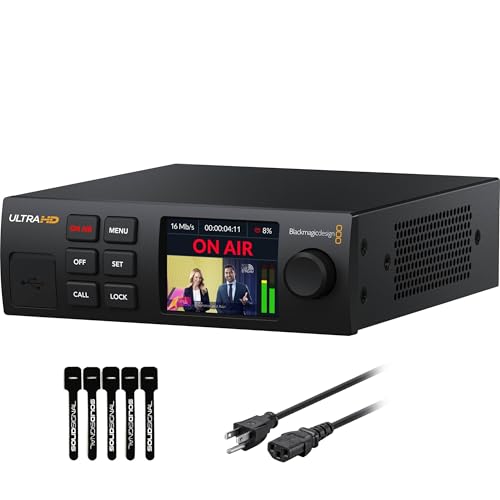
- 4K/HD H.264 and H.265 up to 2160p60
- 12G-SDI input with standards conversion
- Ethernet + mobile with auto-failover
Best For: Broadcast-style live streaming and remote productions
Multi-Protocol HDMI Encoder
URayCoder 4K HDMI to IP Encoder

- 4K UHD HDMI input with H.265/H.264
- Up to 4 simultaneous protocol outputs
- Text, logos, timestamps, and video controls
Best For: HDMI live streaming with multi-protocol distribution
Compact Browser-Setup Encoder
UNISHEEN 1080P60 HDMI Video Encoder

- 1080P60 H.265/H.264 hardware encoding
- Browser setup with no software needed
- Compact design for 24/7 deployment
Best For: Small streaming, signage, and monitoring setups
All-in-One Portable Studio – YoloBox Pro Multi-Cam Live Switcher
If you want portable streaming encoders that bundle several jobs into one box, the YoloLiv YoloBox Pro is built for mobile live production. It combines encoding, switching, monitoring, and recording, while also giving you 4G LTE, WiFi, Ethernet, and bonding support for flexible streaming setups.
Best For: Creators, event teams, and churches that need a compact all-in-one live streaming unit with multi-source switching.
Pros:
- All-in-one encoder, switcher, monitor, and recorder in one portable device
- Supports up to 3 horizontal platforms simultaneously with no subscription fees
- Offers 3 HDMI inputs, 1 USB, 1 USB-C, SD card support, and multiple audio connections
- Includes built-in features like web URL overlay, video cropping, instant replay, and auto-switching
Cons:
- Bonding is supported, but additional charges apply
- Battery life is listed at over 4 hours, which may be limiting for longer shoots
The YoloBox Pro is a strong fit when you need a portable streaming encoder that can simplify a full live workflow. Its bigger touchscreen and broad input support make it especially practical for multi-camera productions on the move.
High-Resolution IP Encoder – URayCoder 4K HDMI to Ethernet Encoder
This is a straightforward option for portable streaming encoders when your priority is turning HDMI into network video streams with minimal fuss. The URayCoder unit supports 4K input, multiple streaming protocols, and simultaneous output to several formats, making it a flexible encoder for IP-based live delivery.
Best For: Users who need a hardware HDMI-to-Ethernet encoder with broad protocol support and 4K input.
Pros:
- Supports H.265/H.264 dual encoding with up to 4K UHD input
- Compatible with many protocols, including RTSP, RTMP(S), SRT, HLS, WebRTC, and more
- Can output 4 video streams with different protocols at the same time
- Includes customization tools like text, logos, timestamps, cropping, rotation, and mirroring
Cons:
- Functions as a dedicated encoder rather than an all-in-one switching system
- Relies on HDMI source devices and Ethernet/network setup for use
If you already have a camera or HDMI source and just need reliable encoding, this model offers a practical, protocol-rich path to streaming. It is especially appealing for users who value network flexibility over integrated production controls.
Premium Production Hub – YoloBox Extreme 4K Live Streaming
Among portable streaming encoders, the YoloLiv YoloBox Extreme stands out for creators who need more inputs, more recording flexibility, and a larger control surface. It brings 8 HDMI inputs, 2 HDMI outputs, ISO recording, and integrated NDI HX support into a single portable production box.
Best For: High-end live productions, sports, and events that need advanced multi-camera control in a portable system.
Pros:
- Supports up to 8 HDMI sources with built-in 4K60 scaling
- Offers 2 assignable HDMI outputs for Program, Multiview, or Preview
- Records each input separately for flexible post-production workflows
- Includes free NDI HX support and instant replay tools for live events
Cons:
- At 2 kg, it is heavier than smaller portable encoder boxes
- Higher-end feature set may be more than casual streamers need
The YoloBox Extreme is a serious mobile production tool when your workflow demands more than basic encoding. Its mix of multi-source input, ISO recording, and touch control makes it a strong choice for demanding live environments.
Ultra-Mini Mobile Encoder – DDMALL USB-Powered HDMI Encoder
If you need portable streaming encoders for tight setups and frequent movement, the DDMALL CEV-2K is built to stay small and simple. Its ultra-mini form factor, USB power options, and cloud-based control make it a practical encoder for compact live streaming jobs.
Best For: Streamers who want a tiny, low-power HDMI encoder for mobile or space-constrained setups.
Pros:
- Ultra-mini size and very light weight for easy portability
- USB-powered design can run from a source device or power bank
- Supports 1080p60 encoding with H.265/H.264 and low-latency protocols
- Includes real-time OSD customization and remote cloud-based control
Cons:
- Limited to 1080p rather than 4K workflows
- Designed as a compact encoder, so it does not replace a full switcher or production panel
The CEV-2K is a smart pick when portability and power efficiency matter more than advanced multicam features. It suits simple HDMI-to-stream workflows where you want dependable encoding in the smallest possible package.
Premium 4K Hybrid Encoder – Magewell Ultra Encode AIO
If you want portable streaming encoders that can handle more than just a single camera feed, the Magewell Ultra Encode AIO is built for flexible live production. It supports HDMI or SDI input, multi-protocol delivery, and onboard recording, making it a strong fit when you need one compact device to cover streaming, monitoring, and archiving.
Best For: Live producers who need HDMI/SDI flexibility, 4K encoding, and multi-destination streaming in one unit.
Pros:
- Accepts either HDMI or SDI input, with picture-in-picture or side-by-side layouts.
- Supports up to 4K encoding with H.264 or HEVC compression.
- Can stream to up to six destinations using RTMP, RTMPS, SRT, NDI|HX2/HX3, HLS, and more.
- Includes recording to SD card, USB storage, or network drives while streaming.
Cons:
- May be more device than needed if you only need basic single-platform streaming.
- Rack-mountable design may be less convenient for ultra-light travel setups.
Overall, this is a feature-rich option for users who need serious workflow flexibility in a portable streaming encoder. Its mix of input options, network controls, and recording support makes it especially useful for demanding live production environments.
Budget Multi-Protocol Encoder – URayCoder 4K HDMI to Stream
For buyers comparing portable streaming encoders that focus on straightforward HDMI ingestion and broad streaming support, this URayCoder model is a practical pick. It accepts 4K HDMI input, supports a wide range of live streaming protocols, and includes basic on-device customization tools for captions, logos, and stream adjustments.
Best For: HDMI-based live streamers who want wide protocol support and easy setup in a compact encoder.
Pros:
- Supports 4K UHD HDMI input with H.265/H.264 encoding.
- Works with many protocols, including HTTP, RTSP, RTMP(S), SRT, HLS, WebRTC, and more.
- Can output up to four streams with different protocols at once.
- Offers text, scrolling captions, logos, timestamps, cropping, rotation, flipping, and mirroring.
Cons:
- HDMI-only design limits flexibility for SDI-based workflows.
- Feature set is centered on streaming output rather than integrated recording or monitoring.
This encoder is a good match if you want broad platform compatibility without a complicated setup. It covers the essentials for live streaming while still giving you room to customize the video output.
Portable HDMI IP Encoder – Magewell Ultra Encode HDMI Plus
If you need portable streaming encoders for HDMI-based production, the Magewell Ultra Encode HDMI Plus offers a strong blend of 4K support, IP workflow compatibility, and local monitoring. It combines HDMI loop-through, multi-protocol streaming, and built-in recording, so it fits well in setups where mobility and production control both matter.
Best For: HDMI camera, switcher, and AV workflows that need streaming, recording, and loop-through in one device.
Pros:
- Encodes HDMI up to 4096×2160p30 with loop-through output for monitoring or pass-through.
- Supports RTMP, RTMPS, SRT, NDI|HX, HLS, and TS over UDP/RTP.
- Can record to internal storage, USB storage, or network locations while streaming.
- Includes PoE, Wi-Fi, and optional 4G/5G USB modem support for flexible deployment.
Cons:
- HDMI-focused design may not suit SDI workflows.
- Internal storage is fixed at 128 GB, so larger archives may require external or network storage.
For teams that want a compact encoder with modern network options, this model stands out for its balance of portability and production features. It is especially useful when you need a clean HDMI workflow with both local and remote output options.
Premium 4K Remote-Production Encoder – Blackmagic Design Streaming Encoder 4K
If you want a portable streaming encoder that feels closer to a broadcast tool than a basic streaming box, the Blackmagic Design Streaming Encoder 4K is built for that workflow. It handles up to 2160p60 in H.264 or H.265, streams directly to major platforms, and skips the need for an encoding PC.
Best For: Broadcast-style live streaming, remote productions, and teams that need built-in failover and camera control.
Pros:
- Supports 4K/HD streaming in H.264 and H.265 up to 2160p60.
- Includes 12G-SDI input with standards conversion plus SDI loop and dual monitor outputs.
- Offers Ethernet and 5G/4G mobile connectivity with automatic failover.
- Adds closed captions, timecode passthrough, REST API control, tally, and talkback support.
Cons:
- Designed around SDI workflows, so HDMI-only users may not need this level of integration.
- More feature-rich than a simple plug-and-stream encoder.
This is the strongest option here for users who need a compact but highly capable streaming hub with pro-level control features. If your setup values reliability, accessibility, and remote-production tools, it stands out immediately.
Multi-Protocol HDMI Encoder – URayCoder 4K HDMI to IP Encoder
This portable streaming encoder is aimed at users who want broad format support from an HDMI source. It accepts up to 4K UHD input, supports H.265 and H.264 encoding, and can push streams over a wide range of protocols for platform and network flexibility.
Best For: HDMI-based live streaming setups that need multi-protocol output and customizable overlays.
Pros:
- Supports 4K UHD HDMI input with H.265/H.264 dual encoding.
- Works with many protocols including RTSP, RTMP(S), SRT, HLS, WebRTC, and more.
- Can output up to 4 simultaneous streams with different protocols.
- Includes text, scrolling captions, logos, timestamps, and video adjustment tools.
Cons:
- Limited to HDMI input, so it is not as flexible for SDI-based rigs.
- Max 4K frame rate is 30fps, which may matter for higher-motion workflows.
For creators or integrators who want one box that can feed many destinations at once, this model offers strong versatility. It is especially appealing if you care about protocol breadth and on-stream branding tools.
Compact Browser-Setup Encoder – UNISHEEN 1080P60 HDMI Video Encoder
For buyers who want portable streaming encoders without a complicated setup, this UNISHEEN model focuses on simplicity and practical everyday use. It delivers 1080P60 hardware encoding, supports a broad set of streaming and IP protocols, and can be configured through a browser with no PC software required.
Best For: Small live streaming rigs, signage, and monitoring setups that need easy browser-based setup.
Pros:
- Hardware H.265/H.264 encoding at 1080P60.
- Supports SRT, RTMP(S), RTSP, HLS, WebRTC, and other common protocols.
- Browser-based setup requires no software or drivers.
- Palm-sized design with low power use for 24/7 deployment.
Cons:
- Limited to 1080P60 rather than 4K streaming.
- Basic networking knowledge is still helpful for advanced configurations.
This is a practical choice if you want a compact encoder that is easy to deploy and doesn’t depend on special software. It gives you the core streaming features most users need, with enough protocol support to fit a variety of small-scale setups.
How We Picked the Best Portable Streaming Encoders
We focused on features that matter in real deployments: input options, codec support, protocol compatibility, reliability, and portability. For Portable Streaming Encoders, the biggest advantage is the ability to stream from a compact device without depending on a laptop-heavy workflow.
We also prioritized units that support common streaming destinations and modern delivery methods such as RTMP, SRT, HLS, and WebRTC. That matters if you need to broadcast to social platforms, private CDNs, IPTV systems, or internal networks.
Quick Comparison
As a rule, all-in-one switcher-style units are best for mobile multi-camera production, while standalone encoders are a better fit if you already have cameras and audio gear. HDMI-only models are simpler and more affordable, while HDMI/SDI or dual-input models offer more flexibility for pro workflows.
If you need monitoring, recording, or looping output, look for those capabilities before deciding. If your priority is minimal setup and stable contribution streaming, a single-input encoder with Ethernet and broad protocol support may be the smartest choice.
Key Buying Factors for Portable Streaming Encoders
Inputs and Signal Flexibility
Check whether you need HDMI, SDI, or both. HDMI works well for cameras and consumer gear, while SDI is often preferred in professional video environments because it handles longer cable runs more reliably.
Codec and Resolution Support
H.264 remains widely compatible, but H.265 can reduce bandwidth demands when your network is limited. If you expect 4K capture or delivery, confirm that the encoder supports true 4K workflow rather than only accepting 4K input and downscaling output.
Protocols and Platform Compatibility
Choose Portable Streaming Encoders with the streaming protocol you actually need. RTMP is still common for platforms like YouTube and Facebook Live, while SRT is valuable for more secure and resilient contribution links. HLS and WebRTC can be useful for specific distribution or low-latency use cases.
Power, Networking, and Workflow
Ethernet is usually more stable than Wi-Fi for live production, and PoE can simplify setup in fixed locations. If you travel often, consider weight, power options, and whether the encoder can operate independently without extra software.
Who Should Buy Which Portable Streaming Encoders?
If you run a multi-camera show, choose an all-in-one live switcher encoder for fewer devices and faster setup. If you already own cameras, a standalone HDMI or SDI encoder is usually the better value.
Creators, churches, schools, and event teams should match the encoder to the venue and bandwidth conditions. Pick a compact H.264 model for simple streaming, a 4K or dual-input model for higher-end productions, and an SRT-capable unit if stream stability is your top concern.
In short, the best Portable Streaming Encoders are the ones that fit your cameras, your network, and your distribution goals without adding unnecessary complexity.