The best laptops for programming balance processor performance, memory, storage, display quality, keyboard comfort, and dependable connectivity. The right choice depends on whether you write web apps, compile large projects, run containers, build games, or work with AI tools.
These 10 laptops cover a broad range of programming needs, including affordable business machines, Linux-friendly options, large-screen systems, and high-performance models with dedicated graphics.
Best 10 Laptops for Programming Picks for 2026
Best Performance
Acer Nitro V 16S AI Gaming Laptop

- 32GB DDR5 RAM and a 1TB Gen 4 SSD
- Dedicated RTX 5060 graphics for AI and GPU workloads
- 16-inch WUXGA display with 100% sRGB coverage
Best For: Demanding development, AI tools, and game programming
Best Business Developer Laptop

- Intel Core Ultra 7 255H with 16 cores
- 32GB DDR5 RAM and 1TB NVMe storage
- Thunderbolt 4 and Windows 11 Pro
Best For: Professional development and multitasking
Best Value Windows Option

- Ryzen 7 7730U processor with eight cores
- 32GB RAM and a 1TB PCIe SSD
- Windows 11 Pro and a numeric keypad
Best For: Everyday programming, study, and business use
Best Linux Starter
Lenovo Linux Mint Business Laptop

- Linux Mint Cinnamon comes preinstalled
- 16GB RAM with a Core i5-1335U processor
- Full HD anti-glare display and full keyboard
Best For: Linux learning, scripting, and lightweight development
Best High-RAM Value

- Ryzen 5 6600H supports sustained multitasking
- 32GB RAM and 1TB SSD are ready for large workloads
- Large display with RAM and SSD upgrade room
Best For: Students and developers needing memory and screen space
Best Touchscreen Business Pick

- Large 17.3-inch FHD touchscreen with 100% sRGB
- Thunderbolt 4 and HDMI 2.1 support flexible setups
- Windows 11 Pro with business-friendly camera privacy features
Best For: Business programmers wanting a large touch display
High-Performance Pick
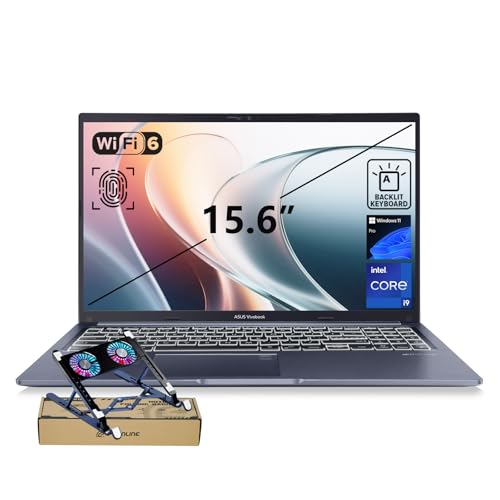
- 14-core Intel Core i9-13900H
- 32GB RAM and 1TB SSD
- Privacy shield, fingerprint reader, and backlit keyboard
Best For: Demanding development and multitasking
Value Workhorse

- Six-core Ryzen 5 5500U processor
- 16GB RAM with 512GB NVMe SSD
- HDMI, Ethernet, USB-C, and numeric keypad
Best For: Everyday coding and student development
Memory-Rich Choice

- Eight-core Ryzen 7 5825U processor
- 40GB RAM and 1TB SSD
- Business ports, numeric keypad, and webcam
Best For: Heavy multitasking and local development environments
Best Performance – Acer Nitro V 16S AI Gaming Laptop
For demanding programming workloads, the Acer Nitro V 16S combines an eight-core Ryzen 7 processor, 32GB of DDR5 memory, and a 1TB PCIe Gen 4 SSD. Its dedicated RTX 5060 GPU also makes it a strong choice for developers who work with AI tools, GPU-accelerated applications, or game engines.
Best For: Programmers who need substantial multitasking power and dedicated graphics for AI, game development, or content creation.
Pros:
- 32GB DDR5 RAM supports large projects, virtual machines, and many open applications.
- 1TB Gen 4 SSD provides fast storage and useful capacity for development tools and source files.
- RTX 5060 dedicated graphics can accelerate compatible AI and GPU workloads.
- 16-inch WUXGA display offers 100% sRGB coverage and a smooth 180Hz refresh rate.
Cons:
- Gaming-oriented design and 4.6-pound weight are less convenient for frequent travel.
- Windows 11 Home may require an upgrade for some professional workflows.
The Nitro V 16S is overkill for basic web development, but its memory, storage, and discrete GPU provide considerable headroom for demanding programming environments.
Best Business Developer Laptop – Lenovo ThinkPad E16
The Lenovo ThinkPad E16 is a practical option among laptops for programming, pairing an Intel Core Ultra 7 255H processor with 32GB of DDR5 RAM and a 1TB NVMe SSD. Windows 11 Pro, Thunderbolt 4, and extensive connectivity make it well suited to professional development setups.
Best For: Developers who want strong multitasking, business features, and flexible connections for monitors and peripherals.
Pros:
- 16-core Intel processor delivers strong performance for coding, analysis, and professional applications.
- 32GB RAM and 1TB PCIe 4.0 SSD support large projects and rapid file access.
- Thunderbolt 4, HDMI 2.1, USB ports, and Ethernet simplify desk-based development setups.
- Windows 11 Pro includes enhanced security and management features.
Cons:
- Integrated Intel Arc graphics are less suitable for demanding GPU-focused development than a dedicated GPU.
- The 60Hz display prioritizes productivity over high-refresh visuals.
With a high-core-count processor and business-focused connectivity, the ThinkPad E16 offers a balanced platform for software development, especially when paired with external displays or a docking station.
Best Value Windows Option – HP 255 G10 Ryzen 7 Laptop
The HP 255 G10 delivers a straightforward programming setup with an eight-core AMD Ryzen 7 7730U, 32GB of RAM, and a 1TB PCIe SSD. Its Windows 11 Pro installation and full-size keyboard with numeric keypad make it a practical fit for everyday development and business use.
Best For: Students, office-based developers, and programmers who want generous memory and storage without dedicated graphics.
Pros:
- 32GB RAM is well suited to IDEs, browser tabs, and simultaneous applications.
- 1TB PCIe SSD offers fast boot times and ample project storage.
- Ryzen 7 processor provides eight cores and up to 4.5GHz turbo speed.
- Windows 11 Pro adds enterprise security and management features.
Cons:
- Integrated Radeon graphics are not intended for demanding GPU or game development.
- The 250-nit, 45% NTSC display is functional but not designed for color-critical work.
- Its 60Hz screen is less suited to high-refresh visual work.
This HP is a sensible productivity-first choice for compiling code, running development tools, and managing large numbers of browser tabs, provided your workflow does not depend on a discrete GPU.
Best Linux Starter – Lenovo Linux Mint Business Laptop
This Lenovo business laptop comes ready with Linux Mint Cinnamon, making it an appealing entry point for programmers who prefer a Linux-based environment. The Core i5-1335U, 16GB RAM, 256GB SSD, and anti-glare Full HD display cover everyday coding, scripting, and learning tasks.
Best For: Linux-focused students, beginner programmers, and developers working with lightweight tools and command-line workflows.
Pros:
- Linux Mint Cinnamon is preinstalled for a ready-to-use Linux programming environment.
- 16GB RAM supports common IDEs, terminals, browsers, and development utilities.
- Full HD anti-glare display and full keyboard with number pad suit everyday productivity.
- HDMI, USB ports, card reader, and privacy-shutter webcam provide useful connectivity and privacy features.
Cons:
- 256GB SSD offers substantially less project and tool storage than the other options.
- Integrated Intel graphics are intended for general use rather than GPU-intensive development.
- Older Wi-Fi 5 and Bluetooth 4.2 connectivity may be less current than newer models.
The Lenovo is a sensible low-complexity choice for learning programming on Linux, though developers with large toolchains, virtual machines, or extensive repositories may quickly want additional storage.
Best High-RAM Value – NIMO 17.3-inch Ryzen 5 Laptop
If you need laptops for programming with plenty of memory for development tools, browsers, documents, and virtualized workloads, the NIMO pairs a six-core Ryzen 5 6600H with 32GB of DDR5 RAM and a 1TB PCIe SSD. Its large Full HD display also gives coding and split-screen work more room.
Best For: Students, remote workers, and entry-level developers who prioritize multitasking capacity and a large screen.
Pros:
- Ryzen 5 6600H with 6 cores and 12 threads provides useful performance headroom for coding and sustained daily workloads.
- 32GB DDR5 RAM and a 1TB PCIe SSD support large projects, multitasking, and quick storage access.
- 17.3-inch 1920 x 1080 display, backlit keyboard, and upgrade room up to 64GB RAM and 4TB SSD.
- Includes a 2-year manufacturer warranty and 100W USB-C PD support.
Cons:
- Integrated Radeon 660M graphics are aimed at everyday visual work and casual gaming rather than demanding GPU development.
- The large 17.3-inch format is less convenient for frequent travel than a smaller laptop.
The NIMO is a practical choice when programming performance, memory, and screen space matter more than portability. Its upgradeable design adds useful longevity for growing projects.
Best Touchscreen Business Pick – HP OmniBook 7 17.3-inch
Among laptops for programming, the HP OmniBook 7 stands out for its 17.3-inch touch display, Windows 11 Pro, modern connectivity, and business-focused features. Its 16GB LPDDR5x memory and 1TB SSD provide a solid starting point for coding, office work, and web-based development tasks.
Best For: Programmers and business users who want a large touchscreen, Windows 11 Pro, and strong peripheral connectivity.
Pros:
- Intel Core Ultra 5 226V and Intel Arc 130V integrated graphics support everyday programming and productivity workflows.
- 17.3-inch Full HD IPS touchscreen offers 400 nits brightness and 100% sRGB coverage.
- Thunderbolt 4, HDMI 2.1, USB ports, Wi-Fi 6E, and Bluetooth 5.3 simplify desk setups and accessory use.
- Backlit keyboard, numeric keypad, camera privacy shutter, 5MP IR camera, and Windows 11 Pro add workplace convenience.
Cons:
- 16GB of RAM provides less headroom than the 32GB configurations in this roundup.
- Integrated graphics are not intended for demanding GPU-intensive development or rendering.
- The 17.3-inch design and 42Wh battery may be less appealing for highly mobile users.
The OmniBook 7 is a feature-rich option for programmers who value a spacious touch interface and modern ports. It is especially well suited to a fixed desk or business-oriented setup.
Best Rugged Budget Workhorse – Lenovo V15 Core 7 Laptop
For buyers comparing laptops for programming on a practical budget, the Lenovo V15 combines a 10-core Intel Core 7-240H processor, 32GB DDR5 RAM, and a 1TB NVMe SSD. Its Windows 11 Pro installation, broad port selection, and MIL-STD-810H testing make it a sensible everyday development and productivity machine.
Best For: Students, small-business users, and developers who need strong multitasking, business features, and external-monitor support.
Pros:
- 10-core Intel Core 7-240H, 32GB DDR5 RAM, and 1TB PCIe NVMe storage support responsive development workflows.
- USB-C, two USB-A ports, HDMI, Ethernet, Wi-Fi 6, and support for two external 4K monitors improve desk flexibility.
- Windows 11 Pro includes BitLocker, Remote Desktop, and device-management features.
- Anti-glare Full HD display, privacy-shutter webcam, numeric keypad, and MIL-STD-810H testing suit everyday business use.
Cons:
- Integrated Intel Graphics are suitable for general programming but not specialized GPU-heavy workloads.
- The display is described as Full HD anti-glare rather than a high-gamut or high-resolution panel.
- The memory upgrade and warranty arrangement involves separate Lenovo and reseller coverage.
The Lenovo V15 offers a balanced programming setup with generous memory, a capable processor, and unusually useful business connectivity. It is a strong fit for users who work at a desk and occasionally connect multiple displays.
High-Performance Pick – ASUS Vivobook 15 i9
For demanding laptops for programming workloads, the ASUS Vivobook 15 combines a 14-core Intel Core i9-13900H processor with 32GB of RAM and a 1TB SSD. It is well suited to multitasking, large development environments, and AI-oriented workloads, while the included cooler is intended to help manage heat during sustained use.
Best For: Developers who need strong multitasking performance, abundant memory, and substantial local storage.
Pros:
- Intel Core i9-13900H with 14 cores for demanding workloads
- 32GB DDR4 RAM and a 1TB PCIe M.2 SSD
- Backlit keyboard, fingerprint reader, and webcam privacy shield
- HDMI, USB-C, multiple USB-A ports, and Windows 11 Pro
Cons:
- Integrated Intel UHD Graphics are not intended for dedicated graphics workloads
- 15.6-inch display is limited to 1920×1080 at 60Hz
This Vivobook is the performance-focused option in the group. Its high-end processor and generous memory make it a strong choice for compiling, running multiple tools, and working with virtualized or AI-assisted workflows, though its integrated graphics and standard FHD panel keep it oriented toward productivity rather than graphics-heavy development.
Value Workhorse – Lenovo V15 Ryzen 5
The Lenovo V15 is a practical choice among laptops for programming if you want a capable six-core processor, 16GB of RAM, and fast SSD storage without moving to a higher-end configuration. Its FHD screen, wired Ethernet, HDMI, and numeric keypad also make it useful for home-office or business setups.
Best For: Students, entry-level developers, and business users running code editors, browsers, and everyday development tools.
Pros:
- Six-core, 12-thread AMD Ryzen 5 5500U processor
- 16GB RAM and a 512GB PCIe NVMe SSD
- FHD display with HDMI, USB-C, and RJ45 Ethernet
- Windows 11 Pro and a built-in numeric keypad
Cons:
- Memory is listed with a 16GB maximum, limiting upgrade flexibility
- Integrated AMD Radeon Graphics are suited to general productivity rather than demanding graphics work
The V15 offers a balanced baseline for programming, especially when your workflow centers on lightweight applications, web development, coursework, and office tools. It has less headroom than the Ryzen 7 and Core i9 options, but its 16GB memory and six-core CPU provide a sensible everyday starting point.
Memory-Rich Choice – Lenovo V15 Ryzen 7
For programmers who keep many applications, browser tabs, and development services open, this Lenovo V15 pairs an eight-core AMD Ryzen 7 5825U with 40GB of RAM and a 1TB SSD. The 15.6-inch FHD display and business-friendly connectivity make it a flexible desktop-replacement-style option.
Best For: Multitasking developers who need unusually generous memory and storage for local tools and projects.
Pros:
- Eight-core, 16-thread Ryzen 7 5825U processor
- 40GB RAM and a 1TB PCIe NVMe SSD
- USB-C, USB-A, HDMI, RJ45 Ethernet, and webcam
- Numeric keypad, Windows 11 Pro, and listed battery life of up to 8 hours
Cons:
- Integrated AMD Radeon Graphics are not a substitute for a dedicated GPU
- FHD display is limited to a 60Hz refresh rate
This is the most memory-forward Lenovo option for programming, giving you considerable room for simultaneous editors, containers, documentation, and browser sessions. It is a particularly practical fit for developers who value capacity and connectivity over a high-resolution display or dedicated graphics.
How We Picked These Laptops for Programming
We focused on specifications that directly affect development work: processor performance, RAM capacity, SSD storage, display usability, keyboard design, operating system, and upgrade potential. We also considered practical features such as numeric keypads, webcam privacy controls, HDMI, Ethernet, Wi-Fi, and battery-friendly processor platforms.
The selection includes mainstream business laptops for coding and coursework, as well as more powerful systems suited to Android development, virtual machines, game engines, data work, and local AI experimentation. Because listed configurations can vary by seller, confirm the exact RAM, storage, operating system, and processor before buying.
Quick Comparison
| Best For | Recommended Configuration | Why It Matters |
|---|---|---|
| Students and web developers | 16GB RAM, modern Core i5 or Ryzen 5, 512GB SSD | Good everyday responsiveness and manageable cost |
| Heavy compiling and multitasking | 32GB RAM, Core 7/Core i9 or Ryzen 7 | Handles IDEs, browsers, containers, and builds more comfortably |
| AI, 3D, and game development | Dedicated RTX graphics, 32GB RAM, 1TB SSD | Provides GPU acceleration and room for large projects |
| Linux development | Linux-installed or Linux-compatible business laptop | Reduces setup work and supports common developer tools |
Key Buying Factors for Laptops for Programming
Processor
Prioritize a recent multi-core Intel Core Ultra, Core 7, Core i7, AMD Ryzen 7, or comparable processor when you compile frequently or run several development services. A capable Core i5 or Ryzen 5 is usually sufficient for web development, scripting, and schoolwork.
RAM and Storage
Choose at least 16GB of RAM for modern IDEs, browsers, databases, and containers. Select 32GB if you use virtual machines, emulators, AI tools, or large codebases. A 512GB SSD is a sensible minimum; 1TB is better for SDKs, repositories, virtual machines, and media assets.
Display and Keyboard
A sharp 15.6- or 16-inch Full HD display gives useful workspace without making the laptop excessively large. A 17.3-inch screen is more comfortable for split-screen coding but less portable. Look for a firm, comfortable keyboard, useful key travel, and a backlight if you often work in dim environments.
Graphics and Connectivity
Integrated graphics are adequate for most programming. A dedicated GPU is valuable for game development, 3D workloads, CUDA-compatible tools, local AI models, and video work. HDMI, USB ports, Wi-Fi 6 or newer, and Ethernet can simplify desk and lab setups.
Who Should Buy Which Laptops for Programming?
Students and general developers: Choose a 16GB business laptop with a modern Core i5 or Ryzen 5 and a 512GB SSD. Professional developers: Move to 32GB RAM, a faster Core 7, Core i9, or Ryzen 7 processor, and 1TB storage for smoother multitasking.
Game and AI developers: Choose the Acer Nitro V 16S AI configuration or another model with dedicated RTX graphics. Linux users: The Linux Mint Lenovo configuration offers a ready-to-use environment, while business-oriented Lenovo models may offer a practical base for a clean Linux installation.
Desk-based programmers: A 17.3-inch HP OmniBook or NIMO system provides more screen area. Budget-conscious buyers: Prioritize 16GB RAM and an SSD over premium extras, then verify upgradeability and warranty coverage before ordering.