Accurate color starts with reliable references. The best color calibration tools help photographers, videographers, designers, and editors achieve consistent white balance, exposure, and monitor color across different devices.
This roundup compares display colorimeters, portable calibration kits, and gray-card targets so you can choose the right level of accuracy without paying for features you do not need.
Best 10 Color Calibration Tools Picks for 2026
Portable Camera Reference
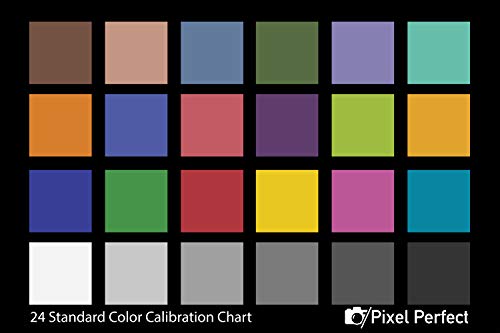
- Set of two 4-by-6-inch reference cards
- Designed for white balance and exposure guidance
- Matte finish helps reduce glare
Best For: Portable photo and video shooting kits
Compact Everyday Calibration
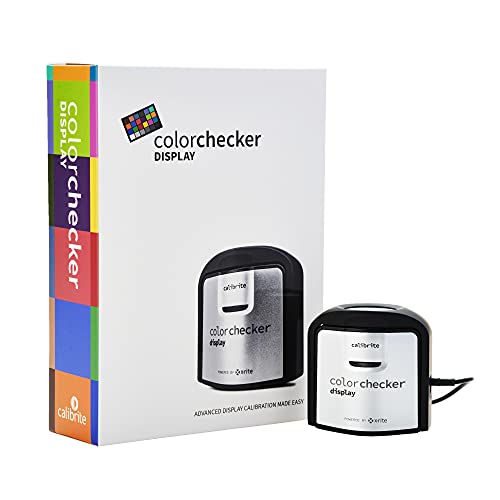
- Portable colorimeter with intuitive software
- Supports monitor and projector calibration
- Includes diffuser arm and tripod mount
Best For: Portable monitor and projector profiling
Advanced Display Analysis

- Supports displays up to 12,000 nits
- Includes deep calibration and screen analysis
- Exports 3D LUTs for compatible video monitors
Best For: Professional video and multi-display workflows
Portable Capture Kit
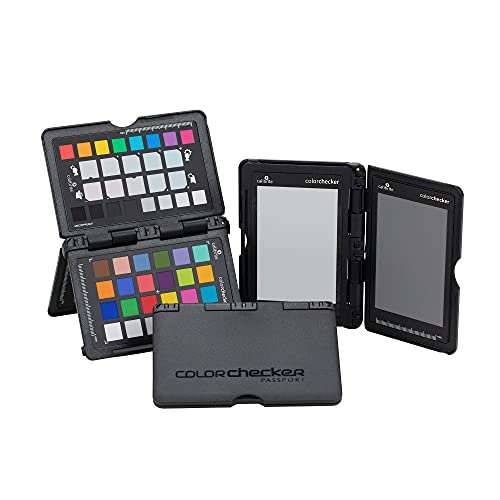
- Four targets cover white balance, exposure, profiling, and enhancement.
- Supports custom DNG and ICC profiles with Calibrite PROFILER.
- Folding case and lanyard suit location photography and video.
Best For: Traveling photographers and videographers building consistent capture-to-edit workflows.
Classic Reference Chart
ColorChecker Classic 24-Patch Target

- 24 formulated patches support reliable color and white-balance references.
- Useful for exposure evaluation, grading, and custom camera profiles.
- A practical choice for studio and multi-camera workflows.
Best For: Photo and video teams seeking a simple, repeatable in-frame color reference.
Pro Chart Set
DKC-Pro 5x7 Color Calibration Charts
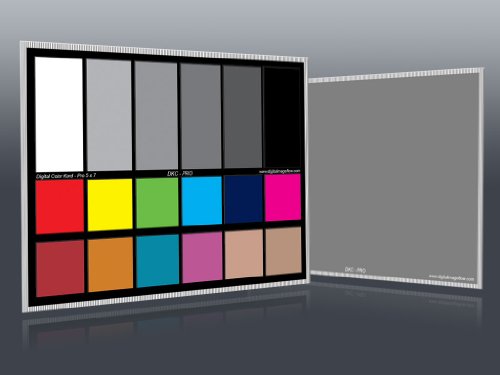
- 12% and 18% gray references for white balance
- 18 coated color patches for digital correction
- Includes two cards, stands, and user guide
Best For: Photographers and video creators needing detailed capture-side color references
Monitor Accuracy Pick
Calibrite Display 123 Colorimeter

- Guided Easy 1 2 3 calibration workflow
- Supports calibration for up to two displays
- Includes before-and-after accuracy checking
Best For: Creators calibrating one or two monitors for more reliable editing
Portable Video Pick

- Two compact charts for on-location use
- 12% and 18% gray references plus colorbar
- Includes stand and user guide
Best For: Video creators needing a portable white-balance and exposure reference
High-Luminance Precision – Display Pro HL
The Calibrite Display Pro HL is a strong choice among color calibration tools for photographers, designers, and editors working with bright LCD, mini-LED, OLED, or HDR-capable displays. Its high-luminance sensor measures up to 3000 nits, while PROFILER software provides both straightforward and advanced calibration controls.
Best For: Creative professionals who need detailed calibration, validation, and multi-monitor consistency on modern high-brightness displays.
Pros:
- Supports LCD, mini-LED, OLED, Apple XDR displays, and compatible projectors.
- Measures brightness up to 3000 nits for brighter modern screens.
- Includes white-point, luminance, gamma, validation, uniformity, and flare-correction tools.
- USB-C connectivity includes a USB-A adapter, plus a travel pouch and 1/4-inch mount thread.
Cons:
- Advanced controls may be more than casual users need.
- Its maximum 3000-nit measurement range may be less suitable for displays exceeding that level.
The Display Pro HL stands out when calibration needs extend beyond basic profiling. Custom patch sets and multi-display workflows make it particularly useful for demanding color-managed workstations.
Portable Camera Reference – Pixel Perfect Color Card
The Pixel Perfect Camera Colour Correction Card is a simple, portable option among color calibration tools for setting white balance, exposure, and color references while shooting photos or video. This set includes two 4-by-6-inch cards with a matte finish designed to help reduce glare.
Best For: Photographers and videographers who want an affordable, compact reference card for consistent in-camera or post-processing color correction.
Pros:
- Set of two cards provides a spare or allows use across multiple kits.
- Compact 4-by-6-inch size fits easily in an equipment bag.
- Matte SmartFlex synthetic paper finish helps avoid glare.
- Includes instructions and access to Adobe correction software resources.
Cons:
- Provides a camera reference target rather than automated monitor calibration.
- Requires a manual shooting and software workflow.
This card is best viewed as a low-cost shooting reference rather than a replacement for a monitor colorimeter. It is practical for establishing repeatable white balance and exposure references in the field.
Compact Everyday Calibration – ColorChecker Display
The Calibrite ColorChecker Display is a compact monitor and projector colorimeter for users seeking approachable color calibration tools. Its intuitive ccStudio software, rotatable diffuser arm, and integrated tripod mount support monitor profiling, projector calibration, and ambient light measurement.
Best For: Photographers, designers, and mobile creative users who want a portable colorimeter with monitor and projector support.
Pros:
- Portable, self-contained design with intuitive ccStudio software.
- Works with monitors and projectors for broader calibration flexibility.
- Rotatable diffuser arm doubles as a tabletop projector stand and optics cover.
- Integrated tripod mount supports projector profiling in larger venues.
Cons:
- Its supplied notes do not indicate the high-luminance measurement range of newer premium models.
- USB connectivity may require an adapter depending on the computer setup.
The ColorChecker Display offers a balanced mix of portability and practical calibration features. It is a sensible fit when projector support matters alongside routine monitor profiling.
Advanced Display Analysis – SpyderPro Calibrator
The SpyderPro is one of the more feature-rich color calibration tools for photographers, designers, and video editors managing multiple or advanced displays. It supports modern backlights up to 12,000 nits, deeper grayscale calibration, display analysis, projector calibration, and 3D LUT export.
Best For: Video and imaging professionals who need extensive display compatibility, multi-monitor matching, and analytical calibration controls.
Pros:
- Supports Wide LED, OLED, QD-OLED, Apple Liquid Retina XDR, and mini-LED displays up to 12,000 nits.
- Offers standard or deeper calibration, with unlimited gamma, white-point, and brightness settings.
- Includes display analysis, uniformity checks, tone-response tools, and CheckCal verification.
- Exports 3D LUTs for compatible video monitors and supports Rec.709, Rec.2020, and DCI-P3.
Cons:
- The extensive feature set may be excessive for basic monitor calibration.
- Requires a battery according to the supplied product details.
SpyderPro is especially compelling for advanced video and multi-display environments. StudioMatch, SpyderTune, ambient-light features, and broad display support give it considerable workflow flexibility.
Portable Capture Kit – ColorChecker Passport Photo 2
The Calibrite ColorChecker Passport Photo 2 is one of the most versatile color calibration tools for photographers and filmmakers who need consistency from capture through editing. Its four targets support white balance, exposure control, camera profiling, and enhancement, while the folding case makes it practical for location work.
Best For: Traveling photographers, videographers, and creators who need portable white-balance and camera-profiling references.
Pros:
- Combines four targets for white balance, exposure, profiling, and image enhancement.
- Supports custom DNG and ICC profiles through Calibrite PROFILER software.
- Folding protective case and included lanyard make it convenient for field use.
- Helps reduce repeated color corrections across a shoot or project.
Cons:
- Its workflow is geared toward users who need camera profiling rather than basic monitor calibration.
- Requires software-supported DNG or ICC profiling workflows for its most advanced functions.
Choose this kit if portability and end-to-end capture consistency matter more than calibrating a computer display. It is especially useful when lighting or camera setups change frequently.
Display Accuracy Pick – Datacolor Spyder Monitor Calibrator
The Datacolor Spyder is a practical color calibration tool for establishing a more dependable starting point on compatible laptop and desktop displays. It supports OLED, mini-LED, and Apple Liquid Retina XDR screens, with guided software, fast calibration, and ambient-light monitoring for changing room conditions.
Best For: Photographers, editors, and designers who need to calibrate a modern computer display quickly and adjust for ambient light.
Pros:
- Calibrates a broad range of laptop and desktop display technologies.
- Guided software and a preset option make setup approachable for beginners.
- Customizable settings provide additional flexibility for experienced users.
- Ambient light sensor can support brightness and contrast adjustments as room lighting changes.
Cons:
- Designed for display calibration, not camera profiling or in-camera white balance.
- Advanced customization may be more than casual users need.
This is the strongest fit of the three for screen-focused work. Its quick calibration and ambient-light features make it a sensible choice for anyone who edits images or video directly on a compatible computer display.
Classic Reference Chart – ColorChecker Classic 24-Patch Target
The Calibrite ColorChecker Classic is a straightforward color calibration tool for photographers and filmmakers who want a dependable reference in the frame. Its 24 formulated patches support white balance, exposure evaluation, color grading, and custom camera profiling under varied lighting.
Best For: Studio photographers, filmmakers, and multi-camera productions that need a repeatable reference for color correction.
Pros:
- Provides 24 scientifically formulated color patches for consistent reference.
- Supports white balance, exposure evaluation, and color grading workflows.
- Works with Calibrite PROFILER for custom DNG and ICC camera profiles.
- Can help streamline corrections for multi-camera and color-critical projects.
Cons:
- Offers a single reference chart rather than the multi-target coverage of a passport kit.
- Its 8 x 11.5-inch format is less compact for frequent travel than a folding portable kit.
Select this chart when you want a proven, uncomplicated reference for capture and post-production. It is particularly well suited to controlled shoots and projects where repeatable color decisions matter.
Pro Chart Set – DKC-Pro 5×7 Color Calibration Charts
For photographers and video creators who need dependable color calibration tools at the camera stage, the DKC-Pro set provides two compact reference charts with precision gray targets and saturated color patches. Its n-Chrome-coated targets are designed for accurate white balance and digital color correction in workflows using software such as Adobe Photoshop and Lightroom.
Best For: Creators seeking a portable, professional-grade reference for white balance and color correction.
Pros:
- Includes precise 12% and 18% gray references for white balance.
- 18 color patches support detailed digital color correction.
- n-Chrome coating is designed to improve saturation, luminance, and accuracy while reducing metamerism.
- Two 5×7-inch cards include stands and a user guide.
Cons:
- Focused on in-camera and software color correction rather than monitor calibration.
- The professional features may be more than casual users need.
Choose this set when consistent color capture matters and you want more detailed targets than a basic gray card provides. The included stands also make setup practical on location or at a tabletop.
Monitor Accuracy Pick – Calibrite Display 123 Colorimeter
Among color calibration tools, the Calibrite Display 123 is aimed at creators who need to correct monitor color shifts rather than calibrate a camera scene. Its guided Easy 1 2 3 workflow, USB-C connection, and before-and-after comparison make monitor calibration approachable for photo editing and other visual work.
Best For: Photographers and creators who want straightforward calibration across a one- or two-monitor setup.
Pros:
- Guided workflow helps simplify the calibration process.
- Supports up to two displays for a more consistent multi-monitor workspace.
- Before-and-after checking makes the calibration change easy to evaluate.
- Offers Native or Photo brightness target options and a USB-C connection.
Cons:
- Requires a compatible computer and software workflow.
- Designed for display calibration, not camera white balance or scene color targets.
This is the most direct choice for correcting what you see while editing. It is especially practical when two monitors need to appear more consistent or when you want a simple way to verify the effect of calibration.
Portable Video Pick – DKK 5×7 White Balance Charts
The DKK two-chart set is a practical option for creators looking for portable color calibration tools for video shoots. Each 5×7-inch chart combines 12% and 18% gray references with a colorbar, helping provide a consistent reference for white balance, exposure, and color correction across cameras and editing software.
Best For: Video professionals who need a compact, repeatable reference during location shoots.
Pros:
- Two compact 5×7-inch charts are easy to transport.
- Combines gray references with color targets for white balance and correction.
- Includes a frame stand and user guide for straightforward setup.
- Designed for use with various cameras and video editing software.
Cons:
- Provides fewer color-target details than the DKC-Pro version.
- It is a capture reference, not a monitor colorimeter.
- The listed battery requirement may be inconvenient for some users.
Select this set if portability and quick setup are priorities. It offers a simple way to establish consistent color and exposure references without adding much bulk to a video kit.
How We Picked These Color Calibration Tools
We selected products across the main categories used in color-managed workflows: monitor colorimeters, camera reference targets, gray cards, and portable multi-target kits. We considered calibration purpose, supported workflows, portability, measurement range, software simplicity, target variety, construction, and suitability for photo or video work.
A monitor calibrator and a camera chart solve different problems. Colorimeters measure and profile a display, while reference cards and charts give your camera a consistent target for white balance, exposure, and color correction. The strongest choice depends on where color inconsistency begins in your workflow.
Quick Comparison
| Tool type | Best for | Main advantage |
|---|---|---|
| Monitor colorimeter | Photographers, designers, editors | Creates a display profile for more accurate on-screen color |
| Portable color target kit | Photo and video shooters | Combines white balance, exposure, and color references |
| Gray card set | Fast in-camera corrections | Simple, affordable exposure and white-balance reference |
| Classic color chart | Color grading and repeatable production | Provides standardized color patches for correction |
Key Buying Factors for Color Calibration Tools
Choose the Right Calibration Category
For a monitor, look for a colorimeter with calibration software and support for your display type. OLED, mini-LED, HDR, and high-brightness screens may require a model with a broad luminance range. For cameras, choose a chart or card that matches your shooting style and editing process.
Check Your Software and Operating System
Before buying, confirm compatibility with your computer, monitor connection, and editing applications. A straightforward guided workflow can be more valuable than advanced controls if you calibrate only occasionally.
Consider Target Size and Portability
A compact passport-style kit is convenient for location work, while a larger chart is easier to frame and read under controlled lighting. Gray cards with a stand or protective case can be especially useful for repeatable studio setups.
Match Accuracy to Your Workflow
Professional print, commercial product, and color-grading work benefits from a calibrated display and a standardized color chart. Casual photography may need only a dependable gray card or entry-level monitor calibrator.
Who Should Buy Which Color Calibration Tools?
- For serious monitor accuracy: Choose a professional colorimeter designed for your display technology, especially if you edit HDR, OLED, or high-brightness content.
- For beginners: Select an easy-to-use monitor calibrator or a simple gray-card system with clear instructions.
- For location photographers and videographers: A portable multi-target kit offers white balance, exposure, and color references in one compact package.
- For studio and commercial work: Pair a calibrated monitor with a full color reference chart for more repeatable capture and grading.
- For budget-conscious users: A basic 12% or 18% gray-card set can improve consistency without the cost of electronic hardware.
Whichever option you choose, use it under consistent lighting, keep physical targets clean and undamaged, and recalibrate monitors periodically as their brightness and color characteristics change.