Accurate color is essential when a screen, camera, printer, or physical sample needs to match your intended result. The best portable color calibration tools make that process easier to manage across studios, offices, job sites, and client locations.
This roundup compares compact color cards, monitor colorimeters, spectrophotometers, and Bluetooth color readers so you can choose equipment suited to your workflow, accuracy requirements, and budget.
Best 10 Portable Color Calibration Tools Picks for 2026
Best for On-Location Camera Work
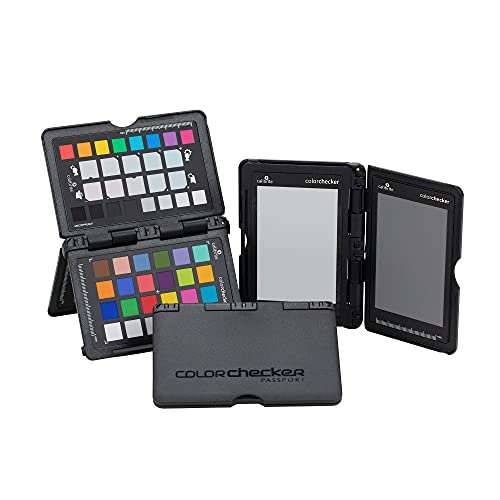
- Four targets for exposure, white balance, and profiling
- Folding case with lanyard for portable use
- Supports DNG and ICC camera profiles
Best For: Traveling photographers and videographers
Best for Advanced Display Calibration

- Supports modern displays up to 12,000 nits
- Offers deep calibration and display analysis
- Includes USB-C, projector, and 3D LUT support
Best For: Photographers, designers, and video editors
Best for Complete Color Management
ColorChecker Studio Spectrophotometer

- Profiles displays, projectors, printers, scanners, and cameras
- Adaptive profiling supports repeatable display results
- Includes ambient light measurement and camera target
Best For: Photography and print production workflows
Best for Fast Surface Color Matching
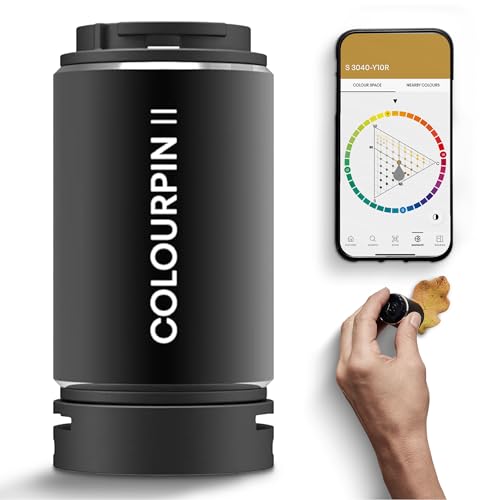
- Pocket-sized reader for walls, fabrics, and furniture
- Bluetooth app supports storage and mood boards
- Includes calibration cap and USB cable
Best For: Interior designers and home decorators
Capture-to-Edit Kit
Photo Workflow Calibration Bundle

- Combines camera profiling and monitor calibration
- Supports mini LED, OLED, and Apple XDR displays
- Includes a RAW workflow color target and white-balance reference
Best For: Photographers seeking a consistent capture-to-edit workflow
Handheld Measurement Tool
Portable Color Difference Spectrophotometer

- Measures more than 30 color and reflectance indexes
- Supports nearly 40 evaluation light sources
- Camera positioning helps target the correct sample area
Best For: Material-sample measurement and technical color comparison
Precision Handheld Pick
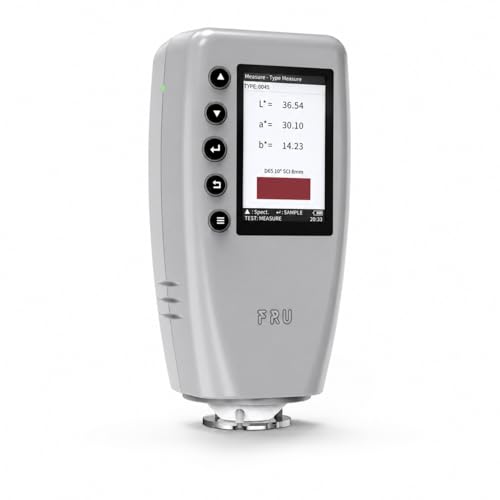
- 8mm aperture with CIELAB readings
- Rechargeable battery and calibration boards included
- Made for industrial color-quality control
Best For: Industrial sampling, color-difference analysis, and production checks
Bluetooth Matching Pick

- Ultra-light portable color reader
- Bluetooth scanning through the NCS+ app
- Case, calibration tile, and USB cable included
Best For: Mobile color matching for coated surfaces and textiles
Monitor Editing Pick

- Guided Easy 1 2 3 calibration workflow
- Supports up to two displays
- USB-C connection with before-and-after check
Best For: Photographers and creators calibrating computer monitors
Best for On-Location Camera Work – ColorChecker Passport Photo 2
The Calibrite ColorChecker Passport Photo 2 is one of the most practical portable color calibration tools for photographers and videographers who need consistent results while traveling or shooting on location. Its four targets support exposure checks, custom white balance, camera profiling, and color enhancement in a compact folding case.
Best For: Photographers and video creators who need repeatable white balance and camera profiles during location shoots.
Pros:
- Four-target set covers exposure, white balance, profiling, and enhancement.
- Folding protective case offers multiple positioning options and includes a lanyard.
- Calibrite PROFILER supports DNG and ICC profiling workflows.
- Helps reduce per-image color corrections across changing lighting conditions.
Cons:
- Designed for camera capture workflows rather than monitor or printer calibration.
- Creating custom profiles requires compatible software and a camera/lens workflow.
Choose this kit when portability and capture-stage consistency matter most. It is especially useful for maintaining a consistent white point and color rendering across a series of images or video clips.
Best for Advanced Display Calibration – SpyderPro Monitor Calibrator
The SpyderPro is a display-focused portable color calibration tool for photographers, designers, and video editors. It supports modern display types, adjustable gamma, white point, and brightness settings, plus deeper calibration and analysis features for users managing demanding screen-based workflows.
Best For: Creative professionals calibrating multiple monitors, high-brightness displays, or video screens.
Pros:
- Supports Wide LED, OLED, QD-OLED, Mini LED, Liquid Retina XDR, and other display types.
- Standard calibration takes about 90 seconds, while deeper calibration measures more grayscale points.
- Includes projector calibration, display analysis, CheckCal, and 3D LUT export support.
- Native USB-C connection includes a USB-A adapter and supports multiple displays.
Cons:
- Its extensive controls may be more than casual users need.
- Some advanced features depend on compatible video monitors, software, or operating systems.
This is the strongest choice in the group for screen accuracy and multi-display consistency. Its broad display support and analysis tools make it suitable for both everyday calibration and more specialized video workflows.
Best for Complete Color Management – ColorChecker Studio Spectrophotometer
The Calibrite ColorChecker Studio is a portable color calibration tool for users who need control from camera capture through printed output. Its spectrophotometer supports monitor, projector, printer, paper, scanner, and camera profiling, making it a comprehensive option for photography studios and print-oriented workflows.
Best For: Photographers and print professionals who need one device for display, camera, printer, and scanner profiling.
Pros:
- Profiles monitors, laptops, projectors, printers, paper, cameras, and scanners.
- Adaptive iterative profiling optimizes results for individual displays.
- Ambient light measurement helps set display luminance for print comparison.
- Includes a ColorChecker Classic Mini for custom RAW camera profiles.
Cons:
- More specialized and potentially more equipment than needed for screen-only calibration.
- Its broader workflow may require additional setup and profiling software.
Pick this model when color consistency must extend beyond the monitor. It offers the broadest device coverage here and is particularly well suited to photographers who proof prints or manage several stages of production.
Best for Fast Surface Color Matching – NCS Colourpin II
The NCS Colourpin II is a pocket-sized color reader rather than a traditional monitor calibrator, making it one of the simplest portable color calibration tools for matching real-world surfaces. It scans walls, fabrics, furniture, and other materials, then connects to the NCS+ app for storing, organizing, and sharing color selections.
Best For: Interior designers, decorators, and anyone matching paint or surface colors in the field.
Pros:
- Compact design weighs about 0.038 kg and fits easily in a pocket.
- Bluetooth connectivity works with the NCS+ app for color libraries and mood boards.
- Calibration cap helps maintain measurement accuracy.
- Designed to read gloss and surface colors across interior and exterior projects.
Cons:
- It matches surface colors rather than calibrating monitors, cameras, or printers.
- Using its connected features depends on a compatible smartphone app workflow.
- The supplied specifications list Windows 7 as the minimum system requirement.
This is the most convenient option for translating a physical object into a usable color reference. Choose it for design consultations and decorating projects, not for digital color-management workflows.
Capture-to-Edit Kit – Photo Workflow Calibration Bundle
This is a practical choice among portable color calibration tools for photographers who need to manage both camera color and monitor accuracy. The kit combines the Display Pro HL colorimeter with ColorChecker Passport Photo 2 for a more consistent RAW capture-to-edit workflow.
Best For: Photographers building a repeatable camera profiling, white-balance, and monitor-calibration workflow.
Pros:
- Combines camera profiling and display calibration in one workflow kit.
- Supports modern mini LED, OLED, and Apple XDR displays.
- ColorChecker Passport Photo 2 provides custom RAW camera profiles and white-balance references.
- PROFILER software offers presets plus adjustable white point and gamma settings.
Cons:
- More equipment than needed if you only want to calibrate a monitor.
- Designed primarily for photo and RAW still workflows rather than general-purpose color measurement.
Choose this bundle when consistency from camera capture through final editing matters more than having the smallest possible calibration setup.
Handheld Measurement Tool – Portable Color Difference Spectrophotometer
For users who need portable color calibration tools beyond display profiling, this handheld colorimeter offers material-sample measurement with an IPS touchscreen and 6mm test aperture. Its broad index and illuminant support suits technical color comparison across varied surfaces.
Best For: Technical users measuring material color, reflectance, color difference, and related production-quality metrics.
Pros:
- Provides more than 30 measurement indexes, including RGB, reflectance, LCh, CIELuv, XYZ, and color difference.
- Supports nearly 40 evaluation light sources, including A, B, C, D50, D55, and D65.
- Camera-based positioning helps identify the measurement area and avoid regional errors.
- Optical-path monitoring is designed to reduce light-source fluctuation interference.
Cons:
- At 2.31 pounds, it is less lightweight than compact display colorimeters.
- Its specialized measurement features may be unnecessary for simple monitor calibration.
This is the more measurement-focused option in the group, especially when you need objective reflectance and color-difference data from physical materials rather than only display calibration.
Display Specialist – High-Luminance Monitor Colorimeter
This compact option is one of the most focused portable color calibration tools for displays. The Display Pro HL measures up to 3000 nits and works with LCD, mini LED, OLED, Apple XDR, and compatible projectors through Calibrite PROFILER software.
Best For: Photographers, designers, and studios calibrating bright HDR-capable displays or multiple monitors.
Pros:
- Measures high-luminance displays up to 3000 nits.
- Supports LCD, mini LED, OLED, Apple XDR displays, and compatible projectors.
- PROFILER provides Basic and Advanced modes with white-point, luminance, gamma, and preset controls.
- Includes validation, uniformity, flare-correction, and multi-display workflow tools.
Cons:
- It calibrates displays rather than cameras or physical material samples.
- Advanced settings may be more than casual users need.
Pick this model when display accuracy is the priority, particularly for bright modern panels, HDR-oriented work, or matching several screens in a creative setup.
Precision Handheld Pick – WR10 Portable Colorimeter
For industrial teams comparing samples or checking production consistency, the WR10 is one of the more measurement-focused portable color calibration tools. Its 8mm aperture, CIELAB readings, 400nm–700nm wavelength range, and included calibration boards support practical color-quality and color-difference work.
Best For: Textile, printing, paint, plastics, leather, photography, and other applications requiring handheld color analysis.
Pros:
- Designed for precision, stable measurement, and straightforward handling.
- Provides a real color screen display with CIELAB measurement support.
- Rechargeable high-capacity lithium battery is included.
- Includes white and black calibration boards plus PC software.
Cons:
- At 2.29 pounds, it is less lightweight than compact Bluetooth readers.
- Its specialized features may be more than casual color-matching users need.
The WR10 is a practical choice when repeatable color measurement and broader industry compatibility matter more than minimum size. It is especially suited to users who want a dedicated analyzer rather than a phone-connected color scanner.
Bluetooth Matching Pick – NCS Colourpin PRO
The NCS Colourpin PRO is a compact option among portable color calibration tools, pairing with the NCS+ app to scan, save, and share color readings. Its lightweight design and included calibration tile make it convenient for professional work away from a desk.
Best For: Interior designers, painters, manufacturers, and professionals matching coated surfaces or textiles on the job.
Pros:
- Weighs just 0.11 pounds for easy carrying.
- Bluetooth connectivity works with the NCS+ smartphone app.
- Supports saving colors, building mood boards, and sharing matches.
- Includes a protective case, calibration tile, and USB charging cable.
Cons:
- Requires a compatible smartphone for its app-based workflow.
- Its primary strength is matching coated materials and textiles rather than broad standalone analysis.
Choose the Colourpin PRO if portability and mobile collaboration are priorities. The app connection is useful for organizing project colors and communicating selections, while the small form factor keeps it ready for field visits.
Monitor Editing Pick – Calibrite Display 123
Photographers and creators need monitor-focused portable color calibration tools, and the Calibrite Display 123 is built for that job. Its guided Easy 1 2 3 software, USB-C connection, brightness targets, and before-and-after check simplify screen calibration without requiring complicated settings.
Best For: Photo editing, video work, and creative setups using one or two displays.
Pros:
- Guided workflow makes monitor calibration approachable.
- Supports calibration of up to two displays for more consistent viewing.
- Includes Native and Photo brightness target options.
- Before-and-after checking helps confirm the calibration change.
Cons:
- Designed for monitors, not physical-surface or textile color scanning.
- Uses a USB-C connection, so older setups may require compatible connectivity.
The Display 123 is a focused solution for improving on-screen color consistency. Its compact 4.8-ounce body and adjustable counterweight suit regular calibration, especially when matching two monitors in a creative workspace.
How We Picked These Portable Color Calibration Tools
We selected tools covering the main portable color-management tasks: setting camera white balance, calibrating monitors, profiling printers and projectors, and reading colors from coated surfaces or textiles. We considered measurement technology, supported devices, software, portability, connection options, ease of use, and the level of accuracy suggested by each product’s intended application.
The list includes both specialist equipment and simpler tools for creators who need dependable color references without a full laboratory workflow. Before buying, confirm compatibility with your operating system, display type, editing software, and the color spaces required by your clients or production process.
Quick Comparison
- Camera and on-location photography: Choose a ColorChecker Passport-style target for repeatable white balance, exposure, and color references.
- Monitor calibration: Display colorimeters are the most practical choice for photo, video, design, and general color-accurate viewing.
- Complete color management: A spectrophotometer is better suited to profiling displays, projectors, printers, and scanners.
- Paint, textile, and surface matching: Bluetooth color readers offer fast scanning, mobile connectivity, and shareable results.
- Industrial measurement: Handheld colorimeters with defined apertures, calibration routines, and numerical color-difference data are designed for technical checks.
Key Buying Factors for Portable Color Calibration Tools
Measurement Type and Accuracy
Color cards provide a physical reference, while colorimeters measure emitted screen light and spectrophotometers measure reflected or transmitted color across wavelengths. Select the instrument that matches the surface or device you need to evaluate. For production tolerances, check stated ΔE accuracy, aperture size, calibration requirements, and supported color models rather than relying on the word “professional.”
Compatibility and Software
Software can matter as much as the hardware. Look for support for your operating system, USB or Bluetooth connection, HDR and OLED displays if relevant, and the profiling applications used in your workflow. A straightforward guided interface may be preferable for occasional users, while advanced controls benefit photographers, designers, and print professionals.
Portability and Power
Check dimensions, protective storage, cable requirements, battery life, and whether the tool can be calibrated or used away from a desk. Compact targets and wireless readers are convenient for field work; larger spectrophotometers may offer broader functionality but require more careful transport and setup.
Who Should Buy Which Portable Color Calibration Tools?
Photographers and videographers should start with a portable color target if their main need is consistent capture, white balance, and exposure. Photo editors, designers, and video professionals will generally benefit more from a monitor colorimeter, especially when working with wide-gamut, HDR, Mini LED, or OLED displays.
Print shops and color-managed studios should consider a spectrophotometer capable of profiling multiple device types. Interior designers, decorators, retailers, and textile professionals may prefer a wireless color reader for quickly identifying and sharing surface colors. Manufacturing and quality-control users should prioritize a handheld instrument with documented accuracy, repeatable calibration, a suitable test aperture, and the measurement data their specifications require.