Accurate color matters when students edit photos, create videos, design graphics, or prepare assignments for print. The right calibration tool can make a laptop or desktop display more trustworthy without requiring professional studio equipment.
This roundup compares monitor colorimeters, portable color-reference kits, and gray-card sets across ease of use, display support, portability, and value. Use the guide below to match your workflow and budget to the most practical option.
Best 10 Color Calibration Tools for Students Picks for 2026
Best Easy Starter

- Calibrates in about 90 seconds
- Uses a simple three-step workflow
- Supports up to three connected displays
Best For: Beginners working on photos, graphics, or digital content
Best Camera Color Reference
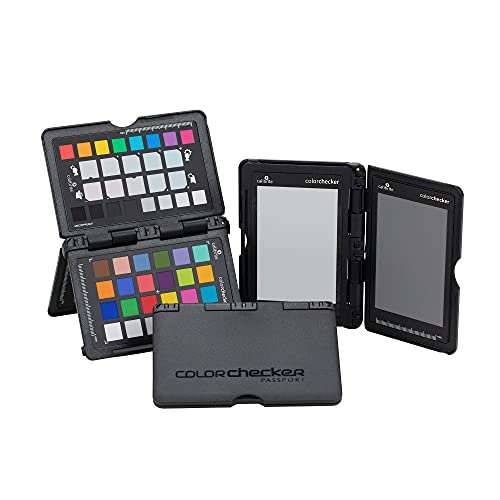
- Includes four exposure and color targets
- Supports DNG and ICC camera profiles
- Folds into a portable protective case
Best For: Photography and video students shooting on location
Best Recalibration Value

- Automates color and brightness calibration
- Supports multiple displays with one sensor
- Includes a ReCAL assistant
Best For: Students needing basic calibration and repeat profiling
Best Camera Reference Chart

- 24 color patches for white balance and color correction
- Supports custom DNG and ICC camera profiles
- Useful for photo and video workflows
Best For: Students learning camera profiling and color grading
Best Budget Gray Card Set
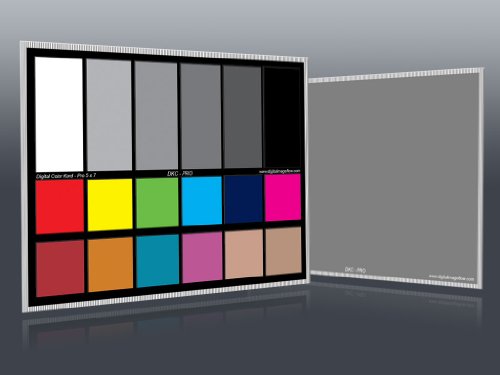
- Two cards with 12% and 18% gray references
- Includes 18 color patches per card
- Comes with stands and a user guide
Best For: Students practicing white balance and photo editing
Best Simple Dual-Monitor Option

- Guided Easy 1 2 3 workflow
- Calibrates up to two displays
- Includes before-and-after comparison
Best For: Students with a dual-screen creative workspace
Best Advanced Student Pick

- Standard and deeper calibration modes
- Supports many modern display types
- Adds projector, multi-monitor, and 3D LUT tools
Best For: Advanced photo, design, and video students
Best High-Brightness Pick – Calibrite Display Pro HL
For students working in photography, design, or HDR content, the Calibrite Display Pro HL is a capable choice among color calibration tools for students. Its high-luminance sensor is designed for LCD, mini-LED, OLED, Apple XDR, and compatible projector workflows.
Best For: Students using bright modern displays who need detailed control over monitor profiles and validation.
Pros:
- Measures displays up to 3000 nits, supporting high-brightness and HDR workflows.
- Works with Mac and Windows through PROFILER software and includes a USB-A adapter.
- Offers white point, luminance, gamma, contrast, uniformity, and flare-correction tools.
- Can profile multiple monitors and create custom patch sets.
Cons:
- Its advanced controls may be more than beginners need.
- It is designed for display calibration rather than direct camera-color reference.
This is the most feature-rich option here for students managing modern, bright displays or more demanding creative assignments. The included pouch and compact 4.8-ounce design also make it practical for moving between workstations.
Best Easy Starter – Datacolor SpyderExpress
The Datacolor SpyderExpress is a straightforward entry point for students who want color calibration tools for students without a complicated setup. Its software-led workflow uses three steps and is designed to produce an edit-ready profile in about 90 seconds.
Best For: Beginners editing photos, designing graphics, or producing content on current laptop and desktop displays.
Pros:
- Simple download, plug-in, and three-step calibration process.
- Supports Liquid Retina XDR displays, including the MacBook M4 mini-LED screen.
- Can calibrate up to three connected displays per workstation.
- Optional software upgrades add ambient-light adjustment, multi-display profiling, and DevicePreview.
Cons:
- OLED and advanced mini-LED support requires a software upgrade.
- Several advanced workflow features are also upgrade-dependent.
SpyderExpress makes sense for students who value speed and low learning friction. It covers everyday monitor calibration now while leaving room to expand the software features later if coursework becomes more demanding.
Best Camera Color Reference – ColorChecker Passport Photo 2
The ColorChecker Passport Photo 2 is a camera-side alternative to screen-only color calibration tools for students. Its four targets help with white balance, exposure, camera profiling, and enhancement before images reach the editing display.
Best For: Photography and video students who shoot on location and want more consistent color from capture through editing.
Pros:
- Provides four targets for exposure control, custom white balance, and camera profiling.
- Supports DNG and ICC profile workflows through Calibrite PROFILER software.
- Helps reduce color casts and per-image corrections across a project.
- Folding case offers multiple positioning options and includes a lanyard.
Cons:
- It does not calibrate a monitor directly.
- Its value is greatest for students actively shooting photo or video projects.
This portable kit complements a calibrated display rather than replacing one. It is especially useful for location assignments, mixed lighting, and projects that require consistent rendering across cameras or sessions.
Best Recalibration Value – Datacolor Spyder4Pro
The Datacolor Spyder4Pro is an older, focused colorimeter for students seeking core display-calibration functions. It automates color and brightness calibration, and its ReCAL assistant is intended to make repeat calibration easier as a display changes over time.
Best For: Students who need automated calibration for multiple displays and prioritize a dedicated recalibration workflow.
Pros:
- Automates color and brightness calibration.
- One sensor can calibrate multiple displays.
- Full-spectrum sensor and double-shielded color filters support measurement consistency.
- ReCAL provides a faster way to repeat calibration.
Cons:
- The supplied notes do not identify support for newer OLED, mini-LED, or HDR displays.
- It is an older model compared with the newer calibration options in this roundup.
- The product details list German as the language.
Spyder4Pro remains relevant for straightforward display calibration when compatibility with the student’s monitor is confirmed. Its multiple-display support and ReCAL assistant are useful for maintaining a consistent workspace without extra complexity.
Best Camera Reference Chart – ColorChecker Classic
The Calibrite ColorChecker Classic is a practical choice for students learning photography or video color workflows. Its 24 color patches provide a consistent reference for white balance, exposure evaluation, camera profiling, and color grading across different lighting conditions.
Best For: Photography and video students who need a portable reference target for dependable in-camera and post-production color decisions.
Pros:
- Includes 24 scientifically formulated color patches for consistent color correction.
- Supports white balance and exposure evaluation under the same light as the subject.
- Works with Calibrite PROFILER software for custom DNG and ICC camera profiles.
- The 8 x 11.5-inch format offers a substantial reference surface without complicated hardware.
Cons:
- It is a physical reference chart rather than a monitor colorimeter.
- Profile creation requires compatible Calibrite PROFILER software.
For students building consistent shooting and editing habits, this chart is a straightforward entry into color calibration tools for students. It is especially useful when the goal is to match camera color across changing light or multiple cameras.
Best HDR Monitor Calibrator – Display Plus HL
The Calibrite Display Plus HL is designed for students working with modern, bright displays and HDR video. Its high-luminance sensor measures up to 10,000 nits and works with LCD, mini LED, OLED, Apple XDR, and compatible projector setups through Calibrite PROFILER software.
Best For: Film, video, and visual-media students who need display calibration for HDR-capable monitors or multi-display editing systems.
Pros:
- Measures displays up to 10,000 nits for high-brightness HDR workflows.
- Supports white point, luminance, contrast ratio, gamma, and other calibration adjustments.
- Includes Rec.709, Rec.2020, and BT.1886 workflow support for video production.
- Provides validation tools, uniformity checks, and multi-monitor profiling features.
Cons:
- Its advanced capabilities may be more than beginners need for basic coursework.
- Calibration requires a Mac or Windows computer and the included software.
Among color calibration tools for students, this is the most capable option for display-focused work. It makes the most sense when accurate HDR monitoring, shared presets, or matched screens matter more than keeping the setup simple.
Best Budget Gray Card Set – DKC-Pro White Balance Charts
The DKC-Pro set offers two compact charts for students who need a simple way to establish white balance and support digital color correction. Each 5 x 7-inch card includes 12% and 18% gray references plus 18 color patches, making the set useful with software such as Adobe Photoshop and Lightroom.
Best For: Photography students seeking a compact two-card reference set for basic white balance and editing practice.
Pros:
- Includes two cards, each with 12% and 18% gray references.
- Provides 18 color patches for digital color correction.
- n-Chrome-coated patches are designed for improved saturation, luminance, and accuracy.
- Includes a frame stand and user guide for convenient tabletop use.
Cons:
- The 5 x 7-inch size provides less reference area than larger charts.
- It is intended for white balance and color correction rather than monitor profiling.
This two-card kit is a practical starting point among color calibration tools for students, particularly for coursework centered on camera capture and photo editing. The duplicate cards can also be convenient across separate shooting or classroom setups.
Best Quick-Start Pick – Spyder Monitor Calibrator
For students seeking color calibration tools for students, the Datacolor Spyder offers a fast, approachable way to establish a more reliable starting point for viewing and editing. Its preset workflow takes about 90 seconds and supports modern laptop and desktop displays, including OLED, mini-LED, and Apple Liquid Retina XDR screens.
Best For: Students who want quick, guided calibration for photo editing and general creative coursework.
Pros:
- Fast calibration process designed to take about 90 seconds.
- Supports OLED, mini-LED, and Apple Liquid Retina XDR displays.
- Ambient light sensor can help adjust display brightness and contrast as room lighting changes.
- DevicePreview Beta simulates how photos may appear on other devices.
Cons:
- Advanced customization is less extensive than the SpyderPro model.
- Requires a nonstandard battery.
This is a practical entry point for students who want better color confidence without a complicated setup. The preset calibration option keeps the learning curve low, while customizable settings leave room to grow.
Best Simple Dual-Monitor Option – Calibrite Display 123
The Calibrite Display 123 is a straightforward choice among color calibration tools for students. Its guided Easy 1 2 3 workflow reduces setup complexity, while support for two displays helps students maintain more consistent color across a laptop-and-monitor or dual-monitor workspace.
Best For: Students using two screens for photo editing, video work, or other creative assignments.
Pros:
- Guided Easy 1 2 3 software workflow is approachable for beginners.
- Supports calibration of up to two displays.
- Includes USB-C connectivity and an adjustable counterweight for screen placement.
- Before-and-after viewing makes the calibration change easy to check.
Cons:
- Supports fewer displays than the SpyderPro.
- Its workflow is focused on simplicity rather than extensive advanced controls.
For students building a compact multi-screen setup, this model balances ease of use and useful functionality. The before-and-after check also provides a quick way to confirm that calibration has improved the display.
Best Advanced Student Pick – SpyderPro Monitor Calibrator
Students working toward advanced photography, design, or video projects may prefer the SpyderPro, one of the more capable color calibration tools for students. It combines fast standard calibration with deeper grayscale measurement, broad display support, multi-monitor tools, and options such as projector calibration and 3D LUT export.
Best For: Advanced students who need detailed control across multiple displays or video-focused workflows.
Pros:
- Offers standard calibration in about 90 seconds plus a deeper calibration mode.
- Supports Wide LED, OLED, QD-OLED, Mini LED, and Apple Liquid Retina XDR displays.
- Can support an unlimited number of displays within the computer’s capability.
- Includes projector calibration, display analysis, and 3D LUT export for compatible video monitors.
Cons:
- Its broader feature set may be more than beginners need.
- Advanced calibration and analysis features may require more setup time.
- Requires a nonstandard battery.
The SpyderPro is the strongest fit when coursework extends beyond basic photo editing into video, projection, or multi-monitor color management. It costs students some simplicity in exchange for substantially broader control and analysis features.
How We Picked These Color Calibration Tools for Students
We focused on tools that address the most common student workflows: screen calibration for photo, video, and design work; camera white-balance and exposure control; and affordable color references for assignments or client projects. We also considered software simplicity, compatibility with modern LCD, Mini LED, and OLED displays, portability, sensor brightness range, connection type, and long-term usefulness.
Because a colorimeter and a color chart solve different problems, this list includes both. A monitor calibrator creates a display profile, while a chart helps a camera capture or reproduce known colors more consistently. Some students may benefit from using both.
Quick Comparison
| Tool type | Best for | Main advantage |
|---|---|---|
| Monitor colorimeter | Photo, video, and design students | Creates a more accurate screen profile |
| Portable color-reference kit | Photography and video production | Supports white balance, exposure, and color matching |
| Classic color chart | Basic camera color reference | Simple, compact, and easy to use |
| Gray-card set | Manual exposure and white balance | Low-cost control in changing light |
Key Buying Factors for Color Calibration Tools for Students
Choose the Right Type
If your priority is accurate viewing on a laptop or monitor, choose a colorimeter such as a Display, Spyder, or similar monitor calibration tool. If you shoot with a camera, a ColorChecker or gray-card set may be more useful. A chart cannot calibrate your display, and a display colorimeter cannot replace an on-location white-balance reference.
Check Display and Brightness Support
Students working with HDR, Mini LED, or OLED screens should look for a sensor and software package designed for bright modern displays. For standard SDR coursework, a simpler calibrator may be sufficient and easier to afford. Confirm operating-system and connection requirements before buying, especially when using USB-C-only laptops.
Prioritize Software and Repeatability
Calibration should be simple enough to repeat regularly. Look for guided workflows, automatic ambient-light handling when appropriate, profile reminders, and software that supports your editing applications. Recalibrate after major display changes and periodically during the semester.
Consider Portability and Durability
Students who move between dorms, labs, classrooms, and freelance jobs should favor compact tools with protective cases or integrated storage. Charts should be kept away from direct sunlight and replaced when their surfaces fade or become damaged.
Who Should Buy Which Color Calibration Tools for Students?
For Beginners and General Coursework
Choose an easy monitor calibrator with a guided workflow if you mainly need dependable color for web design, basic photo editing, or digital art. Simplicity often matters more than advanced controls.
For Photography and Video Students
A portable multi-target color kit is the most versatile choice when you need consistent white balance, exposure references, and color matching in addition to an accurately profiled screen.
For Students on a Tight Budget
A basic colorimeter or gray-card set can provide meaningful improvement without the cost of a high-end professional system. Select the tool that fixes your largest current problem rather than buying features your coursework does not require.
For Advanced HDR or Professional Preparation
Students working with bright Mini LED or OLED displays should favor a higher-range colorimeter with software built for modern display technologies. It costs more, but accurate monitoring can prevent expensive color corrections later.