Accurate color depends on more than a good monitor. Room lighting, screen brightness, white balance, and changing ambient conditions can all affect how images and video look.
This roundup compares 10 color calibration tools with ambient light sensor capabilities, including monitor colorimeters, handheld light meters, color temperature testers, and camera-focused calibration kits. Use the guide below to choose the right tool for your workflow and budget.
Best 10 Color Calibration Tools with Ambient Light Sensor Picks for 2026
Best Wireless Ambient-Light Meter

- Measures lux and color temperature
- Works with ambient and flash lighting
- Bluetooth app and multi-meter support
Best For: Photo, video, and lighting-production workflows
Best Camera Color Reference
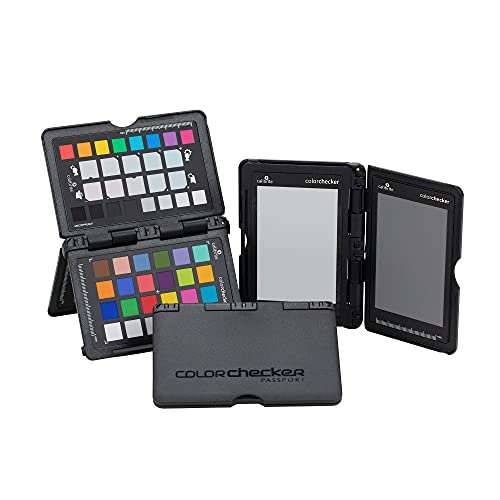
- Four targets for exposure and white balance
- Supports DNG and ICC profiles
- Folding portable protective case
Best For: Consistent camera color on location or during travel
Best Circadian-Light Analyzer

- Measures illuminance, CCT, EML, and mEDI
- Tracks contrast and light uniformity
- Bluetooth iOS and Android app support
Best For: Architectural, workspace, and wellness-focused lighting analysis
Easy Color Matching
Display 123 Monitor Colorimeter

- Guided Easy 1 2 3 calibration workflow
- Supports up to two displays
- Includes brightness targets and before/after check
Best For: Photographers and creators seeking simple monitor calibration
Lighting Measurement
SUNGOOYUE Color Temperature Tester

- Measures illuminance and color temperature
- Evaluates color rendering and flicker frequency
- Responds in less than 0.7 seconds
Best For: Photographers and studio users checking ambient lighting
Advanced Ambient Adaptation

- Adapts profiles using ambient light readings
- Supports modern display technologies up to 12,000 nits
- Includes deep calibration and display analysis tools
Best For: Professional creative workflows and multi-monitor setups
Lighting Mapping Specialist
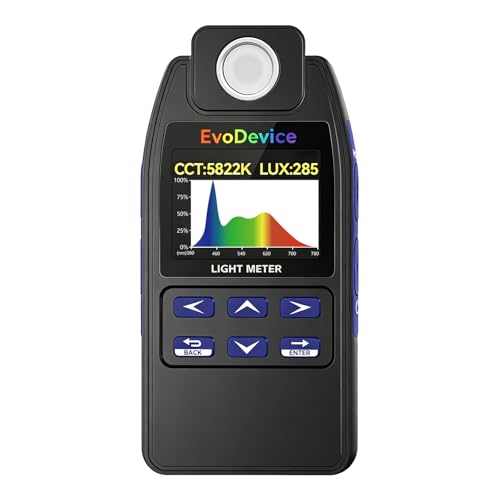
- Measures lux and CCT across common light sources
- Maps lighting at up to 99 points
- Spectrum mode is scoped to select white LEDs
Best For: Checking ambient lighting consistency across a workspace
Monitor Calibration Pick

- Monitors room light and can change profiles automatically
- Guided calibration with 12 predefined targets
- Works with multiple laptop and desktop monitors
Best For: First-time users calibrating computer displays
Material Color Analysis Tool
Handheld Color Sensor Colorimeter

- Covers 26 light sources and 400–700nm
- Provides automatic calibration and one-second readings
- App matches, stores, and shares color data
Best For: Comparing and matching physical color samples
Best High-Brightness Display Tool – Display Pro HL
The Calibrite Display Pro HL is one of the most capable color calibration tools with ambient light sensor workflows for photographers, designers, and editors working with bright LCD, mini-LED, OLED, or HDR displays. Its high-luminance sensor measures up to 3000 nits, while PROFILER software provides adjustable calibration and validation controls.
Best For: Creative professionals calibrating modern high-brightness monitors, Apple XDR displays, projectors, or multiple screens.
Pros:
- Measures displays up to 3000 nits, including LCD, mini-LED, OLED, and compatible projectors.
- PROFILER software supports custom white point, luminance, contrast, gamma, presets, and patch sets.
- Includes profile validation, uniformity checks, Quick Check, and flare correction tools.
- Supports multi-display workflows and includes USB-C connectivity with a USB-A adapter.
Cons:
- Its advanced features may be more than casual users need.
- Designed for display calibration rather than measuring room lighting independently.
Choose this model when accuracy on bright modern displays matters more than simplicity. Its validation and multi-monitor features also make it a strong fit for studio or hybrid editing environments.
Best Wireless Ambient-Light Meter – LightColor Meter
The Datacolor LightColor Meter is a practical choice among color calibration tools with ambient light sensor capabilities when you need to evaluate the lighting around a shoot or workspace. It measures lux, chromaticity, color temperature, and green-magenta balance, then sends readings to a mobile app over Bluetooth.
Best For: Photographers, filmmakers, and production teams checking ambient or flash lighting before and during a shoot.
Pros:
- Measures ambient and flash lighting, lux, chromaticity, color temperature, and DUV balance.
- Covers color temperatures from 1,600K to 20,000K.
- Bluetooth app integration provides real-time readings and mismatch notifications.
- Supports multiple meters at distances up to 80 feet and offers up to 40 hours of use.
Cons:
- Requires a compatible mobile device and the Datacolor app for connected operation.
- Uses two AAA batteries, adding a consumable power requirement.
This is a better match for measuring the light hitting a scene than for profiling a monitor. Its wireless operation and multi-meter support can streamline larger productions where lighting consistency is important.
Best Camera Color Reference – ColorChecker Passport Photo 2
The Calibrite ColorChecker Passport Photo 2 complements color calibration tools with ambient light sensor workflows by giving photographers a physical reference for exposure, white balance, and camera profiling. Its four-target set helps establish consistent color at capture, while PROFILER software supports DNG and ICC profile creation.
Best For: Photographers and video creators who need repeatable white balance and camera color across locations, lenses, or sessions.
Pros:
- Includes four targets for exposure, white balance, camera profiling, and enhancement.
- Supports custom DNG and ICC profiles for specific camera and lens combinations.
- Folding case offers multiple positioning options and includes a lanyard.
- Portable design helps maintain a reference during travel and location shoots.
Cons:
- It is a capture-stage reference, not a standalone monitor or room-light meter.
- Profile creation requires compatible PROFILER software workflows.
Consider this kit when color consistency begins in the camera rather than at the monitor. It can reduce repeated correction work, especially across large projects or changing lighting conditions.
Best Circadian-Light Analyzer – In.Licht Pro Light Meter
The In.Licht Pro Light Meter expands the idea of color calibration tools with ambient light sensor measurement by tracking both visual lighting and circadian-related metrics. It measures illuminance, CCT, EML, mEDI, visual contrast, and uniformity, with Bluetooth app analysis for real-time readings.
Best For: Architects, lighting designers, workspace planners, and users evaluating comfort, uniformity, and circadian effects.
Pros:
- Measures six lighting factors, including illuminance, CCT, EML, mEDI, contrast, and uniformity.
- Bluetooth connectivity works with iOS and Android for real-time analysis.
- Compact 40-gram design includes magnetic mounting and a lanyard hole.
- Supports portable AAA-battery use or extended operation through Micro-USB.
Cons:
- Its focus is environmental lighting analysis rather than monitor profiling.
- Requires the In.Licht Pro app for connected data analysis.
This meter is useful when lighting decisions involve more than color temperature alone. Its EML, mEDI, contrast, and uniformity readings make it especially relevant for healthier workspaces and architectural lighting assessments.
Easy Color Matching – Display 123 Monitor Colorimeter
The Calibrite Display 123 is one of the more approachable color calibration tools with ambient light sensor searches for creators who want a straightforward way to improve monitor accuracy. Its guided Easy 1 2 3 workflow helps correct common color shifts, while the brightness target options and before-and-after check make the results easier to evaluate.
Best For: Photographers and creators who want simple calibration for one or two displays.
Pros:
- Guided workflow keeps setup approachable.
- Supports calibration of up to two displays.
- Includes brightness target choices and a before-and-after comparison.
- Compact body with USB-C connectivity and an adjustable counterweight.
Cons:
- The supplied information does not identify an ambient-light sensor feature.
- Limited to two displays.
This is a practical choice when ease of use and basic multi-display consistency matter more than advanced analysis tools. Its simple workflow should appeal to users who want more reliable on-screen color without a complicated calibration process.
Lighting Measurement – SUNGOOYUE Color Temperature Tester
The SUNGOOYUE Color Temperature Tester is a lighting-analysis instrument rather than a conventional monitor calibrator, making it a relevant option among color calibration tools with ambient light sensor capabilities. It measures illuminance, color temperature, color rendering information, and flicker frequency to help photographers and studio users evaluate their lighting environment.
Best For: Photographers and lighting users who need quick readings for studio or other lighting setups.
Pros:
- Measures illuminance and correlated color temperature.
- Provides color rendering and color tolerance information.
- Includes flicker frequency evaluation for lighting checks.
- Offers a response time of less than 0.7 seconds.
Cons:
- It is designed to assess lighting, not directly calibrate a monitor.
- The supplied notes do not specify monitor-calibration software or display support.
Choose this meter when the room or studio light is the variable you need to understand first. It can complement a display calibrator by providing useful environmental measurements, but it should not be treated as a standalone screen-calibration solution.
Advanced Ambient Adaptation – SpyderPro Monitor Calibrator
The SpyderPro is a full-featured choice among color calibration tools with ambient light sensor support, combining monitor profiling with room-light readings and automatic room-light switching. It supports a wide range of display technologies, advanced analysis, multi-monitor matching, and detailed controls for users who need more than a basic calibration pass.
Best For: Photographers, video editors, and multi-display users who need advanced calibration and room-light adaptation.
Pros:
- Uses ambient light readings to adapt display profiles to room lighting.
- Supports OLED, QD-OLED, Mini LED, Wide LED, and other backlight types.
- Offers standard and deeper calibration modes, plus unlimited display support per computer capability.
- Includes display analysis, projector calibration, 3D LUT export, and multi-monitor matching tools.
Cons:
- Its extensive feature set may be more than casual users need.
- Requires a nonstandard battery according to the supplied details.
The SpyderPro is the strongest fit here for demanding color workflows where display technology, multiple screens, and changing room light all need consideration. Its broader analysis and adjustment options make it a more suitable long-term tool for professional creative setups.
Lighting Mapping Specialist – E130 Light Meter
If you need color calibration tools with ambient light sensor capability for evaluating the lighting around a workspace, the E130 measures illuminance and color temperature across common sources such as LEDs, fluorescent lights, HID, and sunlight. Its 99-point mapping feature is useful when one reading is not enough.
Best For: Mapping light uniformity across rooms, shelves, benches, tanks, or workspaces.
Pros:
- Measures both lux and color temperature across many light sources.
- Records up to 99 points to compare lighting distribution.
- Includes a spectrum mode for phosphor-converted white LEDs using 420nm or 450nm chips.
- Compact handheld design with simple controls and included AAA batteries.
Cons:
- Spectrum-curve analysis is not intended for sunlight, sodium, metal halide, or CFL sources.
- It is a light meter rather than a monitor-display calibration device.
The E130 is a practical choice when ambient lighting measurement and consistency matter more than creating monitor profiles. Its multi-point readings add useful context for lighting adjustments.
Monitor Calibration Pick – Datacolor Spyder X Pro
For photographers and creators seeking color calibration tools with ambient light sensor support, the Datacolor Spyder X Pro combines room-light monitoring with monitor profiling. Its guided workflow and predefined targets make it approachable for first-time users calibrating laptop or desktop displays.
Best For: Calibrating multiple laptop and desktop monitors for more consistent color, shadow detail, and white balance.
Pros:
- Includes room-light monitoring and automatic profile changing.
- Uses a lens-based color engine for monitor color accuracy.
- Single-click calibration and a guided wizard simplify setup.
- Supports multiple calibration targets and before-and-after comparisons with personal images.
Cons:
- Not designed for phone calibration.
- Requires the Spyder X software and a compatible computer workflow.
The Spyder X Pro is the strongest fit here for actual display calibration. It addresses both screen profiling and changing room conditions, while keeping the process accessible to users without specialist color knowledge.
Material Color Analysis Tool – Handheld Color Sensor Colorimeter
This handheld colorimeter is a useful option among color calibration tools with ambient light sensor interests when the goal is measuring physical samples rather than profiling a monitor. It offers automatic calibration, one-second measurements, and app-based color storage for paint, printing, textile, and design work.
Best For: Comparing material colors, evaluating color differences, and matching samples with card libraries.
Pros:
- Measures across 26 evaluation light sources and a 400–700nm wavelength range.
- Automatic calibration and approximately one-second measurement time.
- Displays color values and color-difference results, including ΔE formats.
- App supports color-card matching, sharing, storage, and Windows, iOS, and Android connectivity.
Cons:
- It is intended for physical color samples, not direct monitor profiling.
- App-dependent features require a compatible connected device.
Choose this colorimeter when your workflow involves paint, print, textile, or other physical samples. Its standalone display adds convenience, while the app expands storage and color-card matching.
How We Picked the Best Color Calibration Tools with Ambient Light Sensor
We selected tools that address practical color-control needs across photography, video, design, printing, and display calibration. The list includes dedicated monitor colorimeters, handheld meters for measuring lux and correlated color temperature (CCT), portable color targets for camera white balance, and advanced analyzers that evaluate light across a wider spectrum.
Priority went to useful measurement capabilities, software or app support, portability, display compatibility, and workflow simplicity. Because these products do not all perform the same job, compare their intended use rather than treating every device as a direct alternative.
Quick Comparison
- Monitor calibration: Calibrite Display Pro HL, Calibrite Display 123, SpyderPro, and Datacolor Spyder X Pro are designed to create more accurate display profiles.
- Ambient-light and CCT measurement: Datacolor LightColor Meter, In.Licht Pro, SUNGOOYUE, and E130 focus on measuring illuminance and color temperature.
- Camera color control: Calibrite ColorChecker Passport Photo 2 helps establish consistent white balance, exposure, and color references.
- Advanced spectrum analysis: The handheld color analyzer is suited to users who need broader light-source evaluation and app-based readings.
Key Buying Factors for Color Calibration Tools with Ambient Light Sensor
Know What You Need to Calibrate
A monitor colorimeter measures and profiles a screen; it does not replace a handheld light meter. If your main problem is inconsistent monitor output, choose a display calibrator. If room lighting, studio fixtures, or product-lighting consistency is the concern, select a meter that reports lux and CCT. Photographers may benefit from combining a monitor device with a ColorChecker target.
Check Brightness and Display Compatibility
HDR, Mini LED, and OLED displays can require higher measurement ranges than conventional SDR monitors. Check the stated luminance capability and supported operating systems before buying. USB-C connectivity and current profiling software can also simplify setup on newer computers.
Evaluate Measurement Detail
Basic meters may be sufficient for checking overall illuminance and color temperature. Advanced options can offer spectrum modes, multiple evaluation sources, light mapping, uniformity testing, or wavelength coverage. These features are valuable for studios and technical workflows but may be unnecessary for occasional home use.
Consider Software and Repeatability
A reliable device should make it easy to take repeatable readings, save measurements, or apply a monitor profile. Bluetooth and companion apps can improve portability, while guided software workflows are useful for beginners. Look for hold or freeze functions when measuring changing light sources.
Who Should Buy Which Color Calibration Tools with Ambient Light Sensor?
Choose a high-end monitor colorimeter if you edit HDR photos or video, use a bright OLED or Mini LED display, or need tighter control over professional color work. Choose an entry-level monitor calibrator if you mainly want a straightforward way to improve photo-editing and everyday display accuracy.
Choose a handheld ambient-light meter if you manage studio lighting, evaluate workplace illumination, or need consistent CCT readings across locations. Choose a ColorChecker kit if camera white balance and repeatable on-location color are your biggest concerns. For lighting designers, researchers, and advanced photographers, a spectrum-capable analyzer offers the deepest insight into the characteristics of a light source.