A bright room can wash out projected images, reducing contrast, shadow detail, and color impact. The right ambient-light-rejecting screen helps preserve picture quality by directing projector light toward viewers while limiting some light from windows and lamps.
This roundup covers 10 options for ultra-short-throw and standard-throw projectors, including fixed-frame, portable, DIY material, floor-rising, and motorized designs. Use the guide below to match screen technology, size, gain, and installation style to your room.
Best 10 Projector Screens with Ambient Light Rejection Picks for 2026
Bright-Room Long-Throw Pick
Valerion 100-Inch Fresnel ALR Screen
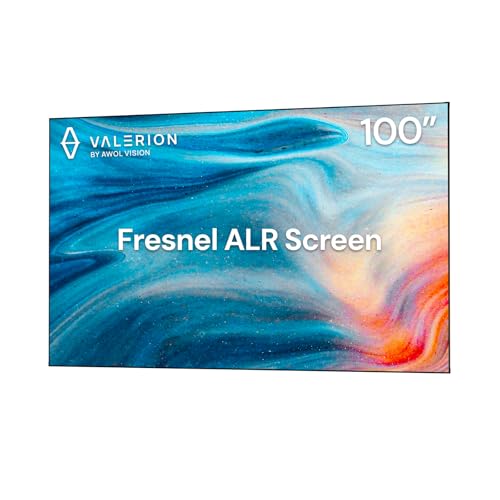
- Up to 85% overhead and side-light rejection
- 1.8 gain with a 90-degree viewing angle
- Designed for long-throw, not UST, projectors
Best For: Long-throw home theaters with daytime or overhead lighting
Large-Format UST Choice
NothingProjector 132-Inch Seamless ALR Screen

- 132-inch seamless screen for UST projectors
- Claims 95% ambient ceiling-light rejection
- 170-degree viewing angle with a slim bezel
Best For: Large UST laser-TV installations with wide seating
Portable Value Option
GAINVANE 100-Inch Anti-Light Screen

- Portable 100-inch 16:9 display
- 160-degree viewing angle for group viewing
- Can hang by hooks or rope indoors or outdoors
Best For: Traveling presentations, movie nights, and flexible setups
DIY Brightness Boost
SilverMagic 120-Inch ALR Screen Material

- Claims 70% ambient-light rejection
- Up to 2.7x gain from center seats
- Trim-to-fit material for DIY wall or frame installs
Best For: Centered-seat, standard-throw DIY theater builds
DIY Grey ALR Material
130-Inch Front-Projection Fabric

- Grey matte EPPE polymer material with 0.85 gain
- 69-by-118-inch sheet supports up to about 130 inches
- Fixed-frame DIY use; not for UST or short throw
Best For: DIY fixed-frame front projection
UST Daylight Screen

- Up to 85% ambient light rejection
- PET Crystal surface supports 4K and active 3D
- 160-degree viewing angle with slim 10mm frame
Best For: UST projectors in bright rooms
Motorized Floor-Rising ALR
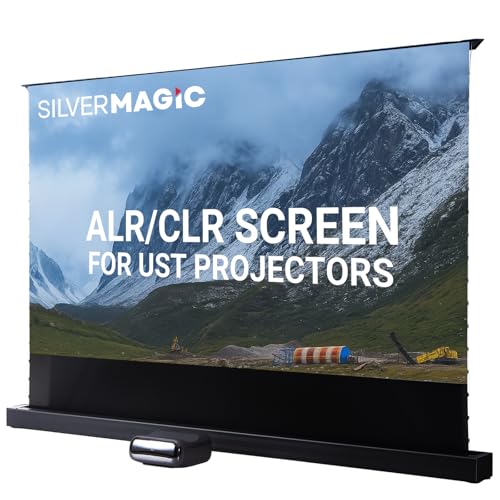
- Claimed 95% ambient light rejection with 0.8 peak gain
- Motorized floor-rising design with USB synchronization
- Supports 4K, 8K, and active 3D content
Best For: Large retractable UST home theaters
Top UST ALR Pick
120-Inch Fixed-Frame ALR Screen

- Up to 95% ambient-light rejection
- Made for ultra-short-throw projectors
- 170° viewing angle with 4K/8K support
Best For: Large, permanent UST home theater installations
Best Motorized Standard-Throw Option
100-Inch Fresnel Floor-Rising Screen
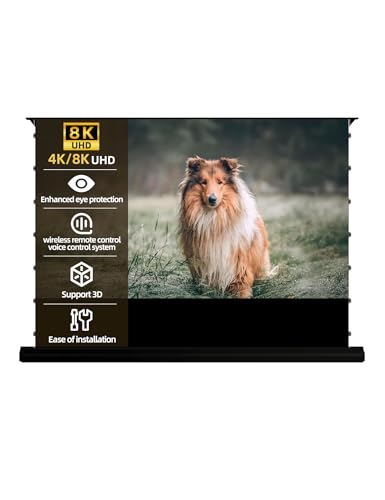
- Fresnel surface helps reject ambient light
- Motorized retractable floor-rising design
- For standard- and long-throw projectors only
Best For: Bright rooms using conventional projectors
Best Retractable UST Choice

- Motorized floor-rising operation
- Designed for UST and 4K projectors
- Claims 95% ambient ceiling-light rejection
Best For: Bright-room UST setups without wall drilling
Bright-Room Long-Throw Pick – Valerion 100-Inch Fresnel ALR Screen
For shoppers comparing projector screens with ambient light rejection, the Valerion 100-inch Fresnel model is designed for long-throw projectors and brighter viewing spaces. Its 1.8 gain, 90-degree viewing angle, and claimed rejection of up to 85% of overhead and side light target clearer, brighter images during daytime use.
Best For: Home theaters using long-throw projectors in rooms with overhead or side lighting.
Pros:
- Fresnel ALR surface supports daytime viewing and claims up to 85% ambient-light rejection.
- 1.8 gain is designed to provide brighter visuals than traditional white screens.
- Supports premium 4K and 8K projection and includes a scratch-resistant, easy-to-clean surface.
- Rollable design can simplify transport and DIY installation.
Cons:
- Not compatible with ultra-short-throw projectors.
- The 90-degree viewing angle is narrower than many wide-angle screens.
- At 33 pounds, installation may require careful wall mounting.
This is a focused choice for a fixed home-cinema setup where a long-throw projector and bright-room performance matter more than maximum viewing width.
Large-Format UST Choice – NothingProjector 132-Inch Seamless ALR Screen
If you want projector screens with ambient light rejection for an ultra-short-throw setup, this 132-inch NothingProjector screen emphasizes scale and a seamless image. Its HBSP material is listed for 4K, 8K, 3D, and HDR content, while the 170-degree viewing angle is intended to keep the picture visible across a wide seating area.
Best For: Large living rooms or home theaters using UST laser projectors and needing a broad viewing angle.
Pros:
- At 132 inches, it offers an unusually large viewing area.
- Seamless construction avoids visible joins across the image.
- Listed with 95% ambient ceiling-light rejection.
- 170-degree viewing angle and a 0.4-inch bezel support wide, nearly borderless viewing.
Cons:
- Its 132-inch size requires substantial wall space.
- It is a fixed-frame, wall-mounted screen rather than a portable option.
- The supplied information does not specify side-light rejection.
Choose this model when an expansive, seamless UST display is the priority. Measure the wall carefully before buying, since the listed screen dimensions are approximately 113 by 64 inches.
Portable Value Option – GAINVANE 100-Inch Anti-Light Screen
For flexible indoor or outdoor viewing, the GAINVANE 100-inch screen offers a portable alternative among projector screens with ambient light rejection. Its 16:9 format, 160-degree viewing angle, and hook-and-rope mounting options make it suitable for movie nights, presentations, and temporary setups in rooms that are not fully dark.
Best For: Buyers who need a portable 100-inch screen for home movies, offices, travel, or outdoor use.
Pros:
- Portable design can be hung with hooks or rope and stored in a bag.
- 100-inch, 16:9 display supports group viewing.
- Designed to reduce the effect of ambient light in living rooms and conference rooms.
- 160-degree viewing angle accommodates viewers spread across a room.
Cons:
- Wall mounting is manual and does not include a dedicated frame or stand.
- The glossy polyester surface may not suit buyers seeking a matte finish.
- Warranty coverage is listed as 90 days.
This is the practical pick for occasional use and easy relocation. It prioritizes portability and broad compatibility over the controlled, permanently tensioned presentation of a fixed-frame screen.
DIY Brightness Boost – SilverMagic 120-Inch ALR Screen Material
The SilverMagic screen material is aimed at DIY builders comparing projector screens with ambient light rejection for standard-throw projectors. It claims 70% ambient-light rejection and up to 2.7x gain from center seats, while the trimmable material can be installed on a wall or customized for a frame.
Best For: DIY home-theater builders using standard-throw projectors who sit near the center of a 120-inch screen.
Pros:
- Claims 70% ambient-light rejection for daytime or lights-on viewing.
- Up to 2.7x gain can increase brightness from center seating positions.
- 120-inch material can be trimmed to fit a wall or custom frame.
- Included thumbtacks, nails, and black velvet support a relatively quick DIY installation.
Cons:
- Not compatible with ultra-short-throw projectors.
- The 30-degree viewing angle favors centered seating and can limit off-axis brightness.
- It is screen material rather than a complete fixed-frame screen.
This option makes sense when customization is important and the main seating position is centered. Its narrow viewing angle means it is less suitable for wide, spread-out seating.
DIY Grey ALR Material – 130-Inch Front-Projection Fabric
For shoppers comparing projector screens with ambient light rejection, this grey Yandood fabric is a flexible DIY option for a fixed-frame installation. Its multi-layer EPPE polymer construction, matte diffuse-reflective surface, and black backing are designed to support contrast and reduce light interference in rooms with everyday ambient light.
Best For: DIY fixed-frame 16:9 screens using a compatible front projector.
Pros:
- 69-by-118-inch material supports screens up to approximately 130 inches diagonally.
- Grey, matte surface offers a 160-degree viewing angle and reported 0.85 gain.
- Three-layer construction includes a black backing to help prevent light penetration and reflection interference.
- Material is described as environmentally friendly and compliant with EU REACH testing standards.
Cons:
- This is fabric material only; it cannot be hung directly and requires a fixed-frame DIY installation.
- Not recommended for projectors under 2000 ANSI lumens.
- Not suitable for rear, side, ultra-short-throw, or short-throw projection, and it is not intended for roller screens.
This is a practical choice when you want to build a large fixed-frame screen yourself, but installation and projector compatibility are essential considerations. The supplied material arrives on a 74-inch reel and needs to be stretched evenly over a suitable frame or smooth surface.
UST Daylight Screen – 100-Inch Fixed-Frame ALR
This NothingProjector model is a purpose-built option for projector screens with ambient light rejection in brighter rooms. Its PET Crystal surface is rated to reject up to 85% of ambient light, while the black light-absorbing core and lenticular finish aim to preserve contrast for 4K and 3D viewing.
Best For: Ultra-short-throw projector setups in living rooms, classrooms, or offices.
Pros:
- Designed for UST projectors and rated for up to 85% ambient light rejection.
- 100-inch 16:9 fixed-frame format has a 160-degree viewing angle.
- Supports 4K UHD content and active 3D projection.
- PET Crystal construction and a slim 10mm frame are intended to provide a flat, wrinkle-free installation.
Cons:
- The 100-inch screen is a fixed wall-mount design rather than a retractable option.
- Its listed dimensions are approximately 87 by 48 inches, so installation space should be measured carefully.
Choose this screen when UST compatibility and daylight performance matter more than portability. The fixed frame and wide viewing angle make it suited to shared viewing areas, while the one-year manufacturer warranty adds basic coverage.
Motorized Floor-Rising ALR – 120-Inch UST Screen
For a large, retractable choice among projector screens with ambient light rejection, this SilverMagic floor-rising screen combines a 120-inch format with a claimed 95% ALR rating. Its optical surface is designed for bright environments, while the motorized housing keeps the screen out of sight when it is not in use.
Best For: Large UST home-theater installations that need a motorized floor-rising screen.
Pros:
- 120-inch screen uses an optical surface rated to reject up to 95% of ambient light.
- Supports 4K, 8K, and active 3D content, with a listed 0.8 peak gain.
- Floor-rising motorization can synchronize with a projector through USB power triggering.
- Offers a 170-degree stated viewing angle, an acoustically transparent design, and a bottom black border.
Cons:
- The large 104.57-by-58.82-inch housing requires substantial floor and installation space.
- The product details list a one-year warranty, while the description separately mentions three-year coverage, so warranty terms should be verified before purchase.
- Its 0.8 gain may be less suitable when maximum screen brightness is the priority.
This is the most feature-rich option here for viewers who want a large screen without leaving it permanently exposed. USB synchronization and floor-rising operation add convenience, but the size, installation requirements, and warranty discrepancy deserve attention.
Top UST ALR Pick – 120-Inch Fixed-Frame ALR Screen
If you need projector screens with ambient light rejection for a room with moderate lighting, this 120-inch fixed-frame model uses black-grid ALR material and a multilayer optical structure designed to reject up to 95% of ambient light. Its 16:9 format and 4K/8K-ready positioning make it a practical match for ultra-short-throw home theater setups.
Best For: UST projector owners who want a large, permanently installed screen for movies, sports, presentations, or events.
Pros:
- Designed specifically for ultra-short-throw projectors.
- Claims up to 95% ambient ceiling-light rejection.
- 170-degree viewing angle supports seating across the room.
- Includes installation hardware and instructions.
Cons:
- Fixed-frame wall mounting is less flexible than a retractable design.
- Installation is recommended for at least two people.
- Best suited to rooms with medium ambient lighting rather than complete light control.
Choose this screen when image stability, wide viewing coverage, and a clean fixed-frame installation matter more than portability. Verify that your projector is ultra short throw before ordering.
Best Motorized Standard-Throw Option – 100-Inch Fresnel Floor-Rising Screen
Among projector screens with ambient light rejection, this 100-inch floor-rising model stands out for standard- and long-throw projectors. Its Fresnel surface is designed to focus projected light toward viewers while reducing side-light interference, helping preserve brightness and contrast in rooms with some indoor lighting.
Best For: Living rooms, bedrooms, media rooms, and offices using a standard- or long-throw projector.
Pros:
- Fresnel surface is designed to reduce image washout from ambient light.
- Motorized floor-rising design retracts after use.
- Improves perceived brightness, contrast, and color depth in bright indoor spaces.
- Suitable for a clean setup without permanent wall mounting.
Cons:
- Not compatible with ultra-short-throw projectors.
- Floor-mounted design requires storage space in front of or below the viewing area.
- Projector compatibility should be confirmed before purchase.
This is the more appropriate choice for buyers with a conventional projector and a need for retractable operation. Its Fresnel ALR design offers a practical way to improve viewing in partially lit rooms.
Best Retractable UST Choice – 120-Inch Motorized ALR Screen
This motorized 120-inch screen is a flexible option for shoppers comparing projector screens with ambient light rejection for bright rooms. Its ST Carbon Black surface is designed for UST and high-brightness 4K projectors, while the floor-rising mechanism lets you retract the screen when the viewing session ends.
Best For: UST home theater users who want a large screen with automatic operation and no wall drilling.
Pros:
- Designed for ultra-short-throw projectors and bright-room viewing.
- Claims 95% ambient ceiling-light rejection.
- Remote and app control allow adjustable height and automatic operation.
- 170-degree viewing angle supports broad seating arrangements.
Cons:
- Floor-rising construction needs suitable floor space.
- Its micro-perforated surface may involve some light loss.
- Compatibility is focused on UST and high-brightness projectors.
Pick this model if convenience is a priority: it can rise and retract without wall mounting, and wireless synchronization may simplify daily use. Confirm the available floor area and projector compatibility before buying.
How We Picked These Projector Screens with Ambient Light Rejection
We selected screens across the main installation types and projector configurations represented in this category. The lineup includes UST-specific ALR and CLR screens, standard-throw models, fixed-frame designs, portable screens, DIY materials, and motorized floor-rising options. We also considered useful specifications such as screen size, aspect ratio, claimed ambient-light rejection, gain, 4K compatibility, and indoor or outdoor flexibility.
Compatibility comes first: a screen designed for an ultra-short-throw projector may produce poor results with a conventional projector, while standard-throw ALR material can create hotspots or uneven brightness when used with UST hardware.
Quick Comparison
| Screen type | Best suited to | Main advantage | Watch for |
|---|---|---|---|
| UST ALR/CLR | Ultra-short-throw projectors | Rejects overhead and room light effectively | Requires precise alignment |
| Standard-throw ALR | Traditional front projectors | Improves contrast in brighter rooms | Viewing-angle and hotspot limits |
| Fixed frame | Dedicated theaters | Flat, consistent viewing surface | Permanent wall installation |
| Motorized floor rising | Multi-use rooms | Screen disappears when not in use | Needs floor space and power |
| Portable or DIY material | Flexible setups and custom frames | Lower-cost or adaptable installation | Wrinkles, mounting, or edge tension |
Key Buying Factors for Projector Screens with Ambient Light Rejection
Projector Compatibility
Confirm whether the screen is made for UST, short-throw, or standard-throw projection. Check the projector’s throw distance, lens position, and recommended screen geometry before ordering.
ALR Versus CLR Performance
ALR screens reduce selected sources of ambient light, but no screen eliminates room brightness. CLR designs are generally optimized to reject ceiling light, making them especially relevant for UST projectors. Side windows, lamps, and daylight may require curtains or additional lighting control.
Gain and Viewing Angle
Higher gain can make an image appear brighter, but it may narrow the viewing cone and increase the risk of hotspots. Choose a balanced gain for family rooms, and prioritize brightness only when the projector and seating layout support it.
Size, Aspect Ratio, and Installation
A 16:9 screen suits most home theater and streaming content. Measure wall width, ceiling height, seating distance, and projector placement. Fixed frames offer the flattest surface; motorized and portable models provide more flexibility.
Surface Quality and Setup
Look for a smooth, tensioned surface and clear installation instructions. Large screens make wrinkles, bowing, and alignment errors more visible. For DIY material, budget for a rigid, square frame and careful tensioning.
Who Should Buy Which Projector Screens with Ambient Light Rejection?
UST projector owners should focus on UST-specific ALR or CLR screens, especially when the projector sits on a media console. Choose a fixed-frame model for a dedicated theater, a motorized floor-rising screen for a shared living space, and a portable option for temporary indoor or outdoor viewing.
Standard-throw projector owners should select conventional ALR material or a screen explicitly labeled for long- or standard-throw use. DIY buyers can save money with screen material, but should be comfortable building a flat, properly tensioned frame. Before purchasing, verify the projector type, diagonal size, mounting location, viewing distance, and return policy.