Digitizing slides and negatives on a Mac can preserve family photos, simplify sharing, and make aging film easier to organize. The best choice depends on whether you prioritize scan quality, speed, format support, or a simple standalone workflow.
We compared 10 film and slide scanners across resolution, supported formats, connectivity, software, display features, and ease of use to help you choose a practical match for your archive.
Best 10 Slide Scanners for Mac Picks for 2026
Best High-Resolution Choice

- 7200 dpi and 48-bit output
- Infrared dust and scratch removal
- Includes SilverFast SE Plus 9
Best For: Detailed 35mm scanning on compatible Macs
Best No-Computer Workflow
Magnasonic FS71 24MP Film Scanner

- Scans without a computer
- Supports several film formats
- 5-inch display and SD-card saving
Best For: Fast, simple family-photo archiving
Best for Batch-Friendly Viewing

- Quick-feeding tray for smoother scanning
- 7-inch tiltable LCD
- Direct SD/SDHC saving up to 32GB
Best For: Easy mixed-format family archiving
Best Value for Detailed 35mm Scans

- 7200 dpi 35mm scanning
- SilverFast SE Plus included
- Carry bag included
Best For: High-detail 35mm negatives and slides
Easy Home Digitizing
KODAK SCANZA Film & Slide Scanner
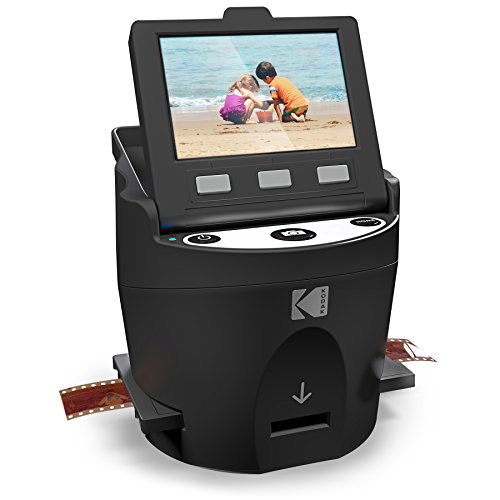
- Converts several supported film formats to JPEG
- 3.5-inch tilting LCD and one-touch controls
- Includes adapters, cables, and cleaning brush
Best For: Quick home archiving across multiple film formats
Color-Accurate Archiving
Plustek OpticFilm 8300i Ai Film Scanner
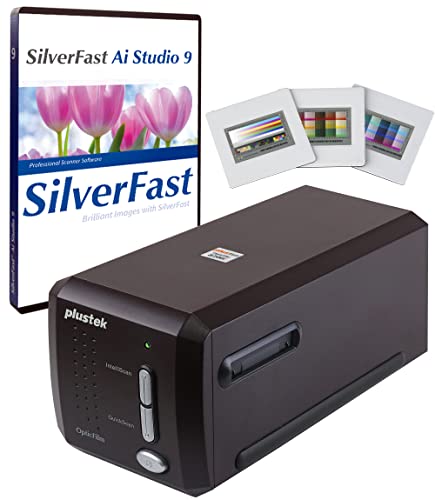
- Built for detailed 35mm slide scanning
- Includes SilverFast 9 Ai Studio software
- Advanced IT8 target supports color calibration
Best For: Enthusiasts seeking controlled 35mm archival scans
Versatile Family Scanning
KEDOK 22MP Photo and Slide Scanner

- Handles film, slides, photos, and name cards
- Large 5-inch LCD for easy previews
- Includes 8GB SD card and 3-year warranty
Best For: Families digitizing mixed photo and film collections
Best Large-Screen Option

- Supports multiple film and slide formats
- 5-inch LCD with HDMI output
- One-touch scanning with 64GB SD support
Best For: Families and hobbyists wanting easy, large-screen scanning
Best Standalone Mac-Compatible Pick

- Converts 35mm film and slides to JPEG
- Scans at up to 1800 DPI
- Rapid feeder and SDHC storage
Best For: 35mm projects needing simple standalone operation
Best Compact Choice

- Up to 16MP scans with a CMOS sensor
- Supports 35mm, 135, and 126 film
- Lightweight design with on-device editing
Best For: Portable film scanning with simple SD-card storage
Best High-Resolution Choice – Plustek OpticFilm 8200i SE
For photographers seeking slide scanners for Mac, the Plustek OpticFilm 8200i SE is a specialized 35mm option with 7200 dpi resolution, 48-bit color, and support for Mac OS 10.7 through 14.x. Its infrared dust and scratch detection can reduce the need for manual retouching.
Best For: Mac users digitizing 35mm slides and negatives who want detailed scans and built-in defect removal.
Pros:
- 7200 dpi resolution produces detailed 35mm scans.
- Integrated infrared channel helps detect dust and scratches.
- Includes SilverFast SE Plus 9 and Plustek QuickScan software.
- Supports Mac OS 10.7 through 14.x.
Cons:
- Designed for 35mm film and mounted slides rather than multiple film formats.
- USB connection requires a computer-based workflow.
The OpticFilm 8200i SE is a strong fit when scan detail and restoration assistance matter more than all-in-one simplicity. Confirm the downloadable driver supports your specific Mac version before buying.
Best No-Computer Workflow – Magnasonic FS71 24MP Film Scanner
The Magnasonic FS71 offers a straightforward alternative among slide scanners for Mac because it can scan and save images without requiring a computer, driver installation, or photo-editing software. It handles several film and slide formats and stores JPEG files on an SD card.
Best For: Users who want quick, simple scanning with on-device adjustments and direct SD-card storage.
Pros:
- Supports 35mm, 110, 126, Super 8 film, and 135/126/110 slides.
- Saves scans directly to SD cards up to 128GB.
- 5-inch LCD supports previewing and basic brightness and color adjustments.
- Scans can take less than five seconds each.
Cons:
- Its listed minimum system requirements specify Windows 7, so Mac compatibility should be verified for computer use.
- Resolution is listed as 24MP rather than a dpi specification.
- HDMI cable is not included.
This model is appealing for convenient home archiving, especially if you prefer standalone operation. Mac users should treat SD-card transfer as the practical workflow and confirm any computer connection requirements.
Best for Batch-Friendly Viewing – KODAK Slide N Scan Max
The KODAK Slide N Scan Max is a practical choice among slide scanners for Mac for users who value easy feeding and on-device viewing. Its quick-feeding tray, 7-inch tiltable LCD, and direct SD/SDHC saving support a convenient home digitization workflow.
Best For: Families digitizing mixed 135, 110, and 126 film collections with simple controls.
Pros:
- Quick-feeding tray helps support continuous scanning.
- Handles 135mm, 110mm, and 126mm film.
- Saves scans directly to SD/SDHC cards up to 32GB.
- 7-inch tiltable LCD supports previewing and one-touch editing.
Cons:
- Listed resolution is 3200 dpi, lower than the Plustek models in this roundup.
- The listed minimum system requirements specify Windows 7, so Mac computer compatibility should be confirmed.
- SD/SDHC storage is limited to 32GB.
The Slide N Scan Max emphasizes ease of use rather than maximum archival resolution. Its large screen and direct card storage make it well suited to casual or family-focused scanning projects.
Best Value for Detailed 35mm Scans – Plustek OpticFilm 8100
The Plustek OpticFilm 8100 is a dedicated 35mm scanner for Mac users who want high-resolution slide and negative digitization. It offers 7200 dpi scanning, a 48-bit specification, and SilverFast SE Plus software for image-processing control.
Best For: Digitizing 35mm negatives and slides for detailed images and larger prints.
Pros:
- 7200 dpi resolution is designed for detailed 35mm scans.
- Captures shadow and highlight detail with enhanced dynamic range.
- Includes SilverFast SE Plus and Plustek QuickScan.
- Includes a protective carry bag for storage or travel.
Cons:
- Supports 35mm negatives and slides rather than a broad range of film formats.
- USB connection and bundled software create a computer-based workflow.
- Listed Mac support extends through OS 13.x, so newer macOS versions should be checked.
The OpticFilm 8100 is a sensible pick for users prioritizing detailed 35mm results and included scanning software. Its stated Mac support is narrower than the newer 8200i SE, making version verification especially important.
Easy Home Digitizing – KODAK SCANZA Film & Slide Scanner
For shoppers comparing slide scanners for Mac, the KODAK SCANZA is a straightforward, standalone option for converting several common film formats to JPEG files. Its built-in display, one-touch controls, and included adapters make it practical for casual home archiving.
Best For: Families digitizing 35mm, 126, 110, Super 8, and 8mm negatives or slides without a complicated computer workflow.
Pros:
- Converts supported film formats to JPEG files in seconds.
- Includes multiple film inserts and adapters.
- Built-in 3.5-inch adjustable, tilting LCD simplifies previewing.
- Includes USB, HDMI, AC, and video cables plus a cleaning brush.
Cons:
- Does not convert film formats beyond 35mm, 126, 110, Super 8, and 8mm.
- SD card is not included.
- Its listed minimum system requirements mention Windows 7, so Mac users should verify their intended workflow before buying.
The SCANZA emphasizes convenience over advanced editing, with on-device RGB and resolution adjustments and gallery browsing. It is a sensible choice for quick, hands-on scanning when broad format support and simple operation matter most.
Color-Accurate Archiving – Plustek OpticFilm 8300i Ai Film Scanner
Among slide scanners for Mac, the Plustek OpticFilm 8300i Ai is aimed at users who want a more controlled 35mm scanning process. Its bundled SilverFast 9 Ai Studio software, IT8 calibration target, and infrared-assisted tools support detailed editing and color management.
Best For: Enthusiasts and archivists digitizing 35mm slides who want calibration tools and advanced software features.
Pros:
- Supports 35mm slides with a listed 7200 resolution and 16-bit color depth.
- Includes SilverFast 9 Ai Studio and Plustek Quick Scan Plus.
- Comes with an advanced ISO 12641-2-compliant IT8 calibration target.
- SilverFast includes infrared, HDRi, Multi-Exposure, and NegaFix features.
Cons:
- Designed for 35mm slides and film rather than multiple film formats.
- Advanced software may require more time to learn than a standalone scanner.
- The supplied details list Mac OS support in the features but cite Windows 7 in minimum system requirements, so users should confirm compatibility for their Mac.
The 8300i Ai is the most software-focused option here. Its calibration target and extensive SilverFast feature set make it better suited to careful archival work than quick, casual scans.
Versatile Family Scanning – KEDOK 22MP Photo and Slide Scanner
The KEDOK is a flexible pick for shoppers seeking slide scanners for Mac that can also handle photos, name cards, and multiple film types. It works without a computer, previews scans on a large 5-inch screen, and saves files to included internal memory or an SD card.
Best For: Households that want one simple device for 35mm and 110 film, slides, printed photos, and business cards.
Pros:
- Scans supported 135/35mm and 110 negatives, 135 slides, photos, and name cards.
- Large 5-inch LCD provides a wide-view preview.
- Includes an 8GB SD card and 128MB internal memory.
- Offers single-touch adjustments for film type, color, brightness, resolution, and date.
Cons:
- SD card support is limited to SD or SDHC cards up to 32GB.
- The listed minimum system requirements mention Windows 7, so Mac users should confirm how they plan to transfer and manage files.
- Its broader photo and document functionality may be unnecessary for users scanning only 35mm slides.
With its large display, included storage, and support for both film and everyday prints, the KEDOK prioritizes accessibility and versatility. It is especially appealing when the scanner will serve more purposes than slide conversion alone.
Best Large-Screen Option – 22MP Film & Slide Scanner
For shoppers comparing slide scanners for Mac, this DigitPro model is a flexible standalone choice for digitizing 35mm, 110, 50mm slides, and Super 8 film. Its 5-inch display, one-touch controls, built-in memory, and SD-card support make it practical for scanning without relying on complicated computer software.
Best For: Families and hobbyists who want a large preview screen, broad film-format support, and HDMI viewing.
Pros:
- Supports 35mm/135, 110, 50mm slides, and Super 8 film.
- 5-inch LCD provides convenient preview, playback, and sharing.
- Stores scans in built-in memory or on an SD card up to 64GB.
- Includes USB transfer, HDMI output, film holders, and a cleaning brush.
Cons:
- SD card is not included.
- Its listed resolution is 1080P rather than a higher optical-DPI specification.
The combination of wide format compatibility and a generous screen makes this a strong all-around option. It is especially convenient if you want to preview, edit, save, and display scans with minimal setup.
Best Standalone Mac-Compatible Pick – DIGITNOW! 135 Film Scanner
This DIGITNOW! unit is worth considering among slide scanners for Mac if you want a standalone workflow with optional computer connectivity. It scans 35mm film and slides to JPEG, saves to an SDHC card, and includes a rapid slide feeder for handling batches more efficiently.
Best For: Mac and Windows users digitizing 35mm slides and negatives who prefer SD-card storage and a compact built-in viewer.
Pros:
- Converts 35mm film and slides to JPEG files.
- Scans at up to 1800 DPI and supports SDHC cards up to 32GB.
- Adjustable rapid slide feeder can help streamline repeated scans.
- Includes a 2.4-inch TFT LCD and TV-out functionality.
Cons:
- Designed for 35mm media rather than multiple film formats.
- Uses a smaller 2.4-inch screen than some newer standalone scanners.
- Its listed minimum system requirement is Windows XP, despite Mac OS support being noted.
With SD-card saving and no computer or software required for basic operation, this model keeps the process straightforward. Its 35mm focus and modest display make it less versatile, but the rapid feeder and 1800-DPI specification may appeal to dedicated 35mm projects.
Best Compact Choice – BEONEGLOBAL ClearScan MINI
The BEONEGLOBAL ClearScan MINI is a portable option for shoppers seeking slide scanners for Mac with simple controls and direct SD-card saving. It handles 35mm/135 and 126 film, offers up to 16MP scans, and includes basic editing tools for quick adjustments before saving.
Best For: Users who prioritize a lightweight scanner for 35mm, 135, and 126 film with on-device editing.
Pros:
- Captures film and slides at up to 16MP using a CMOS sensor.
- Supports 35mm/135 and 126 film formats.
- Compact 10.08-ounce design is easy to carry.
- Allows brightness, color, flip, and rotate adjustments before saving.
Cons:
- SD card up to 32GB is supported but not included.
- Its 2.31-inch LCD is relatively small for previewing scans.
- It does not list HDMI or TV output.
This MINI model is a sensible fit when portability and quick operation matter more than a large display or broad format coverage. Mac OS 10.7.3+ compatibility is listed, while SD-card storage keeps the workflow simple and computer-independent.
How We Picked the Best Slide Scanners for Mac
We evaluated these models for the features that matter most when scanning film on a Mac: supported film formats, optical or advertised resolution, color depth, dust and scratch handling, included software, file-transfer options, and day-to-day usability. We also separated dedicated 35mm scanners from compact devices designed for convenience.
Compatibility deserves special attention. Some scanners connect to a computer and depend on macOS-compatible software, while others save JPEG files to an SD card or internal storage and can be used without a computer. Before buying, check the manufacturer’s current macOS requirements, included drivers, and whether your Mac has the required USB port or adapter.
Quick Comparison
| Best for | Look for | Typical advantage |
|---|---|---|
| Maximum detail | Dedicated 35mm scanner with high optical resolution | Sharper enlargements and better cropping flexibility |
| Simple home scanning | Built-in display and SD-card saving | Less dependence on Mac software |
| Multiple film formats | Support for 35mm, 110, 126, and Super 8 or 8mm | More useful for mixed family archives |
| Color correction | Infrared dust removal or advanced scanning software | Less manual cleanup after scanning |
Key Buying Factors for Slide Scanners for Mac
Resolution and Image Quality
High advertised dpi does not always equal high optical detail. Dedicated Plustek models are aimed at users who want more control and sharper 35mm results, while compact scanners often emphasize speed and convenience. Consider how large you will print or display the scans before paying for maximum resolution.
Mac Connectivity and Workflow
USB-connected scanners can offer better control but may require drivers or specialized software. Standalone models with LCD screens and SD-card storage are often easier for occasional batches, although they may provide fewer editing controls. USB-C Mac users may need a compatible hub or adapter.
Film Formats and Handling
Confirm that the included holders match your collection. Most dedicated units focus on 35mm slides and negatives; all-in-one models may also handle 110, 126, Super 8, or 8mm film. Check holder quality and loading speed if you plan to scan hundreds of frames.
Dust, Scratches, and Color Correction
Infrared cleaning can reduce dust and scratch marks on compatible film, but it is not available or equally effective on every film type. A clean workspace, anti-static brush, and careful handling remain important regardless of the scanner.
Who Should Buy Which Slide Scanners for Mac?
Choose the Plustek OpticFilm 8100 or 8200i SE if you primarily scan 35mm film and want detailed files with computer-based control. The 8200i SE is especially appealing when infrared dust and scratch removal is a priority.
Choose the Plustek OpticFilm 8300i Ai if you are building a serious archive, need advanced color-management tools, or plan to make larger prints.
Choose a KODAK, Magnasonic, KEDOK, DIGITNOW!, or BEONEGLOBAL model if ease of use, a built-in screen, broad format support, or SD-card saving matters more than maximum scanning control. These are practical choices for casual digitization and mixed collections.
For any model, create a consistent file-naming system, keep an untouched master scan, and back up the finished files in at least two locations.